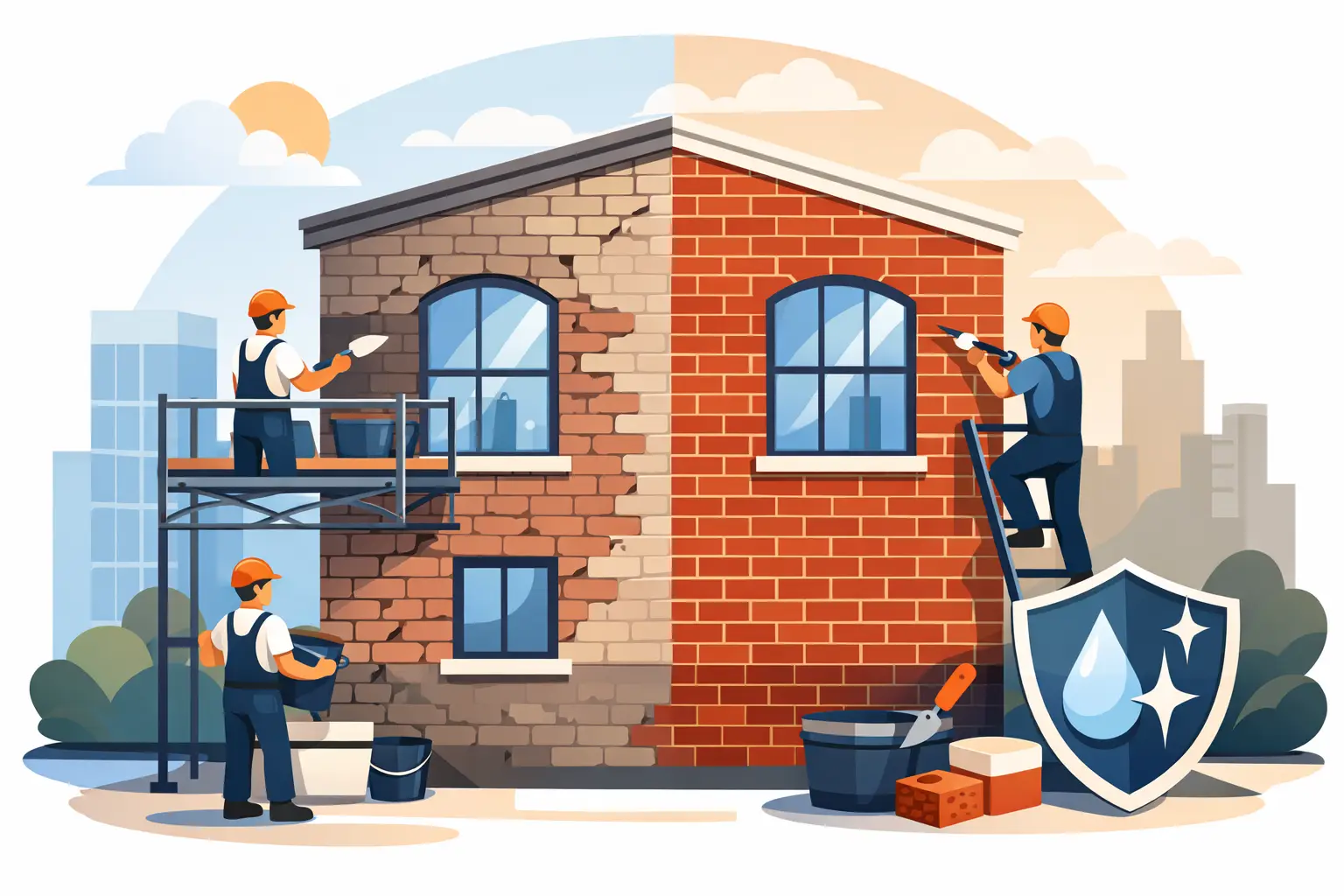
A brick wall can look solid while allowing water to work behind its surface. Cracked mortar, loose brick, white staining, and moisture marks near windows are not simply cosmetic concerns. Brick facade restoration addresses these warning signs before they lead to deeper masonry damage, interior leaks, unsafe sections, or costly structural repairs.
For homeowners, a restored brick facade improves curb appeal and protects a major part of the property envelope. For commercial and industrial properties, it helps keep entrances, exterior walls, and tenant-facing areas safe, durable, and professional. The right repair is not about covering damage. It is about finding the cause, rebuilding weak areas with precision, and creating a finish built to perform through changing weather.
What Brick Facade Restoration Should Address
A durable restoration begins with a close inspection. Brick is a long-lasting material, but it depends on sound mortar joints, proper drainage, stable support, and details that keep water moving away from the wall. When one part fails, the damage can spread slowly through surrounding masonry.
Failed mortar is one of the most common problems. Mortar joints can crack, crumble, or pull away after years of rain, freeze-thaw cycles, settlement, and movement around doors or windows. Open joints allow moisture into the wall. Once water enters, it can freeze, expand, and loosen adjacent brick. Repointing replaces deteriorated mortar so the brickwork can remain tight, supported, and weather-resistant.
Damaged brick requires equal attention. Some bricks can be carefully removed and replaced without disturbing the full facade. Others may show face loss, spalling, cracking, or staining caused by long-term moisture exposure. A reliable contractor matches replacement materials as closely as possible in size, texture, and color while making sure the new work bonds properly with the existing wall.
Restoration may also include rebuilding localized areas, repairing lintels above openings, correcting cracked parging, resealing vulnerable transitions, and addressing drainage conditions near the foundation. The visible brick is only one part of the system. Water that pools at the base of a wall, overflowing gutters, poor grading, or failed flashing can cause the same damage to return if left unresolved.
Signs Your Brick Facade Needs Repair
Small changes in masonry are often the first opportunity to avoid a larger repair. A few hairline cracks may be normal in older brickwork, especially where materials meet or seasonal movement occurs. Wider cracks, stair-step cracking, displaced bricks, or gaps that continue to grow should be assessed promptly.
Watch for mortar that has become soft, sandy, or recessed well behind the face of the brick. This is a clear sign that the joints are no longer doing their job. Loose brick, bulging sections, rust stains over window and door openings, and crumbling edges also deserve professional attention. These conditions can point to water damage, metal deterioration, or movement in the wall assembly.
White powder on brick, known as efflorescence, is another useful warning sign. It occurs when moisture moves through masonry and leaves mineral salts behind. It does not always mean the wall has serious structural damage, but it does show that water is traveling through the material. The source could be a leaking gutter, poor drainage, an open mortar joint, or moisture entering from behind the wall.
Inside the property, peeling paint, damp spots, musty odors, or recurring moisture around exterior walls can be connected to facade issues. The wall may not be the only cause, so a thorough review matters. A precise diagnosis prevents unnecessary work and focuses the budget where it will provide lasting protection.
The Right Process for Brick Facade Restoration
Good masonry work follows a measured process rather than a quick patch. First, the damaged areas must be inspected for movement, moisture paths, failed joints, and weakened materials. This helps determine whether the work is limited to repointing and brick replacement or whether structural repairs, drainage corrections, or foundation-related work are also needed.
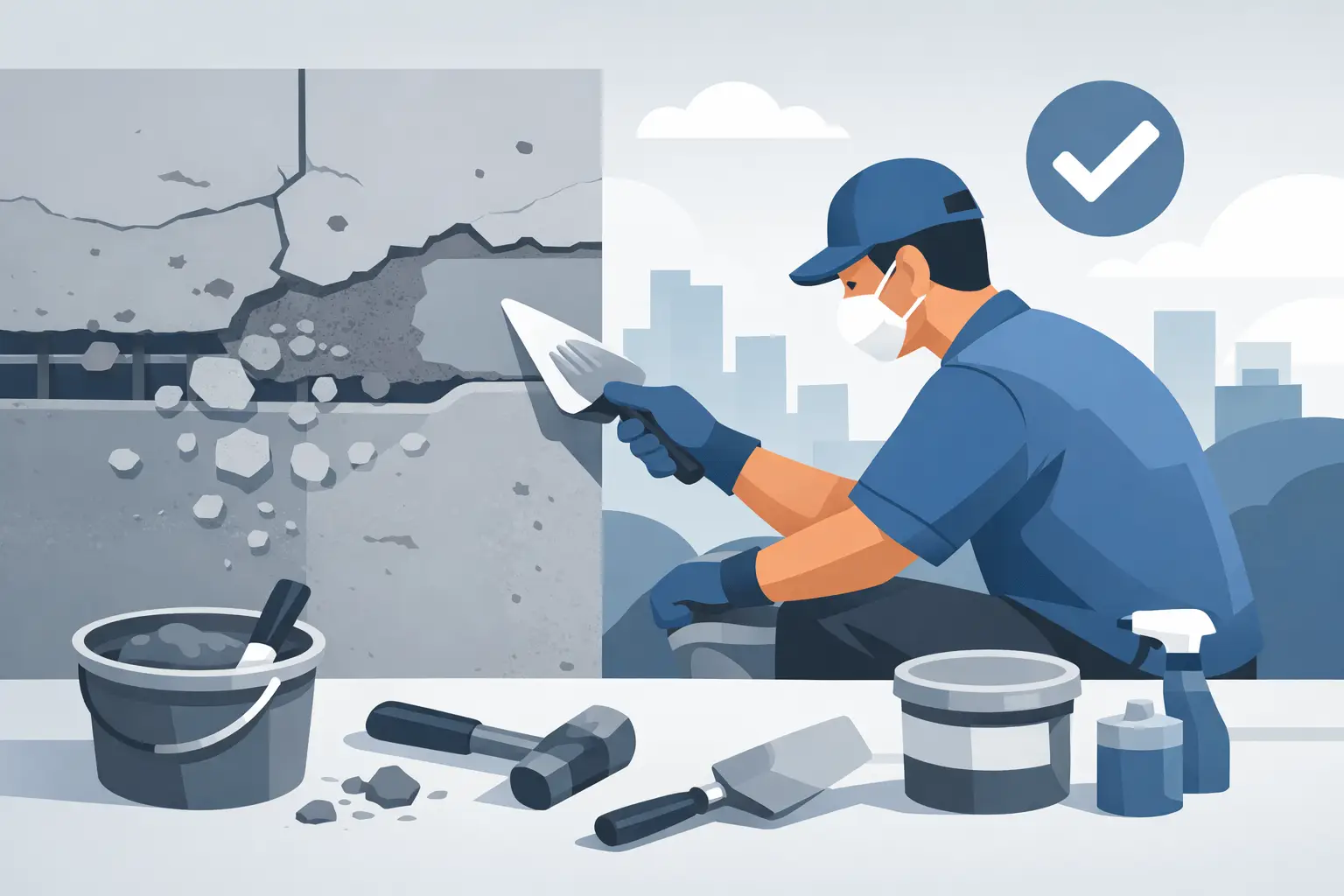
Next, damaged mortar is removed to an appropriate depth without chipping the surrounding brick. This step requires care. Aggressive grinding or careless removal can damage brick edges and leave the finished wall looking uneven. The joints are then cleaned and prepared before new mortar is installed in layers for a strong, consistent bond.
Mortar selection matters more than many property owners realize. Mortar that is too hard for older brick can create problems over time because the brick, rather than the joint, may take the stress of movement and moisture. The correct mix depends on the age and condition of the masonry, the brick type, and the exposure of the wall. Appearance matters, but compatibility and performance come first.
When bricks need replacement, each unit should be set level, aligned with the existing courses, and finished with consistent joints. A repaired area should not stand out because of sloppy spacing, mismatched mortar, or poor color blending. Some variation is natural with older masonry, but skilled work creates a clean, balanced result that respects the character of the property.
The final stage is protection. This may mean correcting the grade around the building, repairing nearby concrete that directs water toward the wall, improving drainage, sealing specific vulnerable areas when appropriate, or repairing flashing and coping details. Brick needs to breathe, so not every wall should receive a surface sealer. The right approach depends on the wall condition and the source of moisture, not a one-size-fits-all product.
Why Quick Cosmetic Repairs Often Fail
Applying caulk over cracked mortar or coating a damp wall can make a problem look better for a short time. It rarely solves the reason the damage developed. If water is entering through open joints or collecting at the base of the building, the concealed masonry may continue to deteriorate behind the repair.
Painting brick can also be a trade-off. A quality coating may be appropriate in certain situations, but it changes the appearance and maintenance needs of the facade. It can also trap moisture if the wall has not been properly repaired and prepared first. Property owners should understand whether they are choosing a true masonry repair, a protective finish, or a temporary visual cover-up.
The lowest estimate is not always the best value either. Brickwork requires careful material matching, proper joint preparation, weather-aware scheduling, and cleanup that protects surrounding hardscapes and landscaping. Rushed labor can leave weak joints, stained brick, and repairs that fail after the next hard winter. Strong workmanship costs less over time because it reduces repeated patching and protects the wall behind the finish.
Protecting a Restored Brick Facade
Once restoration is complete, simple maintenance helps the work last. Keep gutters and downspouts clear and make sure water discharges away from the foundation. Check that soil, mulch, and paving do not sit too high against the brick, where they can hold moisture against the wall. Inspect mortar joints each spring and after severe storms, especially around chimneys, steps, windows, and areas exposed to heavy runoff.
Avoid high-pressure washing. It can strip mortar, damage soft brick faces, and force water farther into open joints. If cleaning is needed, use methods suited to the type and condition of the masonry. Harsh chemicals should also be used carefully because they can discolor brick or damage mortar.
For a property with recurring cracks or moisture issues, routine inspections are a practical investment. Early repairs are typically more controlled, less disruptive, and more affordable than waiting for bricks to loosen or wall sections to fail.
ASAP Paving And Masonry approaches brick restoration with the same focus used for foundations, drainage, concrete, and structural masonry: identify the cause, repair the damaged materials correctly, and build a durable result. Clear recommendations and honest pricing help property owners make confident decisions about work that protects both appearance and structure.
A brick facade should provide strength, not become a source of recurring repairs. If you see failing mortar, damaged brick, or signs of moisture, arrange an on-site assessment while the repair can still be targeted, precise, and built to last.