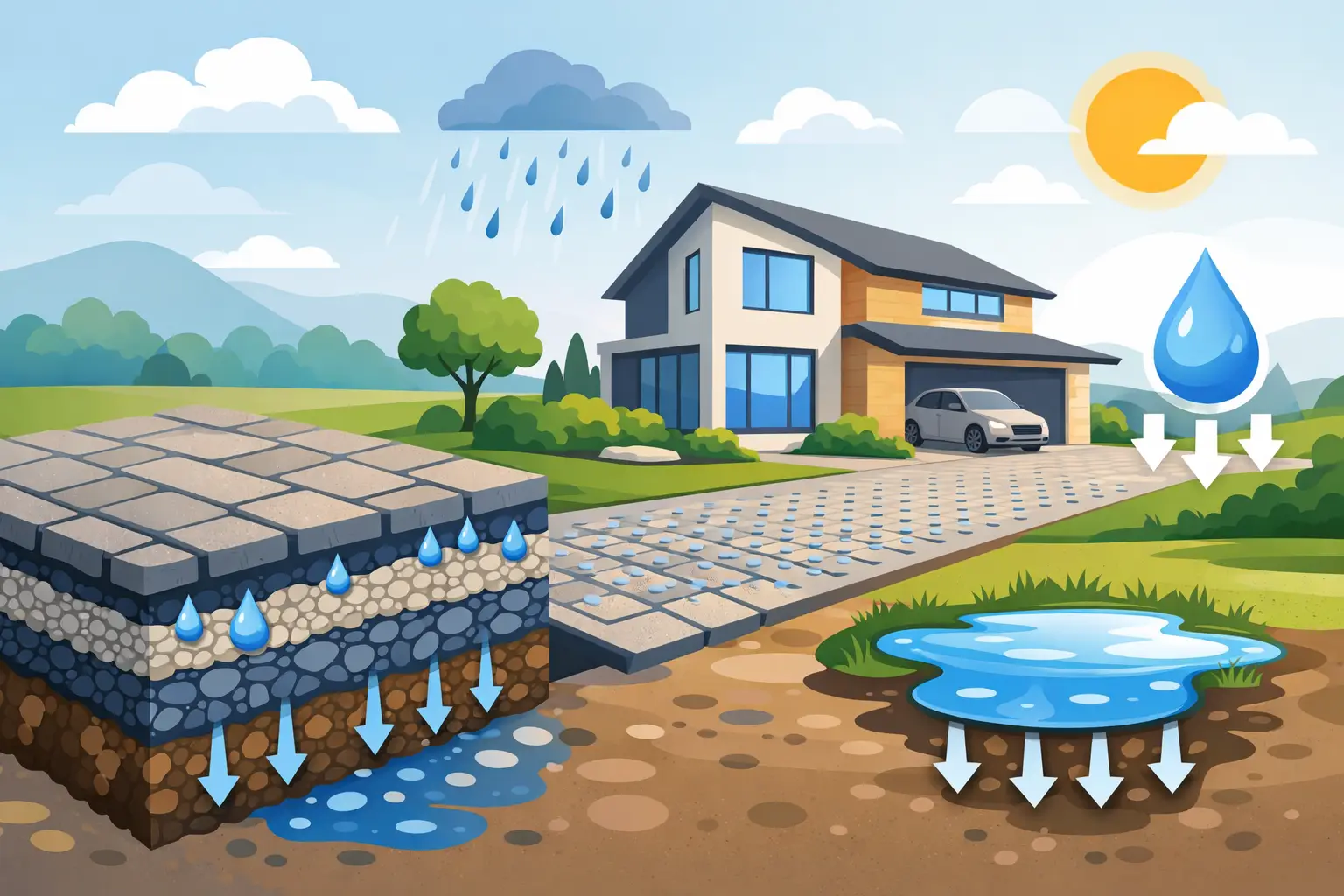
Water rarely damages a property all at once. It starts with a damp strip beside the foundation, a soft spot at the edge of a driveway, or runoff that cuts a shallow channel through the lawn after every hard rain. When comparing french drains versus swales, the right choice comes down to where water is collecting, how quickly it needs to move, and what sits in its path.
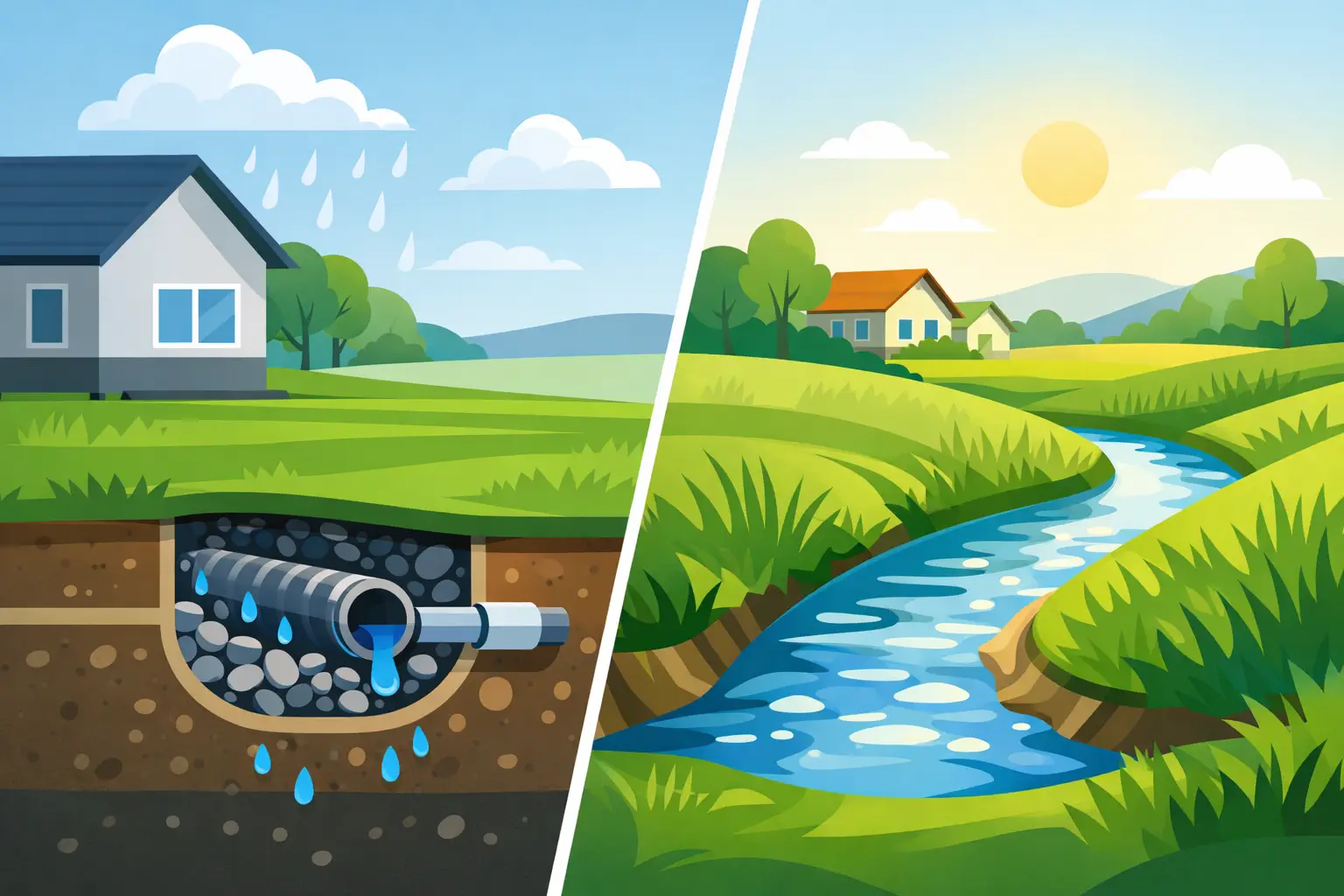
Both systems can provide reliable drainage when they are properly designed and installed. But they work in very different ways. A French drain moves water below ground through a gravel-filled trench and perforated pipe. A swale is a graded channel that guides water across the surface. Choosing the wrong approach can leave pavement, foundations, landscaping, and surrounding soil exposed to recurring moisture damage.
French Drains Versus Swales: The Core Difference
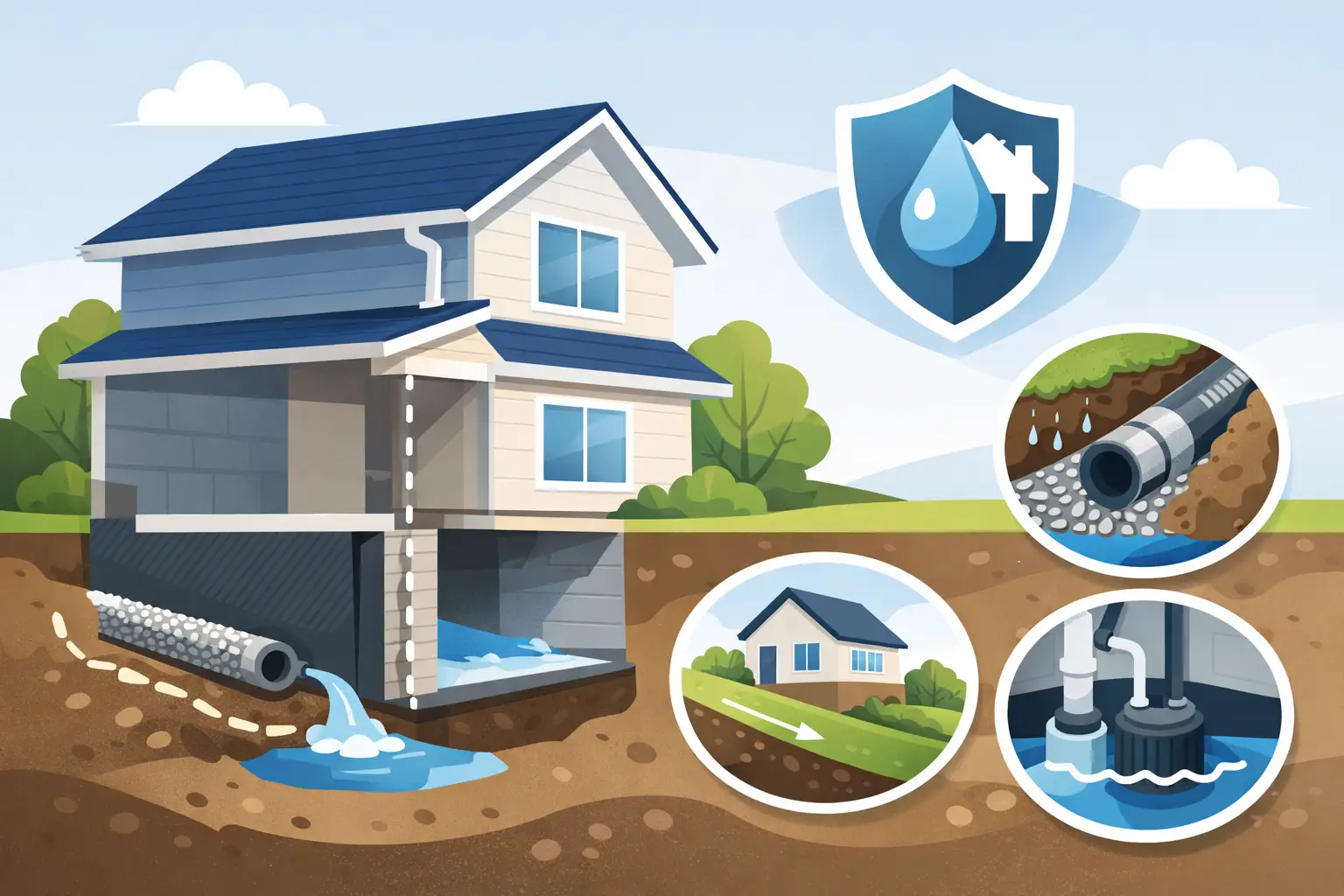
A French drain is built for subsurface water. It is commonly installed where water saturates soil near a foundation, patio, retaining wall, driveway edge, or low area that cannot be corrected with simple surface grading. The system collects water through gravel and perforated pipe, then directs it to an approved discharge point away from the problem area.
A swale is built for surface runoff. It is a broad, shallow channel shaped into the landscape with a gradual slope. Rather than trapping water underground, it gives rainwater a controlled route across the property. A well-built swale can slow runoff, reduce erosion, and direct water toward a suitable outlet without looking like a ditch through the middle of the yard.
The distinction matters because drainage is not only about moving water. It is about protecting the soil and structures around it. Water left beside a foundation can increase pressure on foundation walls. Water flowing across unprotected soil can wash away topsoil and undermine the edge of asphalt, concrete, pavers, or retaining walls.
When a French Drain Is the Better Choice
French drains are often the stronger solution when the problem is below the surface or tightly confined. If soil stays wet long after a storm, water seeps toward a basement, or a patio holds moisture near the house, a subsurface system may be needed. The pipe creates a dependable path for water that would otherwise remain trapped in the ground.
This approach is especially useful around foundations and hardscape features. Proper drainage behind a retaining wall, for example, helps relieve water pressure that can push, crack, or shift the structure over time. Along a driveway, a French drain can help prevent saturated base material and soil movement that lead to settlement, cracking, and edge failure.
A typical installation requires excavation, grading, filter fabric, clean drainage stone, perforated pipe, and a planned outlet. The trench must be set at the proper depth and slope. If it is too shallow, too flat, filled with the wrong stone, or allowed to clog with soil, the system will not perform as intended.
French drains have a more finished appearance because most of the system is concealed. They can be installed beneath lawn areas, beside paved surfaces, or behind walls. That makes them a practical option where property owners want strong drainage without changing the overall look or use of the space.
French Drain Trade-Offs
A French drain is not the answer to every wet yard. It generally costs more than surface grading because it involves deeper excavation, aggregate, pipe, and restoration work. It also needs a legal and practical place to discharge. Sending drainage onto a neighboring property, sidewalk, public right-of-way, or area that will simply send it back toward the building creates a new problem instead of solving the original one.
Maintenance is usually limited, but not nonexistent. Catch basins and cleanouts should be kept clear, and the outlet must remain open. A system surrounded by fine soil without quality filter fabric can eventually lose capacity. Strong materials and precise installation are what make the investment lasting.
When a Swale Is the Better Choice
A swale is often the right fit when rainwater flows over the ground and there is enough open space to redirect it naturally. It works well on lawns, around large driveways, beside parking areas, and across commercial or industrial sites where surface water needs a clear route away from buildings and traffic areas.
The goal is controlled grading. The swale should have gentle sides, a consistent fall, and an outlet that can safely handle the water. In many residential yards, it can be shaped into the landscape and finished with grass. On larger or steeper sites, erosion-control materials, stone, or other protective finishes may be required where water moves faster.
Swales are also valuable as part of site preparation. Before a new driveway, patio, or parking area is installed, the surrounding grade must be considered. A beautiful paved surface will not stay strong if runoff is directed underneath it or toward the building. Planning the swale first can protect the finished work for years.
Swale Trade-Offs
A swale needs room to work. It may not be suitable for a narrow side yard, a small urban lot, or an area where a change in grade would interfere with access, landscaping, or existing utilities. It also must be carefully graded. A shallow low spot with no outlet is not a functional swale. It is simply another place for water to stand.
Appearance is another consideration. Although a properly finished swale can blend into a lawn, it remains a visible landform. Some property owners prefer a buried drainage system near patios, front entrances, or highly landscaped spaces. Others choose a swale because it handles large surface runoff without the expense of extensive trenching.
What Should Guide the Decision?
The best drainage system starts with a close look at the source of the water. Is runoff coming from a roof, neighboring grade, slope, driveway, or parking area? Is water pooling on top of the lawn, or is the soil staying saturated beneath the surface? Does the water threaten a foundation, retaining wall, paved surface, or entrance?
The condition of the site matters as much as the amount of water. Heavy clay soil drains slowly and may require more than surface shaping. A steep lot may need erosion protection and carefully managed flow. A flat property may need a catch basin, drain line, or other engineered outlet because gravity alone cannot carry water far enough.
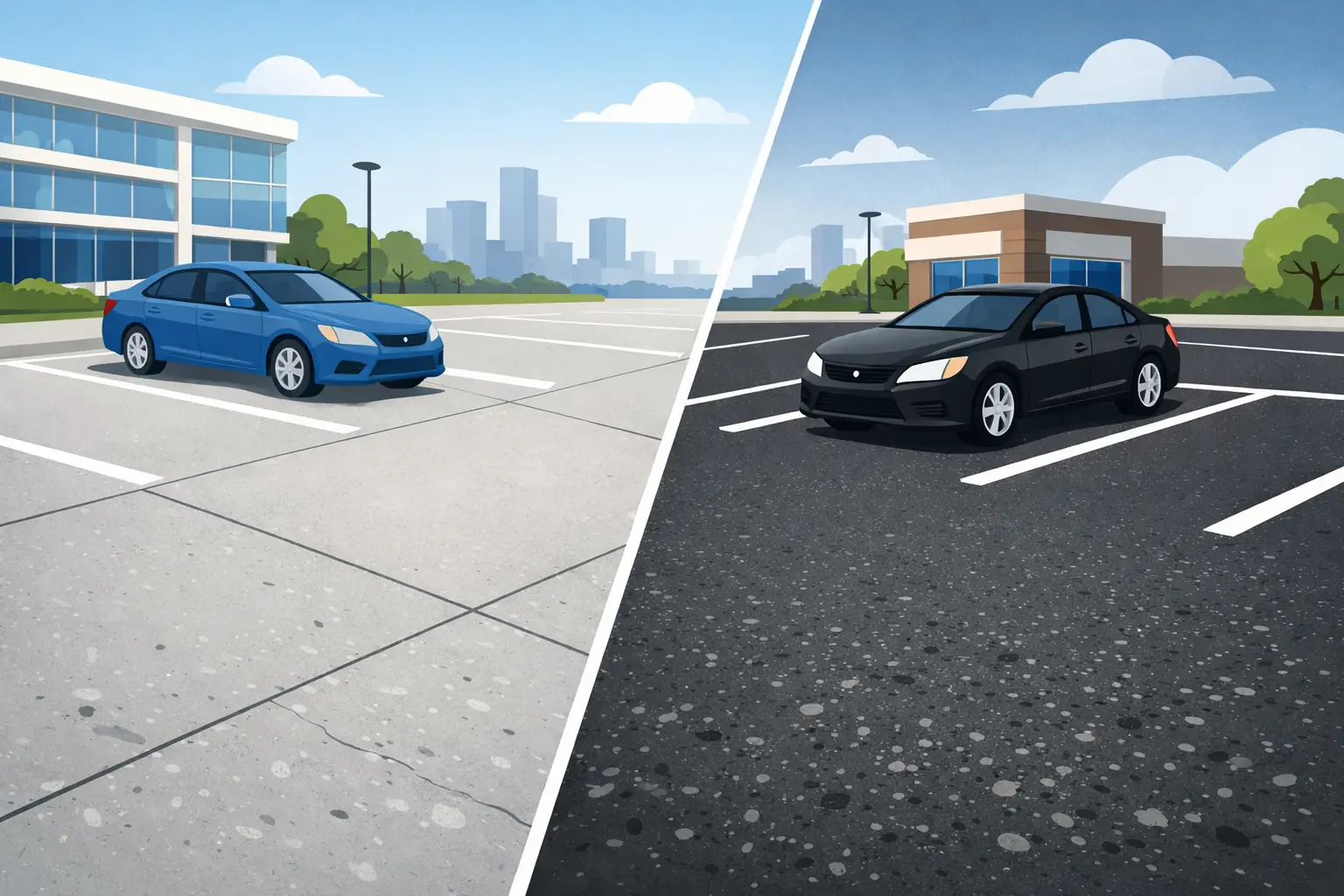
For commercial and industrial properties, traffic and operations add another layer. Water crossing a loading area, driveway, or parking lot can create slippery conditions, potholes, base failure, and premature pavement damage. A reliable drainage plan must account for vehicle loads, plow routes, access points, and the durability of surrounding surfaces.
In Many Cases, the Best Solution Uses Both
French drains versus swales is not always an either-or decision. Many properties benefit from both systems working together. A swale can collect and guide broad surface runoff, while a French drain handles water that reaches a foundation, retaining wall, or low area near paving.
For example, a sloped backyard may use a swale to move rainwater around the home while a French drain protects the base of a retaining wall. A driveway project may need surface grading to shed water away from the pavement, along with a buried drain at the garage entrance where runoff concentrates. The strongest drainage plan follows the water from where it starts to where it can safely exit.
Why Professional Grading and Installation Matter
Drainage work is easy to underestimate because much of it is buried or shaped into the ground. Yet a few inches of incorrect grade can keep water moving toward a structure. An improperly placed outlet can flood another part of the property. Poor compaction around a drain trench can cause a paved surface to settle after the project is complete.
A dependable contractor evaluates elevations, soil conditions, existing structures, utilities, and the path water takes during heavy rain. The work should be planned alongside excavation, foundations, retaining walls, concrete, asphalt, and landscaping rather than treated as an afterthought. This is how drainage becomes a lasting part of the property instead of a recurring repair.
ASAP Paving And Masonry provides practical drainage, grading, excavation, and hardscape solutions designed to protect the work around them. Clear recommendations, quality materials, and precise installation help property owners address water before it causes larger structural damage.
If water is pooling, washing out soil, or reaching the edge of your foundation or pavement, do not wait for the next storm to make the problem clearer. A site assessment can identify whether a French drain, swale, improved grading, or a combined system will give your property the strong, reliable drainage it needs.