Water at the foundation rarely announces itself with one dramatic leak. More often, it starts with a musty basement smell, white powder on concrete, a damp line along a wall, or a crack that worsens after heavy rain. This foundation waterproofing methods homeowners guide explains what causes those warning signs and which solutions provide reliable, lasting protection.
The right approach depends on where water is coming from, how the soil drains, the condition of the foundation, and whether the problem is surface moisture or active water entry. A strong waterproofing job does more than cover a wall. It controls water at the source, protects the structure, and helps prevent repeat damage.
Start With the Water Source
Before choosing a product or repair, identify why water is reaching the foundation. Many basement moisture problems begin above ground. Roof runoff, flat grading, clogged drains, cracked pavement, and soil that slopes toward the house can send a surprising amount of water directly against foundation walls.
Walk around the property during or shortly after rain. Look for puddles beside the home, downspouts that discharge too close to the wall, sunken soil, and driveway or patio surfaces that direct runoff toward the structure. Inside, check whether dampness is limited to one area or appears along several walls. Localized wet spots may point to a crack or failed joint. Widespread moisture may indicate poor drainage or high groundwater.
A dependable plan starts with this inspection. Applying a coating to the interior of a basement wall may temporarily improve appearance, but it will not correct roof runoff or saturated soil pressing against the outside of the foundation.
Foundation Waterproofing Methods Homeowners Should Know
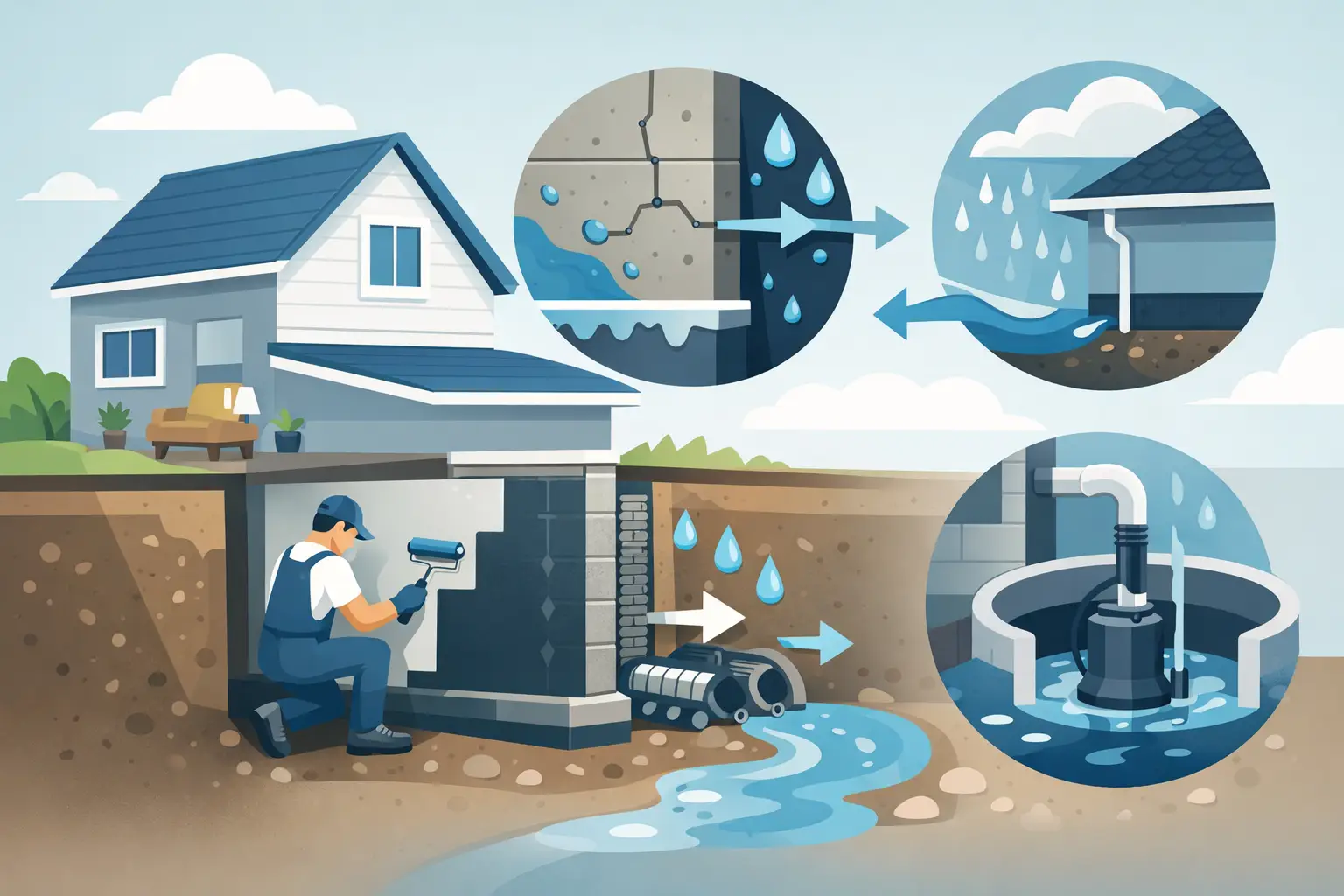
Waterproofing and water management are often grouped together, but they serve different purposes. Waterproofing creates a protective barrier at the foundation. Drainage systems collect and direct water away before pressure can build. The strongest results often come from combining both.
Exterior waterproofing membranes
Exterior waterproofing is usually the most complete option when a foundation has recurring leaks, significant soil moisture, or visible damage on outside walls. The work requires excavation around the affected foundation area. Once exposed, the wall is cleaned, cracks are repaired, and a waterproof membrane is applied. A protective drainage board may then be installed before the trench is backfilled.
This method stops water before it enters the concrete or masonry. It also gives contractors access to inspect the exterior wall for deteriorated mortar, open joints, cracks, and failed previous coatings. For homes with serious water intrusion, exterior waterproofing is often the durable long-term repair.
The trade-off is cost and site disruption. Excavation may require removing landscaping, sections of walkways, patios, or paving. Access can also be limited on tight lots. Still, when water pressure is consistently acting on the outside of the foundation, repairing the problem from the exterior is often the most reliable choice.
Exterior drainage systems
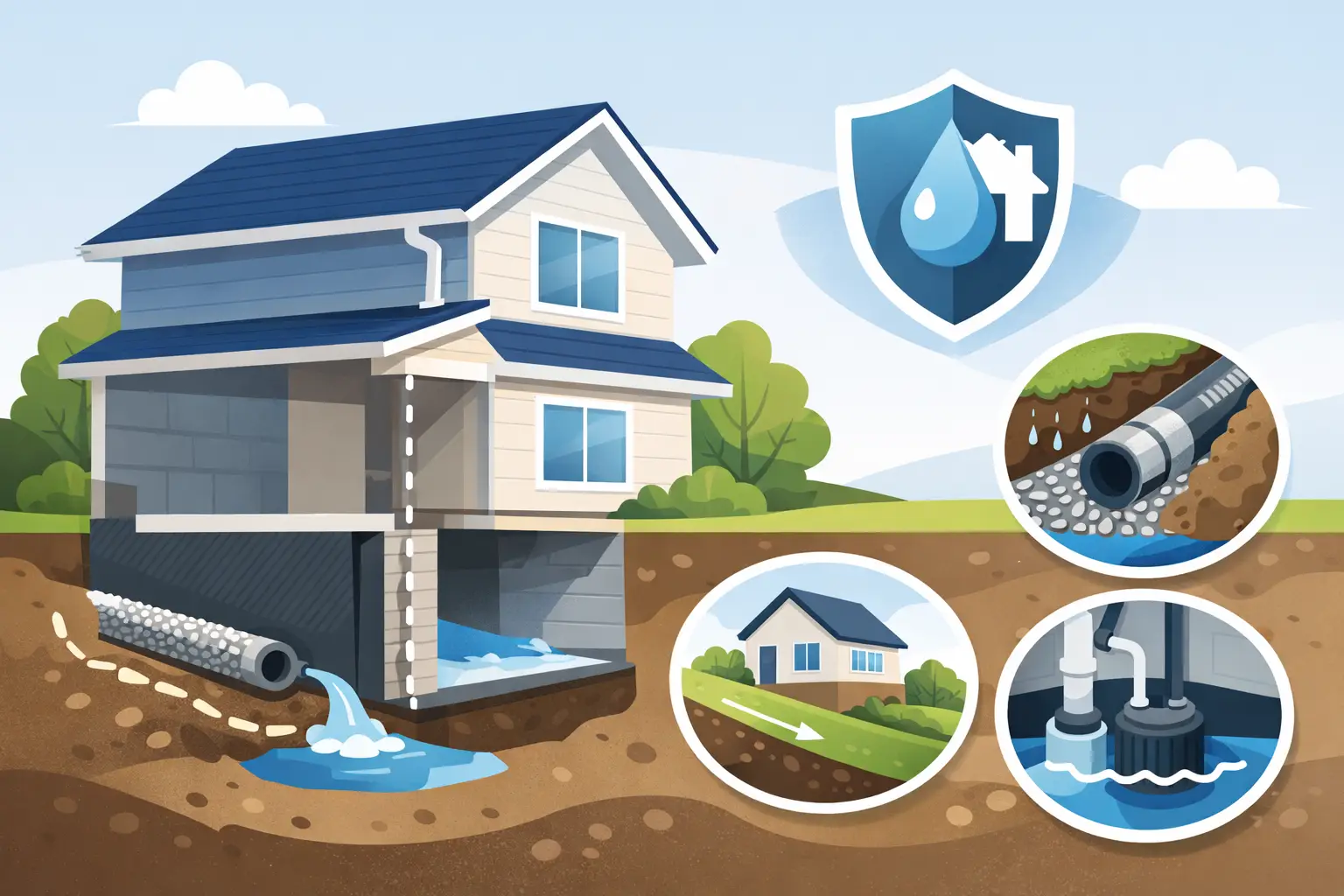
A footing drain, often called a French drain, is installed near the base of the foundation to collect groundwater and carry it to a suitable discharge point. It typically includes perforated pipe, clean stone, and filter fabric to reduce clogging from soil.
Drainage systems work best when grading, downspout extensions, and surface drainage are also handled properly. A new drain cannot perform as intended if roof water continues pouring beside the foundation or if dense soil traps runoff against the wall.
For older homes, failed or clogged footing drains are a common cause of wet basements. Replacing or adding drainage during exterior excavation can protect the waterproofing membrane and reduce hydrostatic pressure, which is the force created when water-saturated soil pushes against foundation walls.
Interior drainage and sump systems
Interior drainage is designed to manage water that reaches the foundation footing. Contractors install a channel along the inside perimeter of the basement, place drain pipe in clean stone, and direct collected water to a sump basin. A sump pump then discharges the water safely away from the home.
This is a practical solution when exterior excavation is not feasible, when access is restricted, or when groundwater is the main concern. It can also be less disruptive to exterior landscaping and hardscaping. However, interior drainage does not stop water from contacting the foundation wall. It controls the water after it reaches the footing.
A quality installation needs a correctly sized pump, a reliable discharge route, and a backup plan for power outages where needed. The discharge should carry water far enough away that it does not return to the foundation. A short pipe ending beside the house simply moves the problem in a circle.
Crack injection and masonry repair
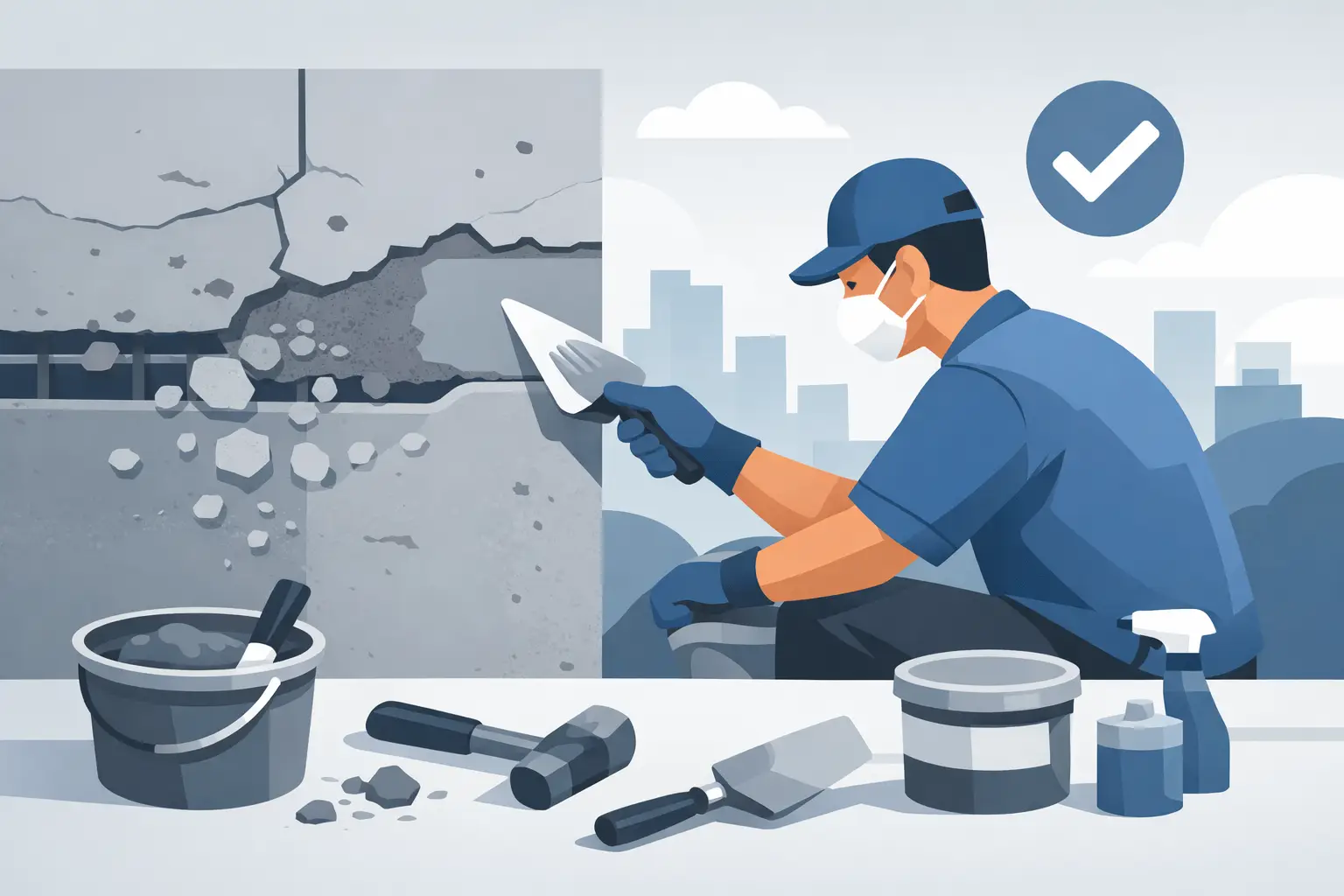
Not every foundation leak requires full excavation. A single non-moving crack may be repaired from the interior using polyurethane or epoxy injection. Polyurethane is commonly used for active water leaks because it expands to fill the crack. Epoxy provides structural bonding in suitable dry cracks, though the best material depends on the crack and the wall condition.
Crack repair is effective when the damage is isolated and the surrounding drainage is sound. It is not a substitute for correcting pressure caused by poor grading, broken drains, or saturated soil. If multiple cracks are appearing, walls are bowing, or masonry is crumbling, the property needs a more detailed structural assessment before cosmetic repairs are made.
For block, brick, and stone foundations, deteriorated mortar joints and damaged parging can create entry points for water. Repointing, parging repair, and protective exterior coatings may be part of a broader foundation protection plan. Sound masonry work matters because water entering through open joints can worsen freeze-thaw damage over time.
Grading Is Part of the Waterproofing System
Proper grading is one of the most valuable and overlooked foundation protection measures. Soil should slope away from the home so rainwater drains outward rather than collecting against the wall. Settling, landscaping work, and years of weather can gradually reverse that slope.
As a general rule, the ground should fall about 6 inches over the first 10 feet away from the foundation where site conditions allow. The goal is simple: water should leave the building perimeter quickly. This may involve adding clean fill, reshaping beds, repairing low areas, or adjusting nearby hardscaping.
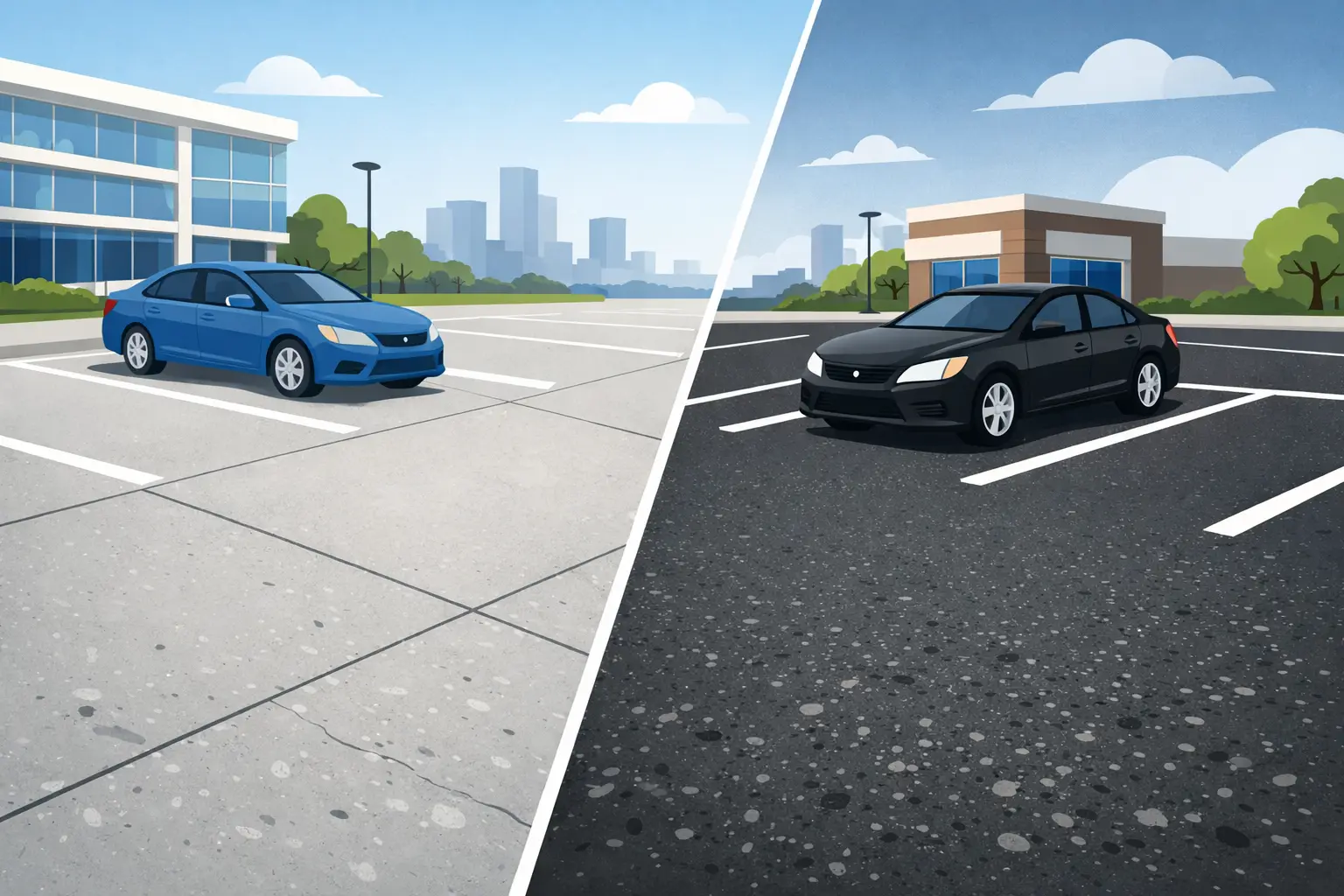
Driveways, patios, walkways, and retaining walls also affect drainage. A paved surface that pitches toward the house can direct water to the exact area homeowners are trying to protect. When repairing or installing exterior surfaces, drainage direction should be planned with the foundation in mind. Precision grading and durable drainage details protect both the paving and the structure below.
What Does Not Work as a Long-Term Fix
Some products have a place in minor maintenance, but they are often oversold as complete waterproofing solutions. Interior paint-on sealers can help reduce dampness on a sound wall, yet they are not designed to withstand ongoing water pressure. Caulking a visible crack may improve appearance, but it rarely reaches deep enough to stop a leaking foundation crack.
Likewise, extending downspouts without addressing a sunken grade, failed drain, or damaged wall may only solve part of the problem. Homeowners get the best value when the repair matches the source of water rather than the most visible symptom.
Be cautious with quick fixes that promise permanent results without an inspection of drainage, cracks, and exterior conditions. Foundation work needs clear diagnosis, quality materials, and workmanship built to perform through heavy rain, freezing weather, and seasonal soil movement.
Choosing the Right Scope of Work
A minor, isolated leak may be resolved with crack injection and improved surface drainage. A basement with repeated seepage along one wall may need exterior membrane work and a new footing drain. If water rises through the floor or appears around the entire perimeter during wet periods, an interior drainage system and sump pump may be the practical answer.
Ask for a clear explanation of the proposed method, where water will be directed, what repairs are included, and how landscaping or hardscaping will be restored. A dependable contractor should explain the limits of each option, not push one method for every property. The goal is strong, lasting protection with work that fits the home, site conditions, and budget.
Foundation moisture does not improve by waiting. Addressing drainage early, repairing cracks properly, and choosing a waterproofing method suited to the actual cause can keep a small warning sign from becoming a costly structural repair.