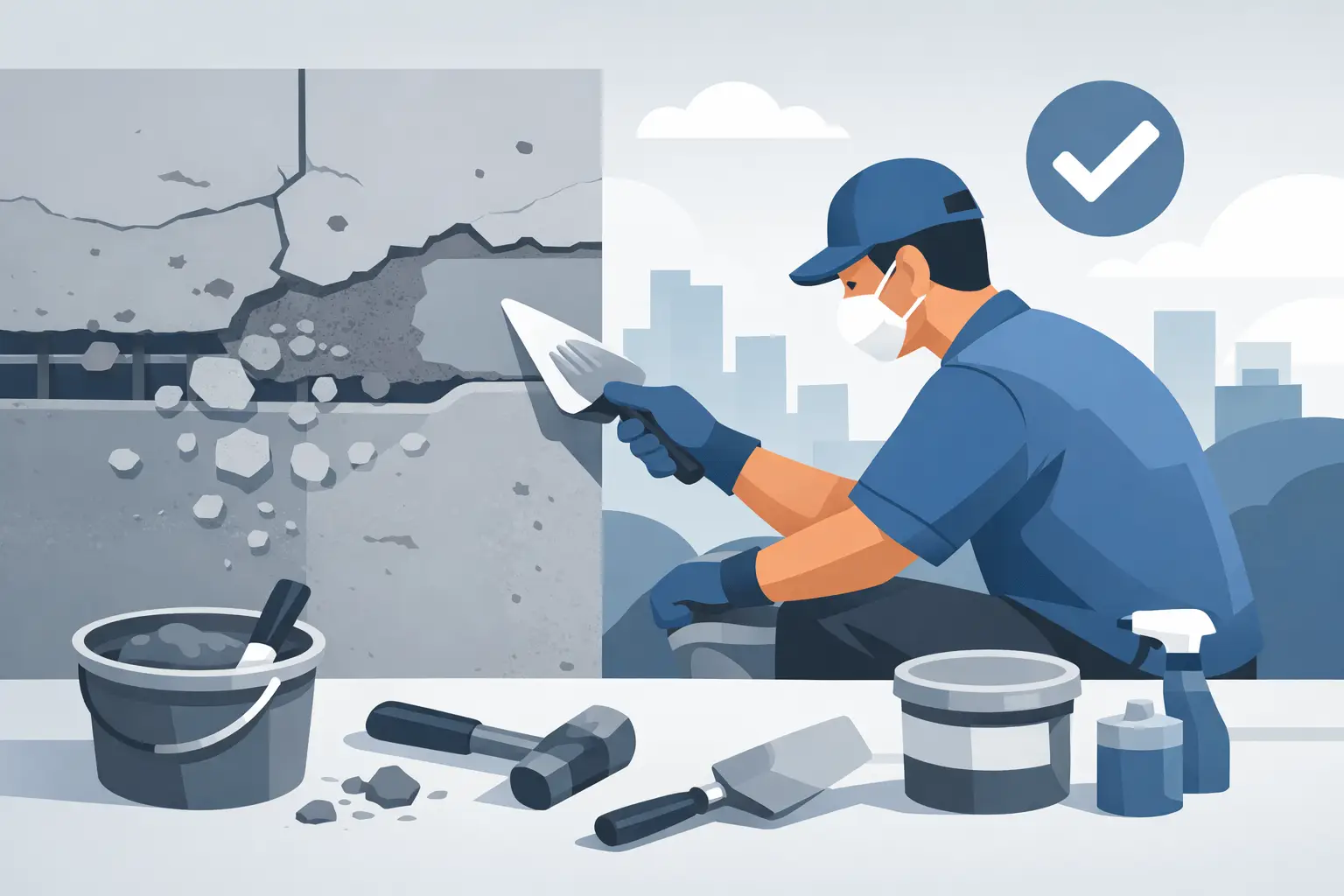
Concrete does not usually fail all at once. It starts with rough patches, small flakes, exposed aggregate, or shallow craters that spread across a driveway, step, patio, or concrete base. Knowing how to repair spalling concrete early can prevent a worn surface from becoming a larger safety, drainage, or structural problem.
Spalling concrete is repairable when the damage is caught in time. The key is not simply covering the damaged area with fresh cement. A lasting repair depends on removing weak concrete, preparing a clean bonding surface, using the right repair material, and correcting the moisture or movement that caused the damage in the first place.
What Causes Concrete to Spall?
Spalling happens when the top layer of concrete breaks away. In colder climates, repeated freeze-thaw cycles are a common cause. Water enters small pores or cracks, freezes, expands, and pushes the surface apart. De-icing salts can speed up this damage, especially on driveways, walkways, and entrance steps.
Other causes include poor concrete installation, weak surface finishing, inadequate curing, heavy vehicle traffic, poor drainage, and exposed reinforcing steel. When water reaches steel inside concrete, the steel can rust and expand. That expansion places pressure on the surrounding concrete until it cracks and breaks away.
A small amount of surface flaking may be a cosmetic repair. Deep spalling, widespread deterioration, cracking around a damaged area, or visible rusted rebar requires a closer assessment. The repair must match the cause and the condition of the slab.
When a Spalling Concrete Repair Is Suitable
A localized repair is often suitable when the damage is shallow and the remaining concrete is solid. For example, a few chipped areas on a porch, patio, garage floor, or driveway can often be repaired with a quality polymer-modified concrete patching material.
The decision changes when damage extends deeper than about an inch, covers a large portion of the surface, or involves structural concrete. Settlement, major cracks, loose slab sections, standing water, and exposed reinforcement are signs that a simple patch may not be enough. In those cases, repairs may involve deeper concrete removal, reinforcing steel treatment, drainage work, slab replacement, or resurfacing.
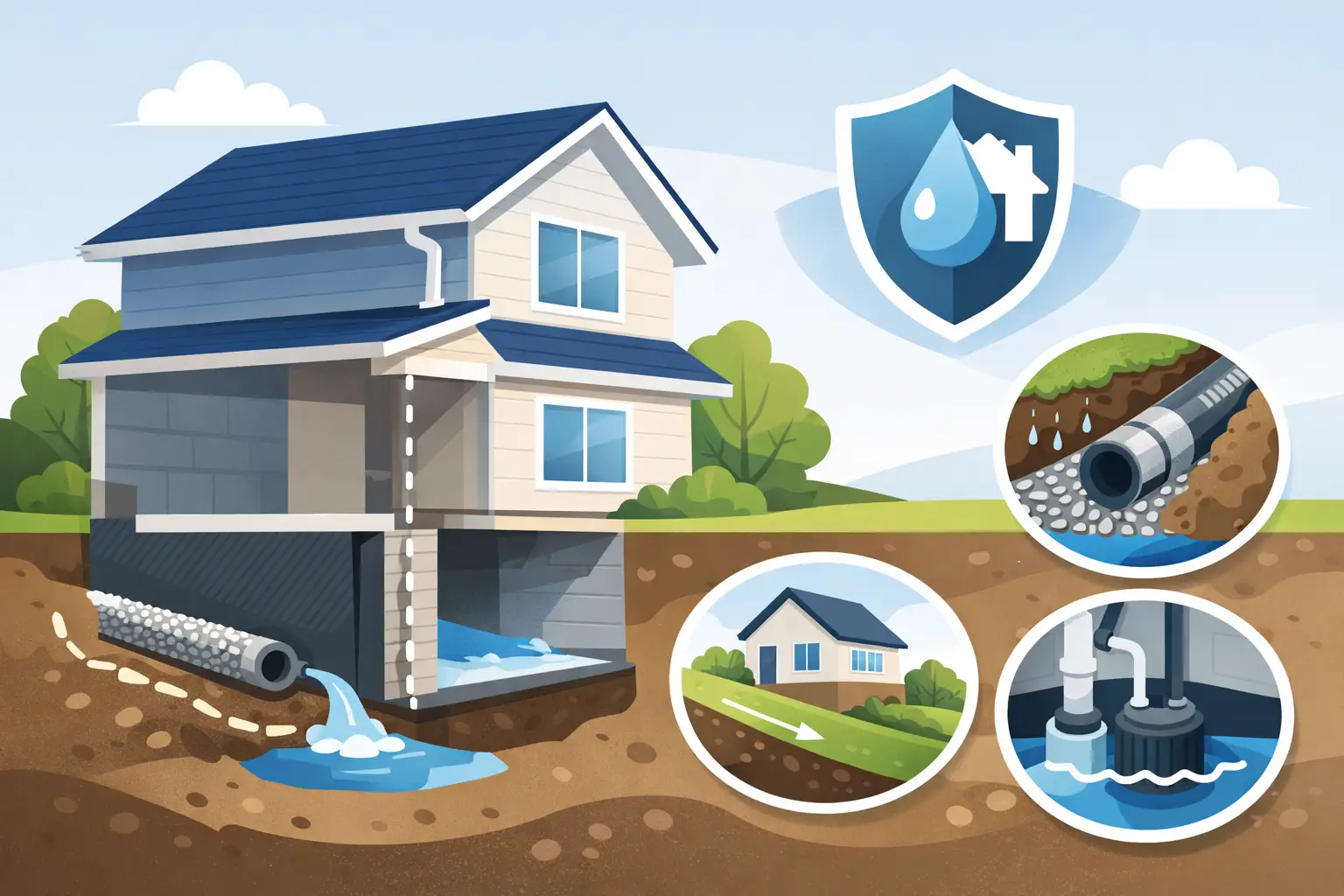
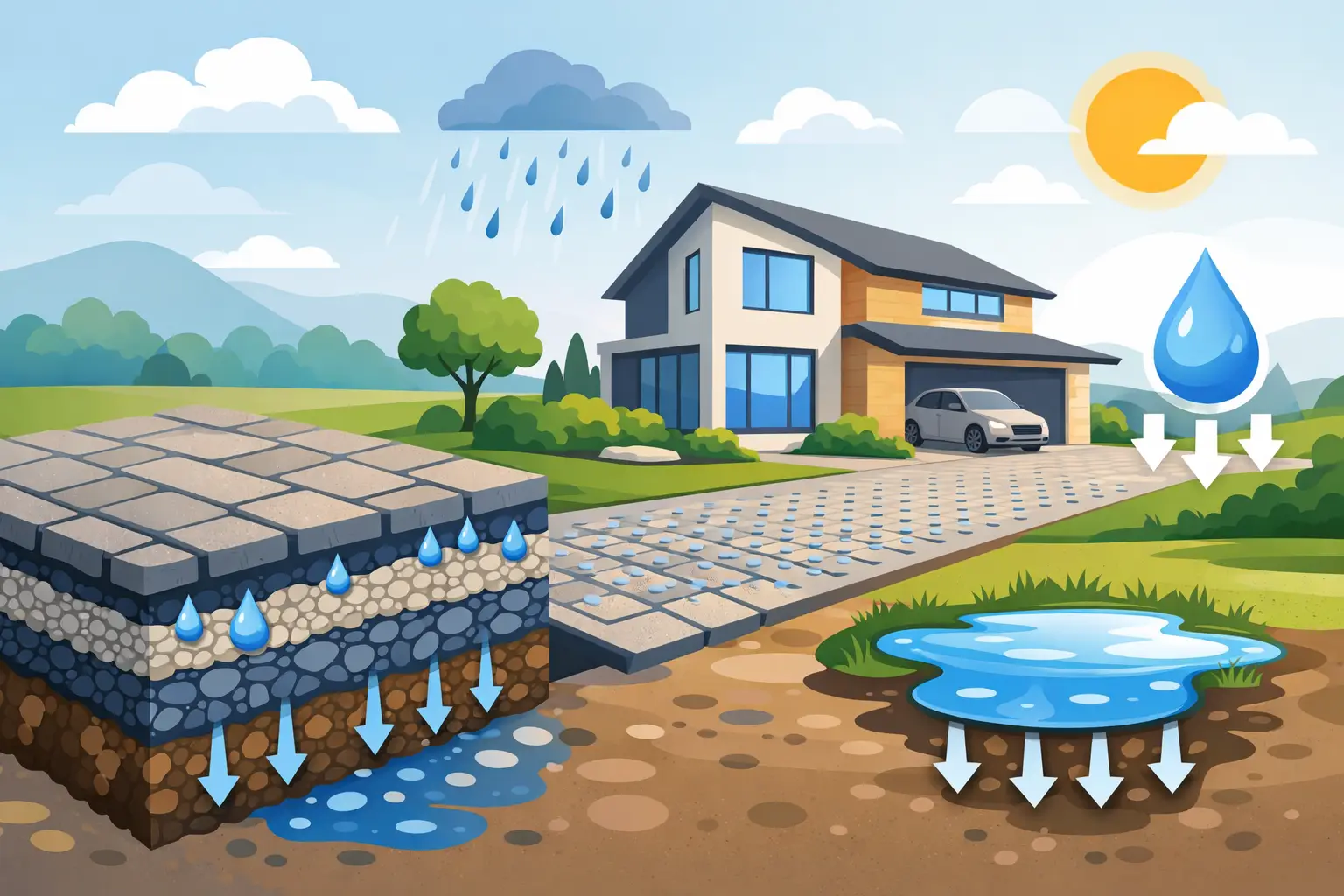
Patching weak concrete without addressing water flow is money wasted. If a downspout drains onto a walkway, the grade directs water toward a foundation, or a driveway holds water after rain, the repair may fail again during the next freeze-thaw season.
How to Repair Spalling Concrete Step by Step
Start by removing all weak concrete
The most important part of a concrete repair is preparation. Use a hammer and masonry chisel, chipping hammer, or appropriate mechanical tool to remove every loose, crumbling, hollow-sounding section. Continue until you reach solid concrete with firm edges.
Do not feather the patch into thin, weak edges. Square or slightly undercut the perimeter of the damaged area where possible. This gives the repair material a stronger edge to hold against and reduces the chance of peeling.
For larger repairs, the damaged area may need to be saw-cut before removal. This creates clean boundaries and helps protect surrounding concrete from unnecessary breakage.
Clean the repair area thoroughly
Once the weak concrete is removed, clean out all dust, dirt, salt, loose aggregate, and debris. A wire brush, shop vacuum, and pressure washing can help, depending on the size of the repair. The surface must be clean enough for the repair product to bond directly to sound concrete.
If steel reinforcement is exposed, remove rust with a wire brush or grinder until solid steel remains. Severe corrosion or steel that has lost significant thickness should be inspected by an experienced concrete contractor. Reinforcement is not cosmetic. It plays a direct role in the slab’s strength and performance.
Before applying repair material, dampen the concrete surface if the product instructions call for it. The surface should be damp but free of standing water. Dry, thirsty concrete can pull moisture from fresh patch material too quickly and weaken the bond.
Apply a bonding agent when required
Many repair systems use a concrete bonding agent or bonding slurry between the existing slab and the new patch. This step helps the new material grip the old concrete instead of separating after a season of weather and traffic.
Follow the product directions closely. Some materials are designed to be placed over a wet bonding coat, while others use a liquid additive mixed directly into the repair mortar. Mixing methods, working time, and temperature limits all affect the final result.
Use the right concrete repair material
For shallow spalls, a polymer-modified repair mortar is usually a better choice than ordinary concrete mix. It is designed for thinner applications, stronger bonding, and better resistance to shrinkage. For deeper repairs, use a material rated for the required depth and intended use.
A driveway repair needs a product that can handle vehicle weight, weather exposure, and de-icing conditions. A vertical foundation wall, step riser, or concrete edge may require a non-sag repair mortar that stays in place while curing. Using the wrong product can lead to cracking, delamination, or a patch that breaks under normal use.
Pack the material firmly into the prepared area to remove air pockets. Build it up in layers if the manufacturer specifies a maximum depth per application. Shape the repair slightly higher than the surrounding surface, then level it with a trowel or straightedge.
Match the finish and restore safe drainage
Finish the patch to match the surrounding surface as closely as possible. A smooth finish may work for a garage floor or patio, while a broom finish provides better traction on exterior steps and walkways. Avoid overworking the surface, which can pull excess water and cement paste to the top.
Maintain the original slope so water runs away from buildings and does not pond on the repair. This detail matters. Even a strong patch can deteriorate if water repeatedly sits on the surface, enters hairline cracks, and freezes.
Cure the repair before using the surface
Fresh repair material needs time to gain strength. Protect it from heavy traffic, rain, direct hot sun, and freezing temperatures during the recommended curing period. Do not rush vehicles back onto a driveway just because the surface feels hard.
Curing time depends on the product, repair depth, weather, and whether the area will carry foot traffic or vehicle traffic. A durable repair is built through proper curing, not just a clean-looking finish on day one.
Prevent Spalling From Returning
The repair itself is only one part of the job. Long-term performance comes from keeping moisture under control and protecting the concrete surface from harsh conditions.
Keep gutters and downspouts from discharging directly onto concrete. Repair cracks before water can work deeper into the slab. Make sure adjacent soil slopes away from foundations, steps, and walkways. On driveways and parking areas, correct low spots and drainage issues that allow water to collect.
Use de-icing products carefully. Rock salt can damage concrete, particularly older surfaces or concrete that was not designed for repeated salt exposure. Sand or products labeled as safer for concrete may provide better traction with less risk of surface damage. A properly selected concrete sealer can also help reduce water and salt penetration, but sealing should only be done after repairs have cured fully and the surface is dry and sound.
When to Call a Concrete Professional
A do-it-yourself patch can work well for small, shallow damage in an otherwise solid slab. Professional repair is the safer choice when concrete is breaking away around reinforcement, a step or slab is moving, the damage is widespread, or water problems are involved.
A contractor can determine whether the concrete needs patching, resurfacing, partial replacement, drainage correction, or a more structural repair. This prevents repeated short-term fixes and helps protect the surrounding driveway, foundation, patio, or entrance area.
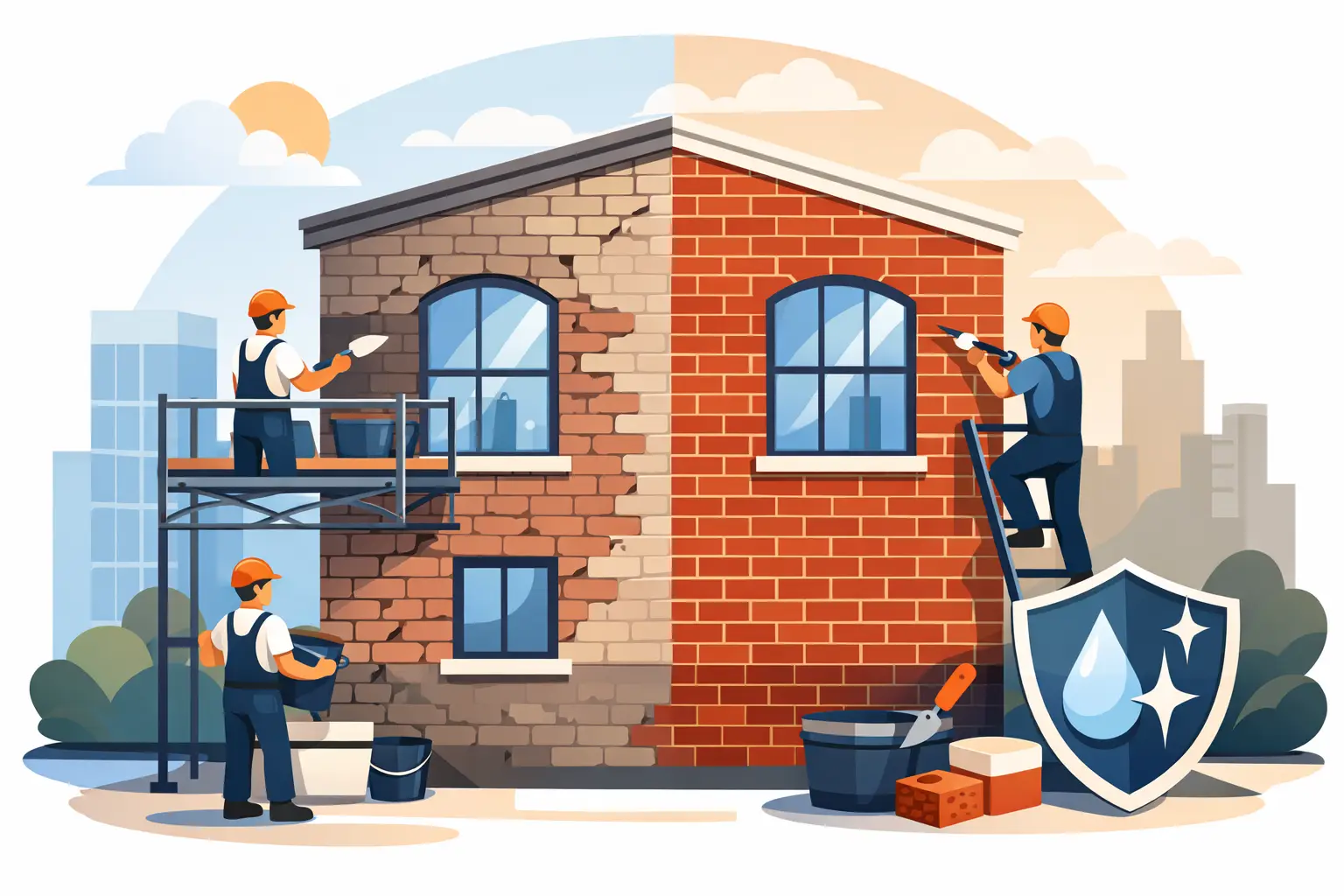
ASAP Paving And Masonry provides dependable concrete repair and site-preparation solutions built around strong surfaces, proper drainage, and lasting performance. A clear on-site assessment can identify the real source of spalling and provide a practical repair plan before minor damage becomes a larger project.