
A parking lot can look finished on opening day and still be set up for early failure. Water that has nowhere to go, turning lanes that are too tight, weak base preparation, and poor traffic flow all create problems long before the asphalt surface wears out. Good parking lot design starts below the pavement and works outward, giving vehicles, pedestrians, and water a clear place to go.
For business owners, property managers, and developers, the goal is not simply to fit the maximum number of spaces on a site. The goal is a safe, durable, reliable parking area that supports daily operations, protects the property, and controls long-term repair costs.
Parking Lot Design Starts With the Site
Every strong parking lot begins with a clear understanding of the existing ground conditions. Soil type, elevation changes, drainage paths, utility locations, building entrances, loading areas, and surrounding roads all affect the layout and construction method. A flat-looking site may still hold water after rain, while soft or unstable soil can shift under repeated traffic if it is not properly prepared.
Site preparation is where lasting performance is built. Excavation removes unsuitable material and creates the correct depth for the aggregate base and pavement. The base is then placed, graded, and compacted to support the intended traffic load. Skipping this work to save money often leads to rutting, alligator cracking, sinking edges, and potholes that return after patching.
The right pavement thickness also depends on use. A small office lot with passenger vehicles has different needs than a retail center with delivery trucks, a medical facility with frequent traffic, or an industrial yard with heavy equipment. Design the base and asphalt system for the heaviest regular vehicles, not just the average car.
Grading Must Move Water Away
Water is one of the most damaging forces in paved surfaces. When it enters cracks or reaches the base layer, it can weaken the structure below the asphalt. In colder climates, freeze-thaw cycles make the problem worse by expanding trapped moisture and opening cracks further.
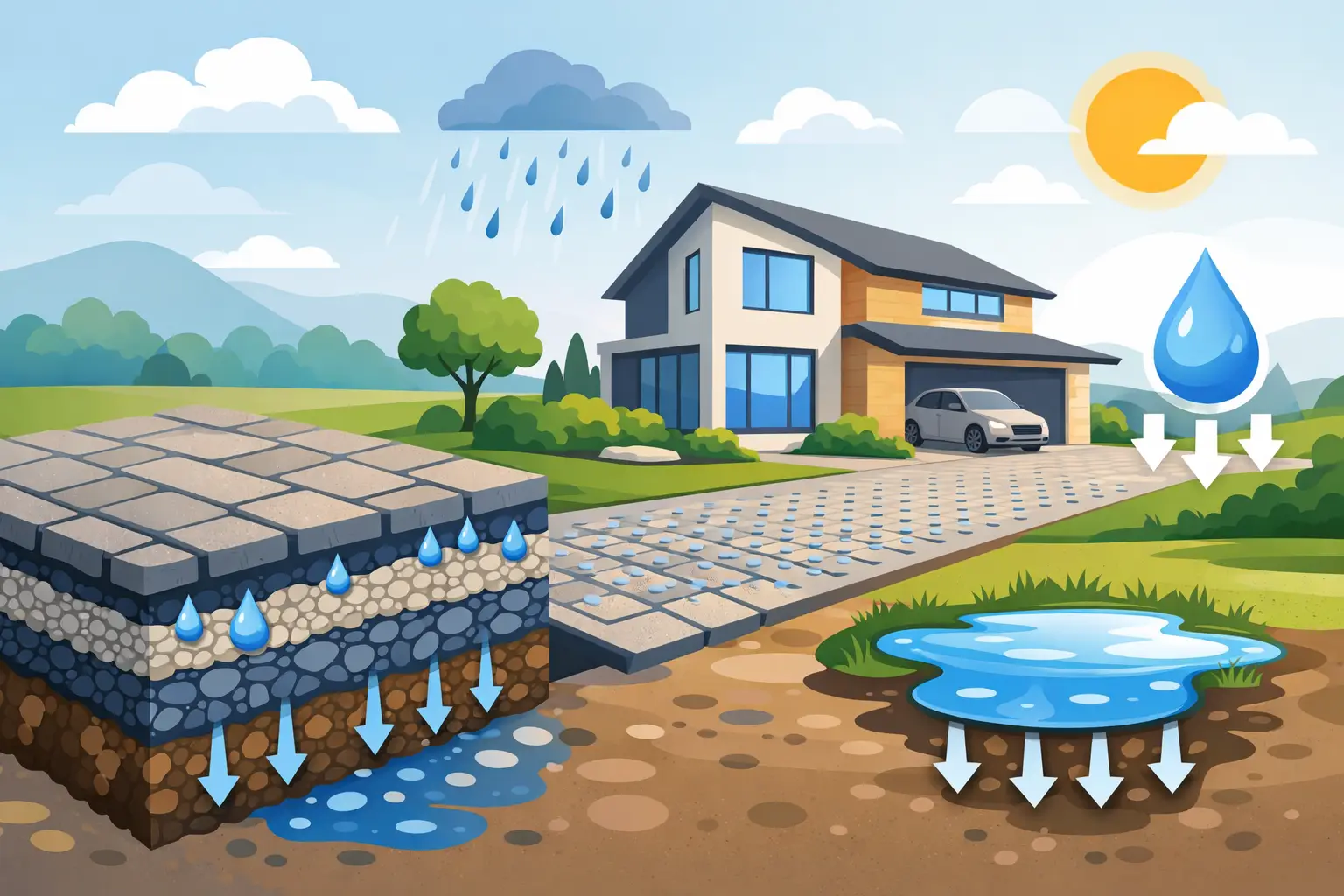
A properly graded lot directs water toward catch basins, swales, trench drains, or other approved drainage points. Pavement should have enough slope to drain consistently without making walking areas uncomfortable or sending runoff toward a building foundation. The exact approach depends on the site, but standing water should never be treated as a cosmetic issue. It is an early warning sign of a drainage or grading problem.
Plan Traffic Flow Before Marking Spaces
A reliable layout makes movement feel obvious. Drivers should be able to enter, find a space, travel through the lot, and exit without sudden stops, sharp turns, or confusion about right of way. When traffic patterns are unclear, minor collisions, blocked aisles, and frustrated customers become more likely.
The number and orientation of parking spaces should match the available area and the expected traffic pattern. Angled spaces can improve circulation in one-way aisles, while 90-degree spaces may provide greater capacity where two-way travel is practical. Neither option is automatically better. The best choice depends on lot dimensions, access points, vehicle size, and how quickly traffic needs to move during busy periods.
Entrances and exits also deserve careful attention. A driveway connection that is too narrow, poorly placed, or too close to an intersection can create backups that spill onto the street. Delivery vehicles need adequate turning space, and fire access routes must remain clear. For commercial and industrial properties, it is often worth separating customer parking from truck traffic whenever the site allows it.
Protect Pedestrians at Every Crossing Point
People on foot should not have to guess where vehicles are coming from. Walkways, crosswalks, curb ramps, signs, wheel stops, and visible pavement markings help create predictable routes between parking spaces and building entrances. Good lighting is equally important for early mornings, evenings, and poor weather.
Accessible parking spaces and routes must be included according to applicable local and federal requirements. These areas need more than a painted symbol. Proper space dimensions, access aisles, slopes, signage, curb ramps, and an unobstructed route to the entrance all matter. Requirements can vary by jurisdiction and property type, so the final plan should be checked against current code requirements before construction begins.
Build the Surface for Its Real Workload
The paved surface is only as strong as the foundation beneath it. A durable parking lot typically includes prepared subgrade, compacted aggregate base, and asphalt or concrete selected for the site conditions. Each layer has a job: the subgrade supports the system, the base spreads loads and helps drainage, and the surface handles traffic and weather exposure.
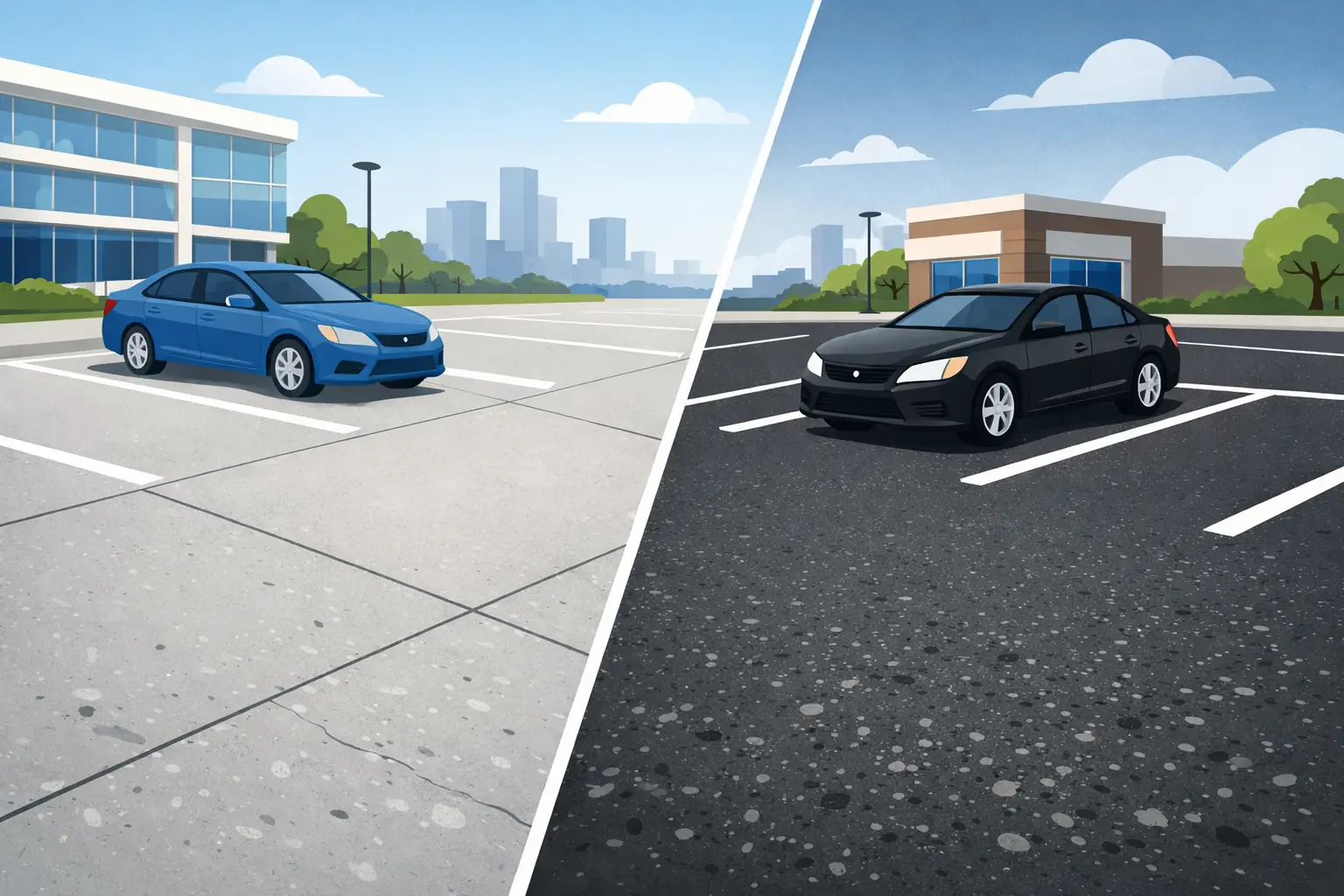
Asphalt is a common choice because it is efficient to install, flexible under changing temperatures, and practical to repair. Concrete can be a strong option in dumpster pads, loading zones, heavy truck lanes, curbs, and areas exposed to concentrated loads. Many commercial sites benefit from using both materials where each performs best.
Edges require special attention. Asphalt without proper edge support is more likely to crack and break apart as vehicles travel too close to the boundary. Concrete curbs, stable shoulders, and well-designed transitions can help protect the pavement edge while improving drainage and appearance.
Do Not Treat Drainage Structures as an Afterthought
Catch basins, manholes, trench drains, and pipe connections should be coordinated with final paving elevations. If structures sit too high or too low, water may pond around them or vehicle traffic may damage the surrounding pavement. Drainage structures also need strong repair details where asphalt meets concrete frames.
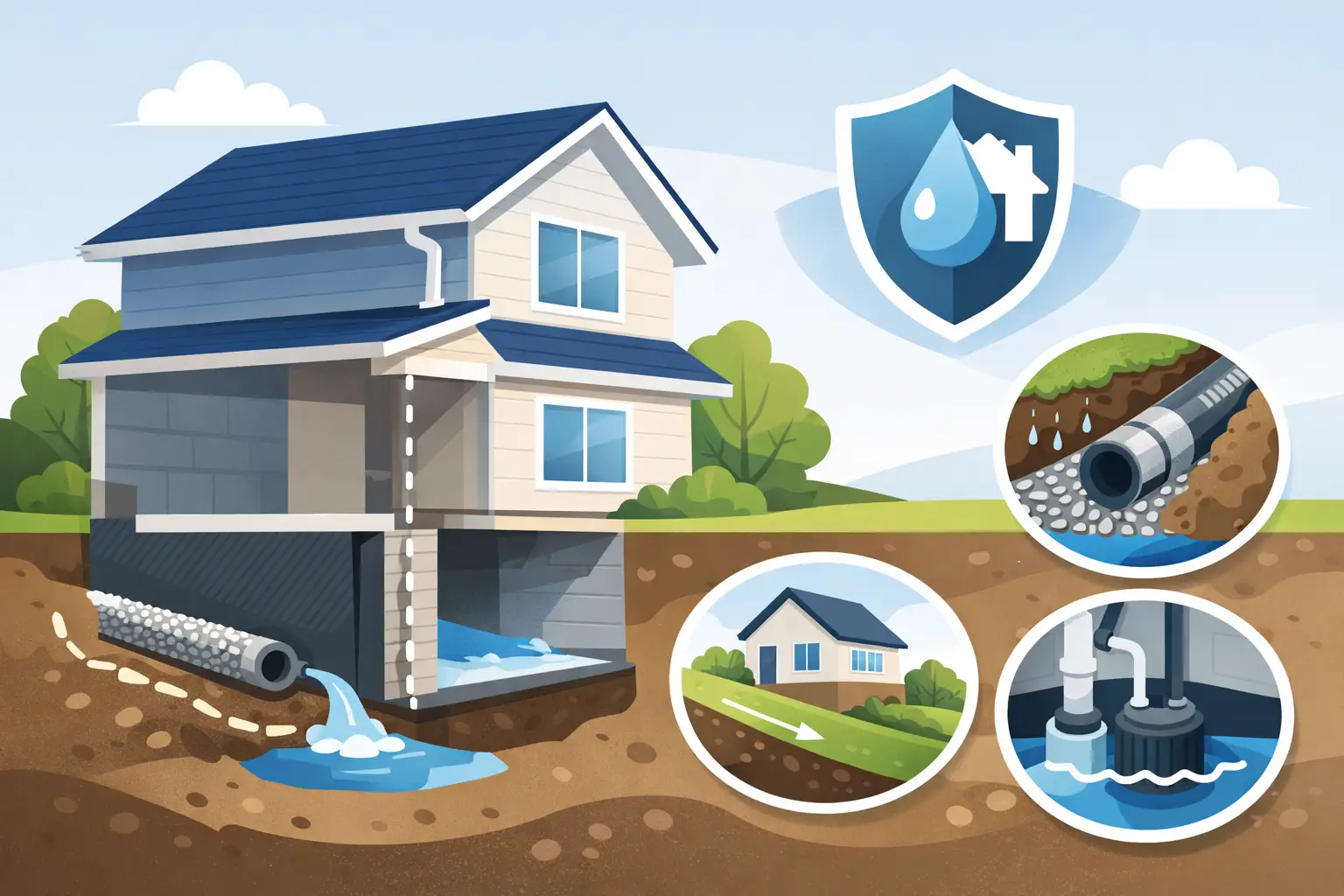
On sites with recurring water issues, a wider solution may be needed. That can include regrading, new drainage lines, catch basin repair, French drains, or improved discharge points. Surface patching alone will not solve a problem caused by water moving below the pavement.
Use Markings, Signs, and Lighting to Keep the Lot Working
Striping is the final layer of organization, not a substitute for good layout. Clearly marked spaces, directional arrows, stop bars, fire lanes, loading zones, pedestrian crossings, and accessible areas help people use the property safely. Faded or inconsistent markings can make even a well-built lot harder to navigate.
Signs should reinforce the traffic plan without cluttering the property. Drivers need clear guidance at entrances, intersections, accessible spaces, speed-control areas, and restricted zones. Lighting should cover walkways, entrances, parking rows, and payment or pickup areas without creating harsh glare for drivers or nearby properties.
A clean, organized finish also supports curb appeal. Customers often form an opinion about a business before they walk through the door. Smooth pavement, sharp striping, working drainage, and well-maintained curbs show that the property is managed with care.
Plan for Maintenance From the Beginning
Even the best parking lot needs regular care. Sealcoating, crack filling, drainage cleaning, line repainting, and timely repairs protect the investment and extend pavement life. Waiting until potholes are widespread usually means the damage has already reached deeper layers.
A practical maintenance plan starts with inspections after winter, heavy rain, and periods of high traffic. Look for standing water, open cracks, loose edges, depressions, clogged drains, and areas where vehicles are rutting the surface. Addressing these concerns early is more affordable than rebuilding failed sections later.
Property owners should also plan for phased work when operations cannot stop. Repairs can often be scheduled by section, keeping customer access, employee parking, and delivery routes open as much as possible. Clear scheduling and proper traffic control make a major difference on active commercial sites.
Choose Construction That Solves the Whole Problem
A new layout or resurfacing project should not focus only on fresh asphalt. The strongest results come from looking at the full system: excavation, soil preparation, base installation, drainage, paving, concrete work, curbs, and final markings. When these parts are planned together, the lot is better equipped to handle weather, traffic, and daily use.
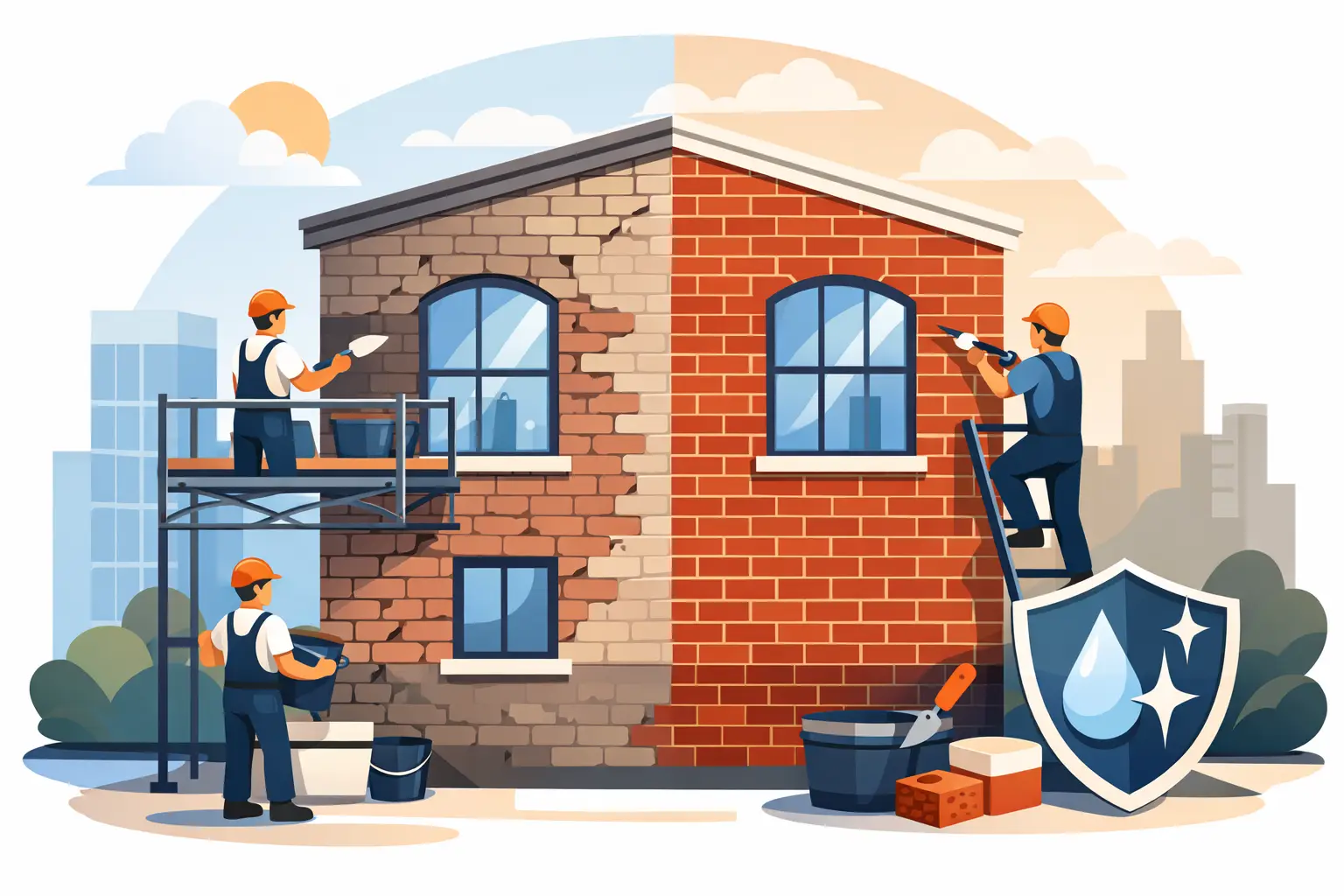
ASAP Paving And Masonry approaches parking areas with that full-site perspective. From grading and drainage control to durable paving and concrete details, the work is built to perform under real conditions, not just look good when the crew leaves.
If your property has standing water, cracking pavement, confusing traffic patterns, or limited access for larger vehicles, start with an on-site assessment before the damage grows. A clear plan and a properly built foundation can turn a recurring repair problem into a parking area that serves the property reliably for years.