Water does not need a major flood to damage a foundation. A roof runoff path that ends beside the wall, a low area in the yard, or a driveway that slopes toward the house can keep soil wet for weeks. Over time, that moisture creates pressure against foundation walls, worsens cracks, and can lead to leaks, settlement, and costly repairs. The best foundation protection options control water before it reaches the structure and correct the conditions that keep it there.
For most properties, foundation protection is not one product or one repair. It is a system of grading, drainage, sound masonry, and durable surface work designed around the building and the site. The right solution depends on the soil, slope, existing cracks, roof drainage, and how water moves across the property during heavy rain or snowmelt.
Start With Water Flow, Not Just the Crack
A crack is often the visible symptom, not the original problem. Filling it may be part of a proper repair, but crack filling alone will not stop recurring damage if water continues to collect against the foundation.
Walk the property after rainfall and look for standing water near exterior walls, overflowing gutters, downspouts that discharge too close to the house, eroded soil, or pavement that directs runoff toward the building. Indoors, watch for damp basement corners, musty odors, peeling finishes, white mineral deposits on masonry, and cracks that grow or shift over time.
A professional site assessment identifies where water starts, where it travels, and where it should be directed. That approach prevents spending money on a temporary fix while the real source of moisture remains in place.
The Best Foundation Protection Options for Lasting Results
Regrading the Property
Proper grading is one of the strongest and most cost-effective forms of foundation protection. The ground around a building should slope away from the foundation so surface water naturally moves outward rather than pooling beside the wall.
Settlement, landscaping changes, and old construction can leave the soil nearly level or sloped inward. Regrading restores a controlled fall away from the home or commercial building. Depending on the site, this may involve adding and compacting suitable fill, reshaping lawn areas, and creating swales that carry water toward a safe drainage area.
Grading works best when the soil can be reshaped without blocking vents, covering siding, or creating a trip hazard at walks and entrances. It is a practical first step for many properties, but it may not be enough on a steep lot, a clay-heavy site, or an area with persistent groundwater.
Downspout Extensions and Roof Runoff Control
A single roof can collect a large volume of water during a storm. If downspouts empty at the base of the foundation, that water saturates the exact area that needs to stay stable and dry.
Extensions, buried discharge lines, and properly positioned splash control move runoff farther from the building. The discharge point must be planned carefully. Sending water toward a neighbor’s property, a driveway, or a low area that drains back toward the house simply shifts the problem.
This is often a straightforward improvement, but it should be combined with clean gutters and sound grading. Roof water needs a reliable path from the eaves to an approved, well-drained location.
Exterior Drain Tile and French Drains
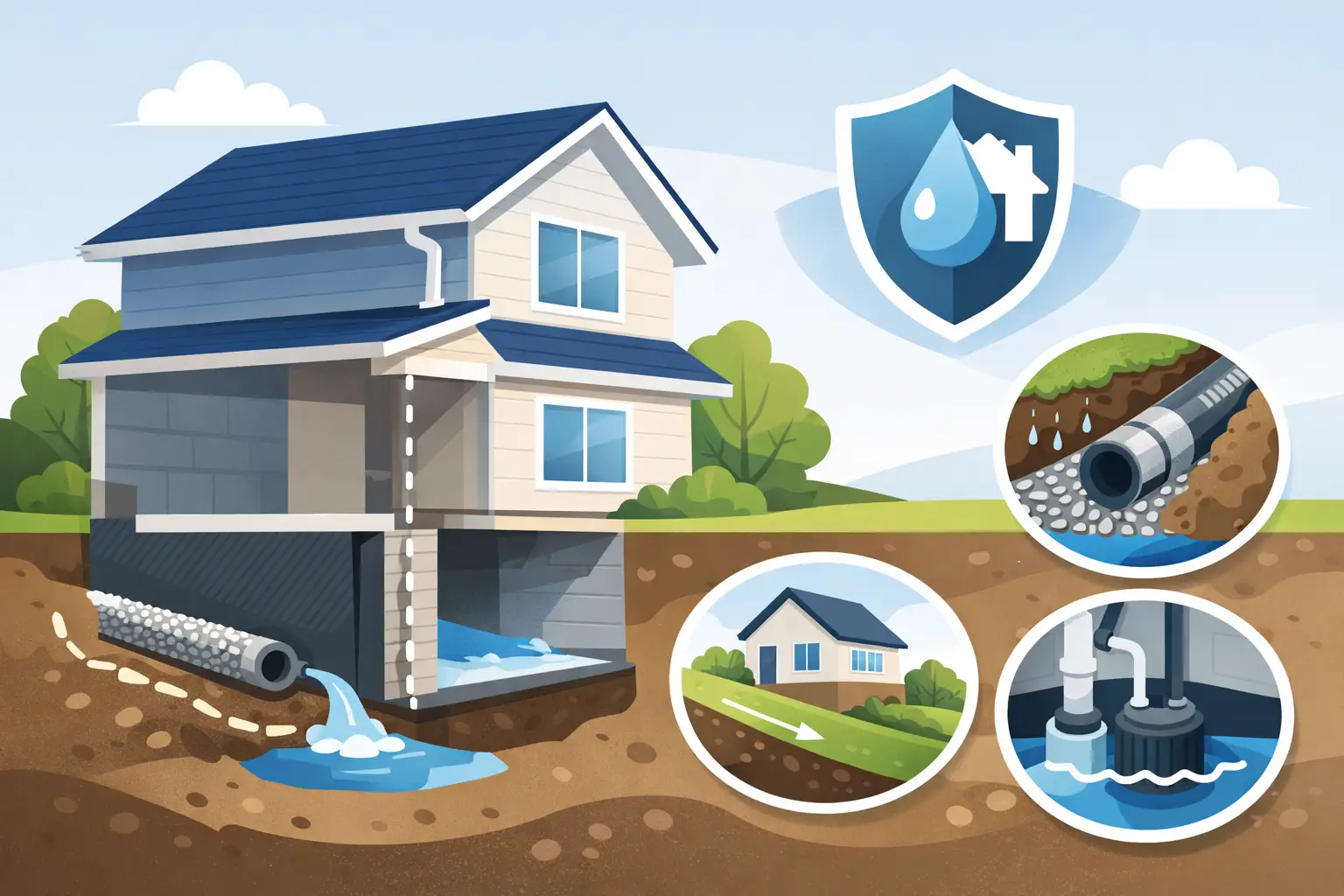
Where water collects below the surface, an exterior drainage system can provide dependable protection. Drain tile is installed around the foundation footing to collect groundwater and carry it to a suitable outlet, sump connection, or drainage point. French drains can also intercept surface and subsurface water before it reaches vulnerable walls or paved areas.
This work requires excavation, proper pipe slope, clean drainage stone, filter fabric, and careful backfilling. Shortcuts can cause the pipe to clog or leave water trapped against the structure. A drainage system should be built to perform below grade, where future repairs are more disruptive and expensive.
Exterior drains are especially useful for properties with wet basements, heavy clay soil, hillside runoff, or recurring water pressure against below-grade walls. They are a larger investment than surface grading, but they address moisture at a deeper level.
Exterior Waterproofing Membranes
When foundation walls have active water intrusion or require excavation for repair, exterior waterproofing is often the most complete solution. After the wall is exposed and cleaned, damaged areas can be repaired before a waterproof membrane and protective drainage layer are installed.
Waterproofing keeps moisture from passing through the foundation wall, while the drainage layer helps direct water down to the perimeter drain. Together, they reduce hydrostatic pressure and protect masonry from repeated saturation, freeze-thaw exposure, and deterioration.
The quality of preparation matters as much as the membrane itself. Loose parging, open joints, failed mortar, and structural cracks should be addressed before the wall is covered. Exterior waterproofing is labor-intensive because excavation is involved, but it protects the wall from the outside, where the water pressure begins.
Foundation Crack Repair and Parging
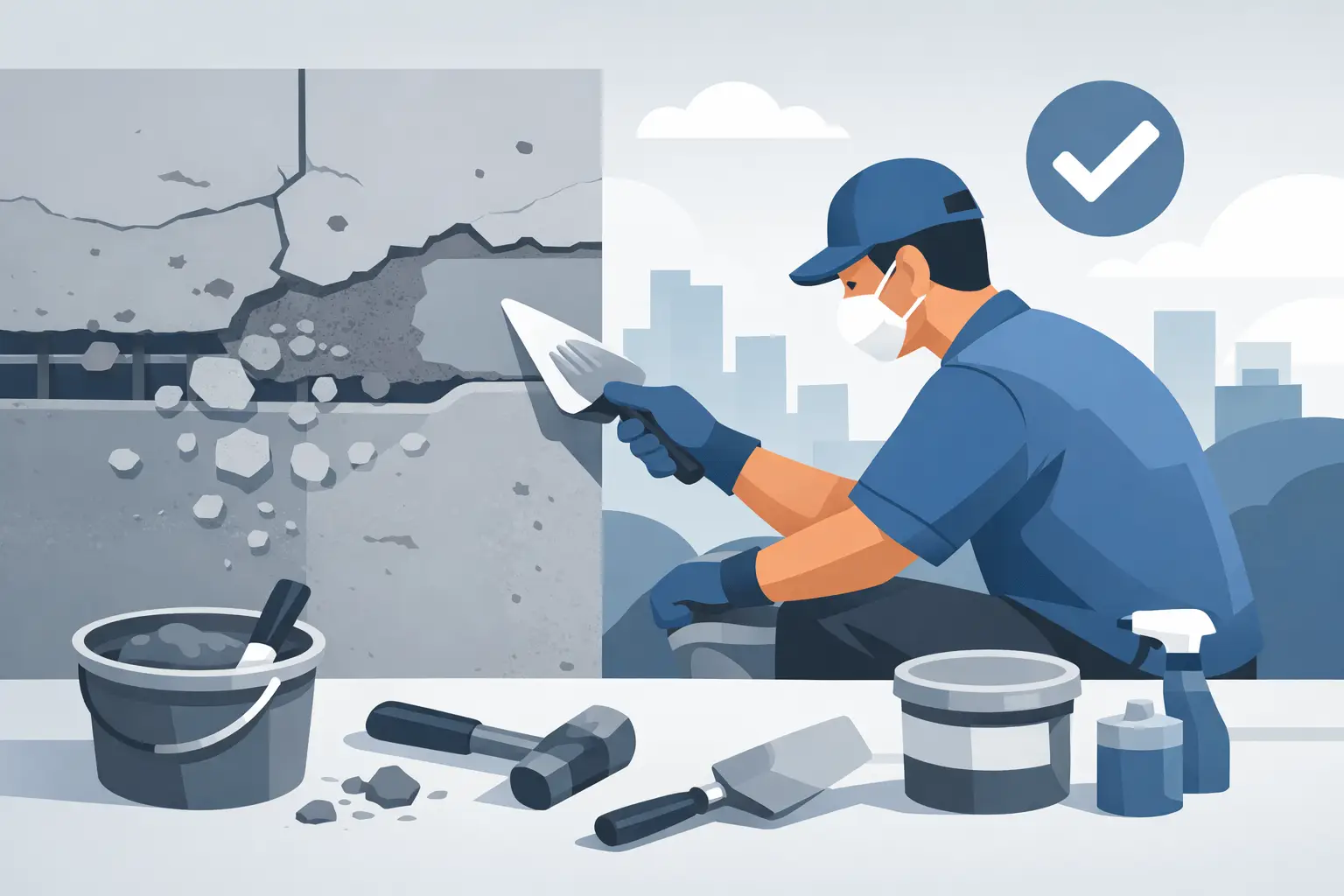
Small surface cracks may be cosmetic, but wider, leaking, horizontal, or changing cracks deserve prompt attention. The repair method depends on the crack type, wall material, and cause. Some cracks can be sealed or injected. Others may require masonry repair, reinforcement, or correction of drainage and soil pressure around the foundation.
Parging provides a clean, protective finish on exposed foundation walls. It can help shield masonry from weather while improving the appearance of the base of the building. However, parging is not a substitute for waterproofing or structural repair. Applying a new finish over an active moisture issue can hide the symptoms for a short time without correcting the source.
A lasting repair treats the wall and the water conditions around it as one job. That is how foundation work stays strong through changing seasons.
Driveway, Patio, and Walkway Drainage Corrections
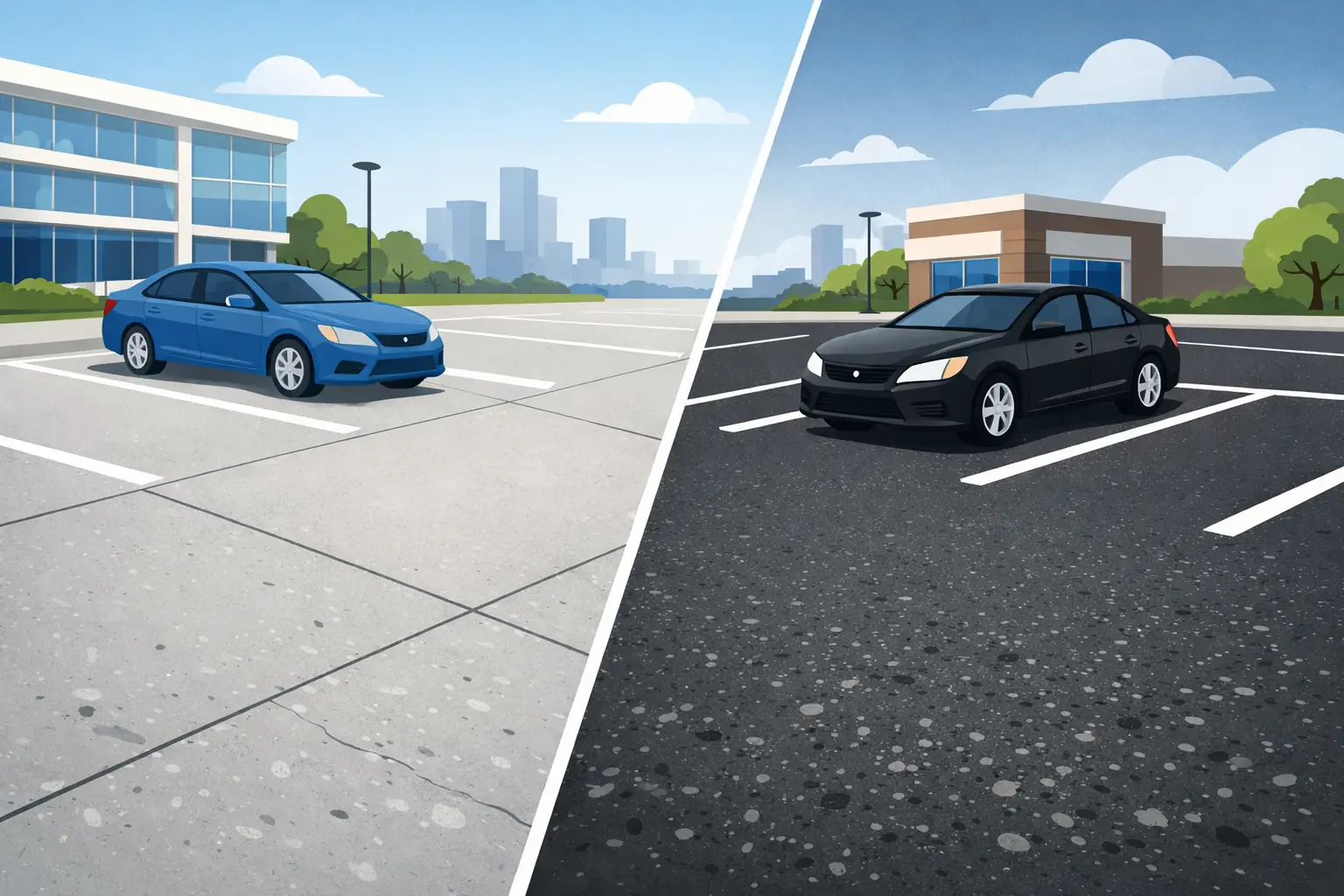
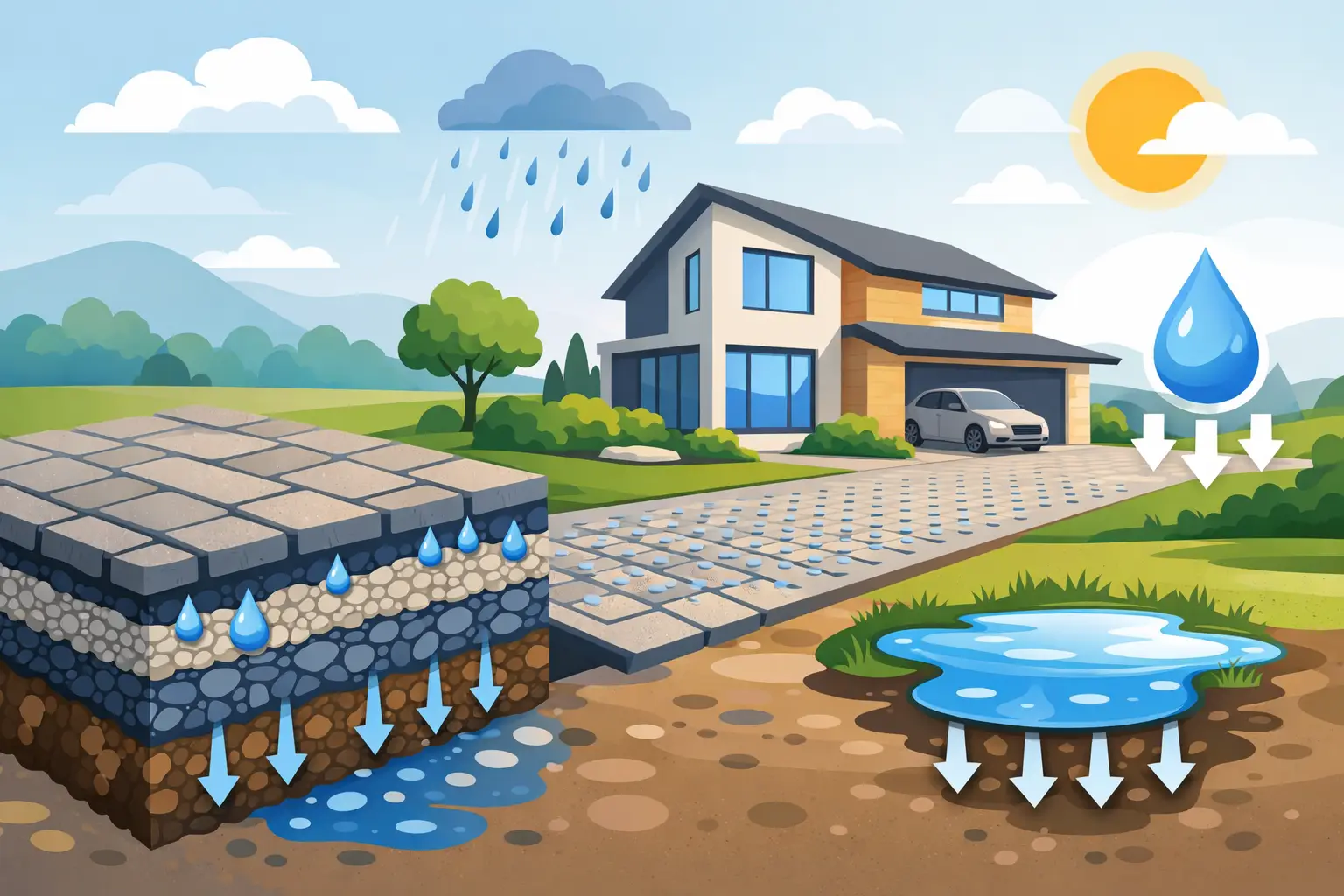
Hard surfaces can either protect a foundation or direct water straight toward it. A driveway, patio, walkway, or concrete pad that slopes toward the building concentrates runoff at the foundation line. Cracked pavement can also allow water to seep into the base material, soften soil, and create movement near the structure.
Repairs may include re-sloping a surface, installing a channel drain, rebuilding a failed base, sealing joints, or replacing damaged sections. The goal is simple: create a durable surface that sheds water away from the building while remaining safe for vehicles and foot traffic.
This is particularly important for commercial properties and high-use areas. Heavy traffic, poor drainage, and freeze-thaw cycles can break down paved surfaces quickly when the base is wet or unstable.
Choosing the Right Level of Protection
The best choice depends on what the property is telling you. If the issue is occasional surface puddling, grading and downspout improvements may solve it. If water enters a basement during storms, an exterior drainage system and waterproofing may be needed. If cracks are widening, walls are bowing, or floors are settling, the property should be evaluated before cosmetic repairs are made.
Budget matters, but so does the cost of repeated patchwork. A lower-cost surface fix can be sensible when the foundation is dry and stable. It is less sensible when there is clear evidence of below-grade water pressure or ongoing movement. A tailored estimate should explain the cause, the recommended scope, and what each part of the work is designed to prevent.
For new construction, renovations, and major hardscaping projects, plan foundation protection early. Excavation, grading, drainage, retaining walls, and paving should work together. Installing a new patio or driveway without considering water flow can create a problem that did not exist before.
Build Protection Into Routine Maintenance
Foundation protection needs periodic attention, even after professional work is complete. Keep gutters clear, check that downspout outlets remain open, and avoid piling mulch or soil against exterior walls. After winter and major storms, inspect for new erosion, pooling water, shifted pavers, cracked concrete, and changes in foundation walls.
Do not ignore small warning signs. Moisture and soil movement rarely improve on their own, and early repairs are usually more manageable than rebuilding damaged masonry or correcting a failed drainage system later.
A strong foundation starts with water control, precise site work, and materials built to last. When water has a clear path away from the building, the entire property has a better chance of staying dry, stable, and ready for years of regular use.