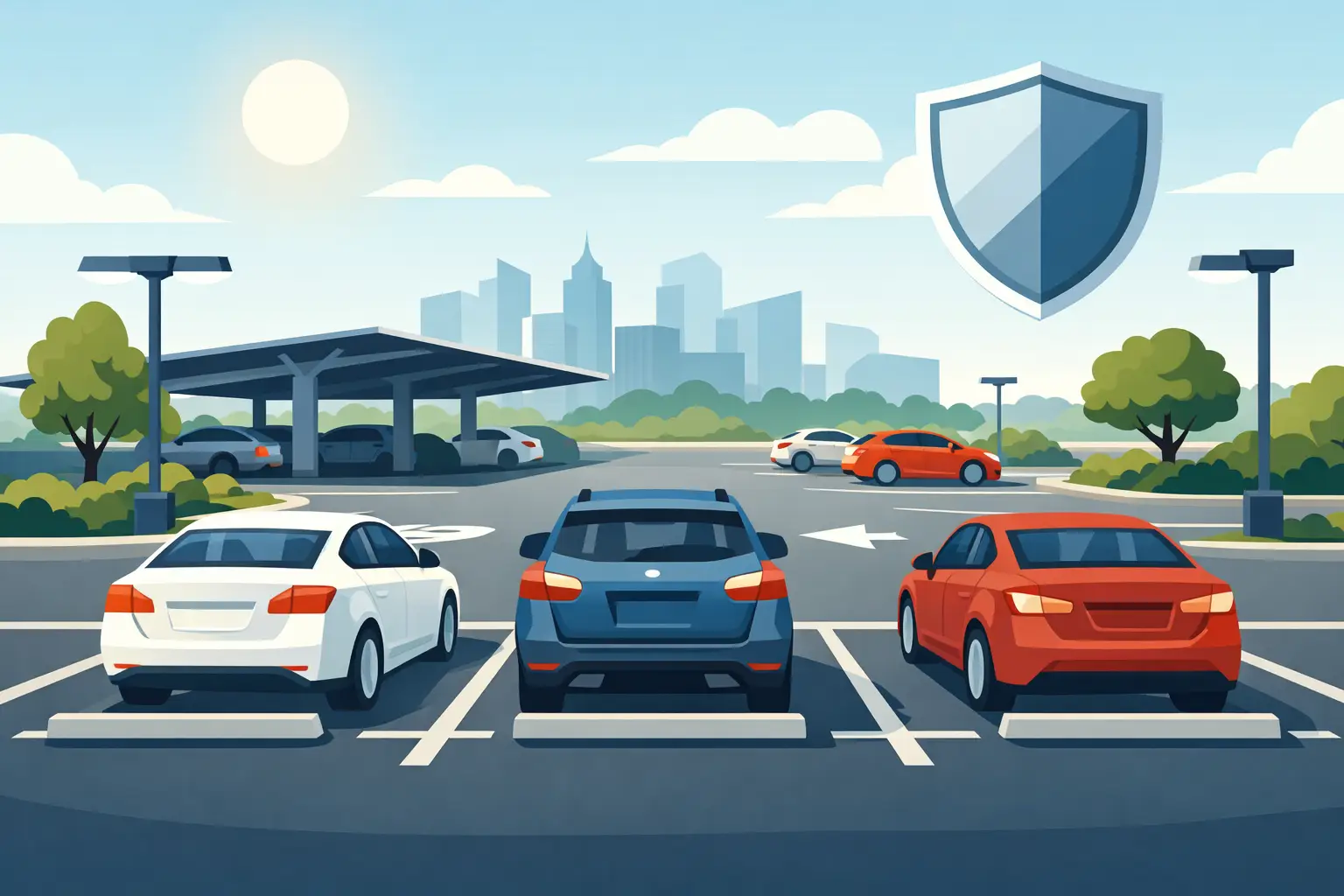
A parking lot takes more punishment than most exterior surfaces. Cars turn in place, delivery vehicles brake hard, water settles after storms, and freeze-thaw cycles work on every joint and crack. When choosing concrete versus asphalt parking surfaces, the right answer depends on traffic, site conditions, budget, drainage, and how long you plan to own the property.
Both materials can deliver a strong, dependable parking area when they are installed over a properly prepared base. The surface alone does not determine performance. Grading, excavation, compaction, drainage, thickness, and edge support all play a major role in whether a lot stays smooth and reliable or begins to fail early.
Concrete Versus Asphalt Parking Surfaces: The Main Difference
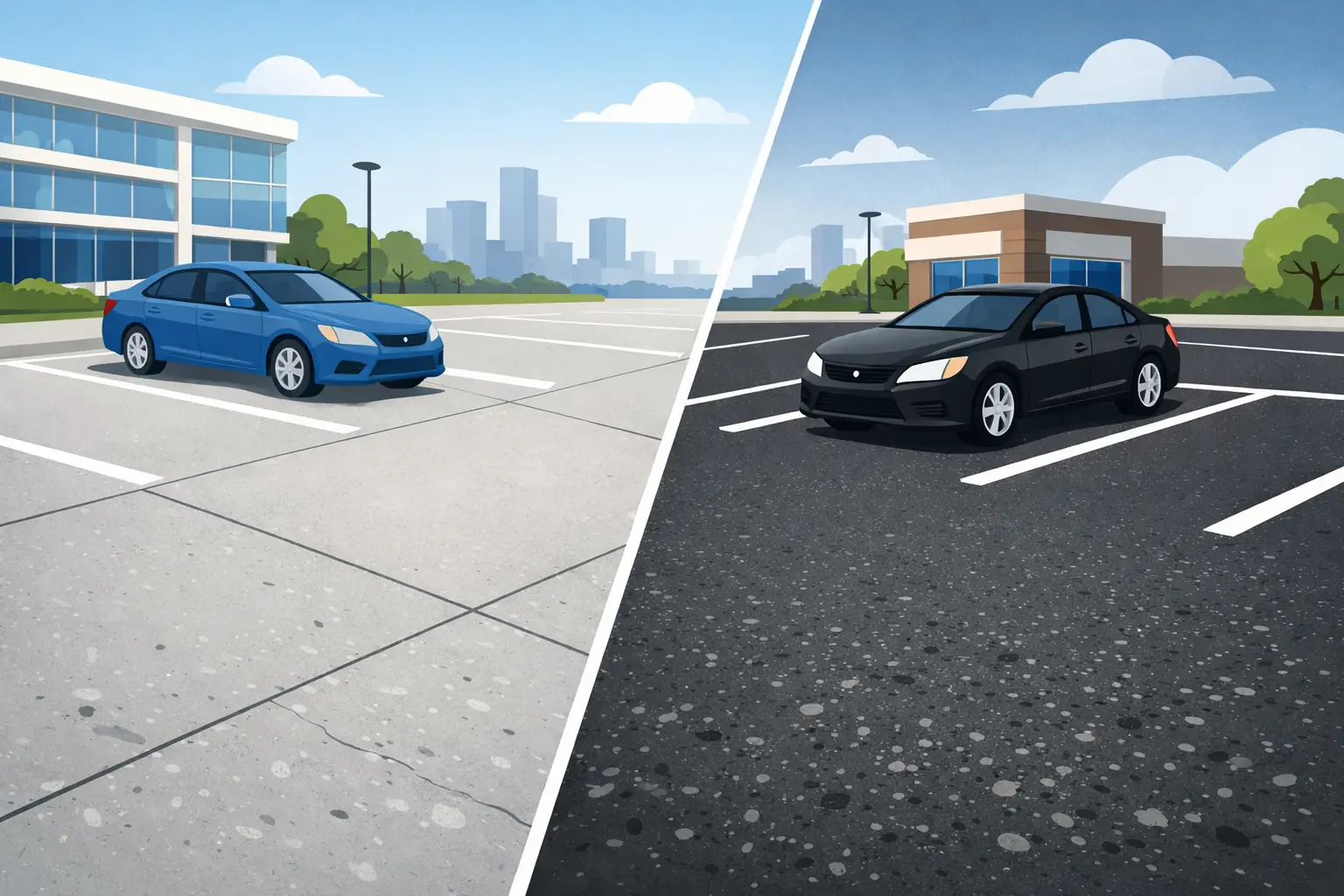
Concrete is a rigid pavement. It carries vehicle weight through a hard slab that spreads the load across the prepared base below. Asphalt is a flexible pavement made with aggregate and asphalt binder. It has more give under traffic and depends on a well-compacted stone base for support.
That difference affects nearly every decision. Concrete generally costs more to install, lasts longer in the right conditions, and handles concentrated heavy loads well. Asphalt is typically less expensive at the start, can be installed and reopened more quickly, and is easier to patch or modify when utility work is needed.
Neither material is automatically better. A lightly used office lot, a busy retail parking area, and an industrial yard have very different demands. Choosing based on the lowest initial price alone often leads to recurring repairs, water problems, and a surface that does not match the site.
Initial Cost and Long-Term Value
Asphalt is usually the more affordable option upfront. Its installation process is efficient, especially for larger areas, and it can be a practical choice for property owners who need a clean, durable parking surface without the higher starting investment of concrete.
Concrete costs more because of material, forming, finishing, reinforcement where required, and curing time. For a property with steady vehicle use and a long ownership horizon, that added investment can make sense. A properly designed concrete lot can provide many years of service with fewer routine resurfacing needs.
Long-term value should include maintenance, not just installation. Asphalt needs regular crack filling and seal coating to protect the binder from water, oxidation, fuel drips, and sunlight. Concrete does not require seal coating in the same way, but cracked slabs, joint failure, scaling, or settling can be more involved to repair.
The best budget is the one that accounts for the full life of the surface. A reliable contractor should explain what preparation and maintenance the project requires before work begins, not after problems appear.
Durability Under Traffic
Concrete performs well where vehicles are heavy or make repeated tight turns. Loading zones, dumpster pads, truck lanes, fire lanes, and commercial entrances can benefit from concrete because it resists rutting and deformation under concentrated loads. It is also a strong choice where slow-moving trucks sit or turn in the same locations every day.
Asphalt performs very well for typical passenger vehicle traffic. It provides a smooth, dark finish that is easy to drive on, and its flexibility can help it accommodate minor ground movement. However, heavy trucks, sharp turns, and high summer temperatures can leave marks, depressions, or ruts if the pavement and base are not designed for the load.
For mixed-use properties, a combined approach may be the most practical solution. Asphalt can serve the general parking and driving areas, while concrete is used at loading docks, dumpster enclosures, entrances, and other high-stress locations. This places each material where it can perform best.
Thickness Matters More Than Appearance
A thin surface may look finished on day one but will not withstand daily traffic for long. Parking pavement must be designed around expected vehicles, soil conditions, and the strength of the stone base.
A residential-style asphalt section is not enough for delivery trucks. Likewise, a concrete slab without adequate base preparation can crack and settle even if the concrete itself is high quality. Proper excavation, compacted aggregate, correct thickness, and controlled drainage are the foundation of lasting performance.
Weather, Water, and Drainage
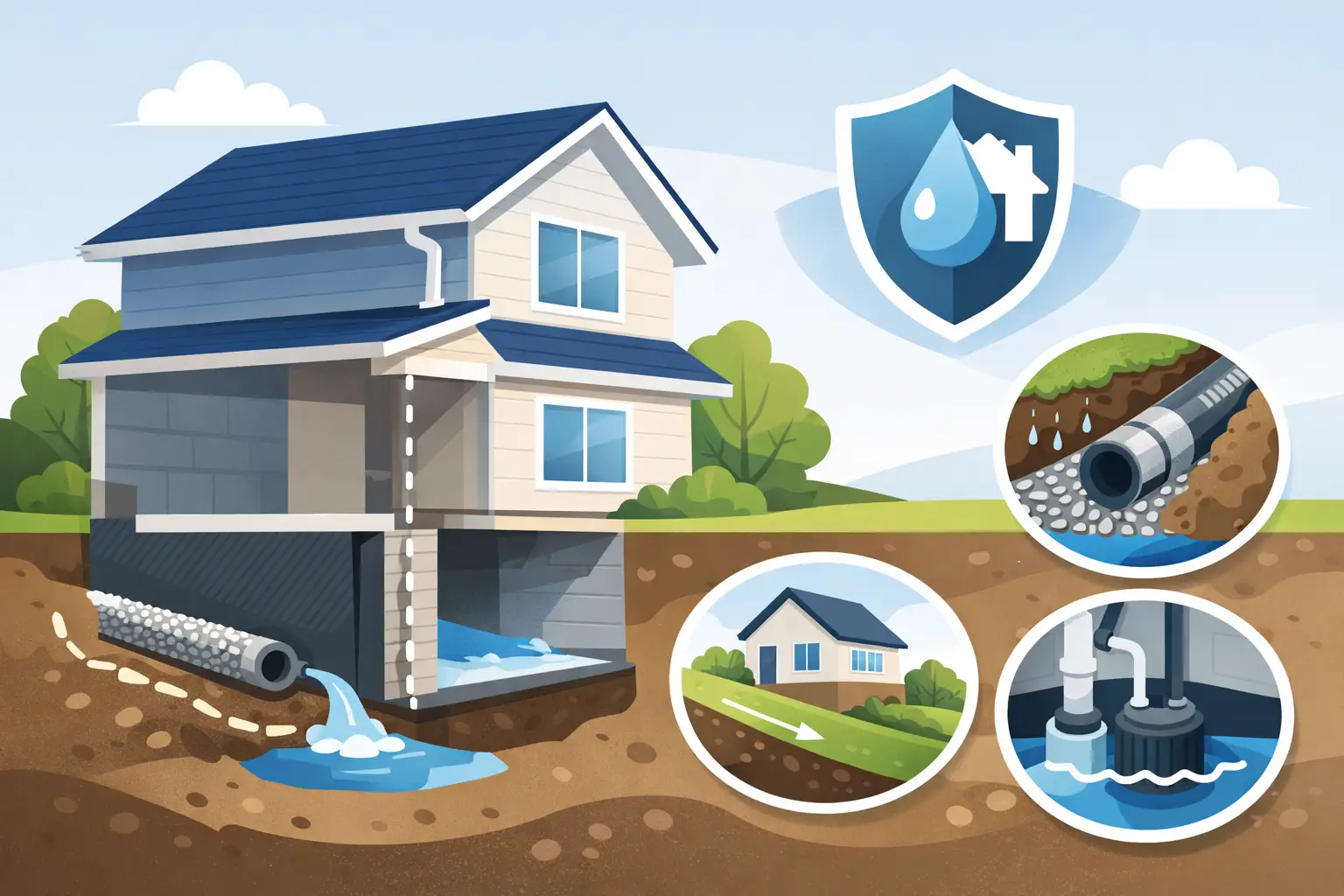
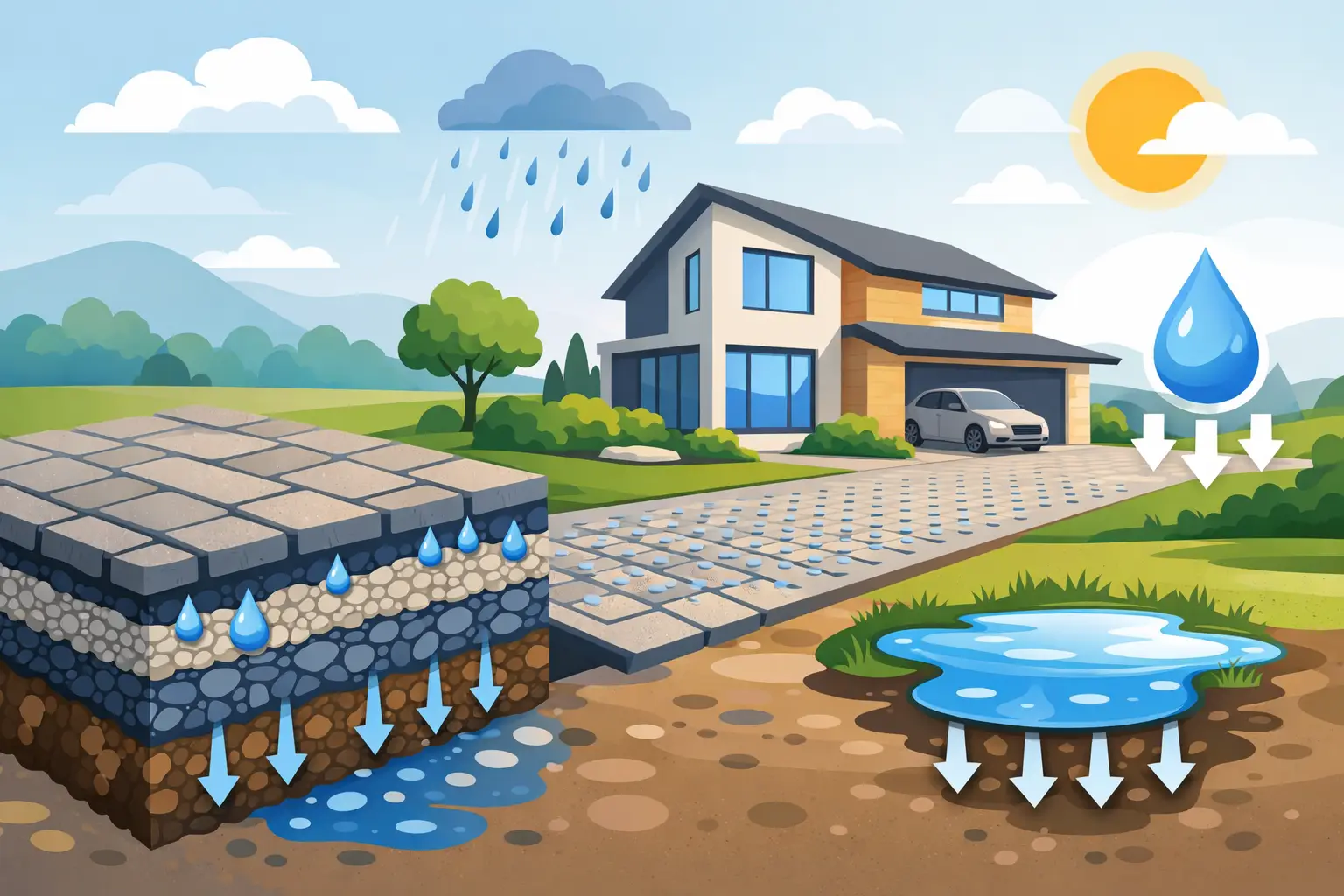
Water is one of the main causes of pavement failure. It can soften the base beneath asphalt, enter cracks, freeze and expand, or wash away supporting soil at the edges. Concrete is also vulnerable when water sits below slabs or enters poorly maintained joints.
Asphalt’s dark surface absorbs heat and helps snow and ice melt faster in many climates. It can be useful for properties that need winter access restored quickly. On the other hand, asphalt can soften during intense heat, particularly where heavy vehicles turn or park for extended periods.
Concrete reflects more heat and remains firm in hot conditions. In cold climates, it requires correctly placed control joints and dependable drainage to manage movement from freeze-thaw cycles. Deicing salts can also damage poorly finished or unprotected concrete over time, causing surface scaling.
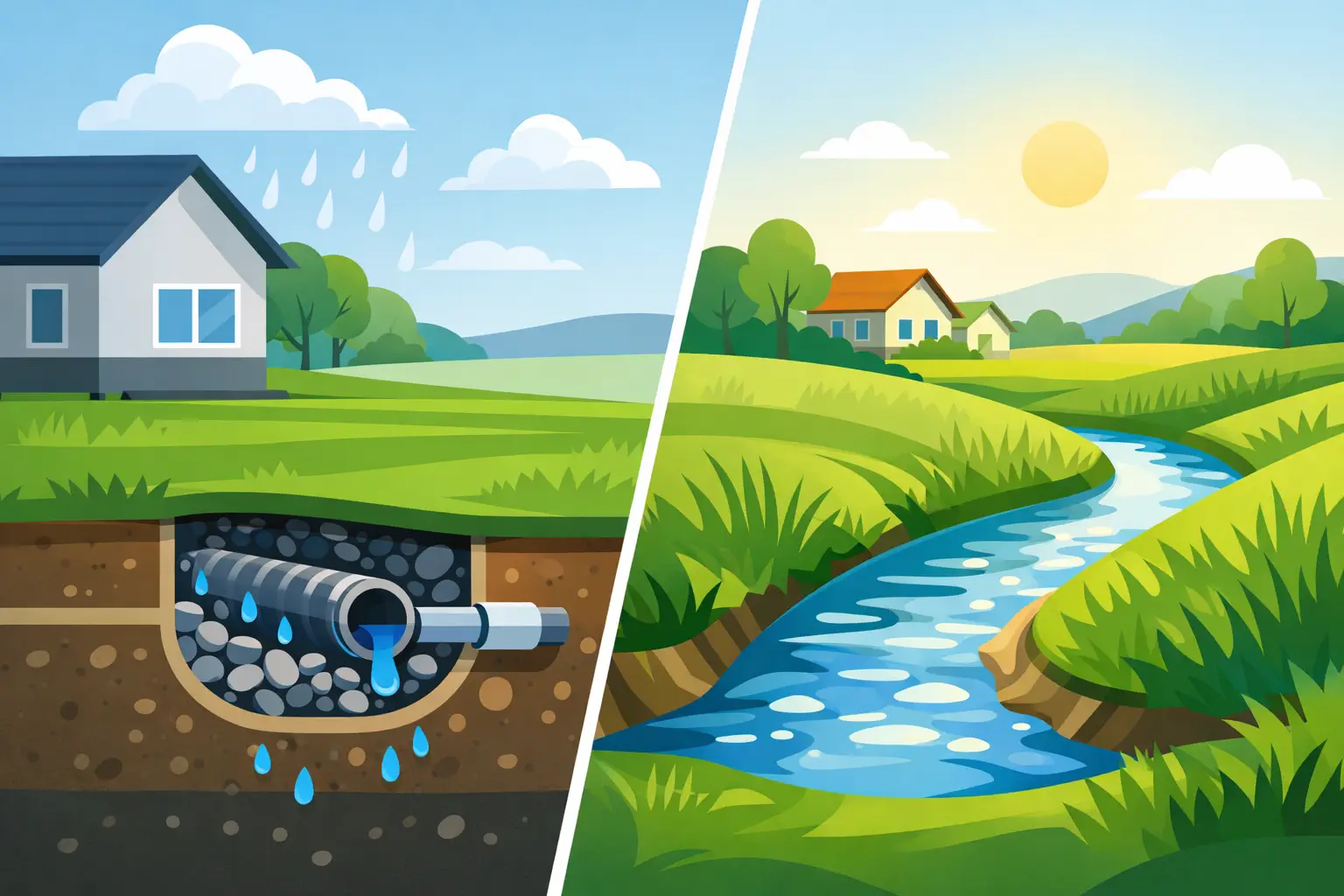
Drainage should be planned before paving begins. The lot needs positive slope so water moves toward catch basins, drains, swales, or other approved outlets. In some cases, correcting grades, installing drainage, or rebuilding unstable subgrade is more valuable than choosing one surface material over another. A strong parking lot starts below the surface.
Repairs and Ongoing Maintenance
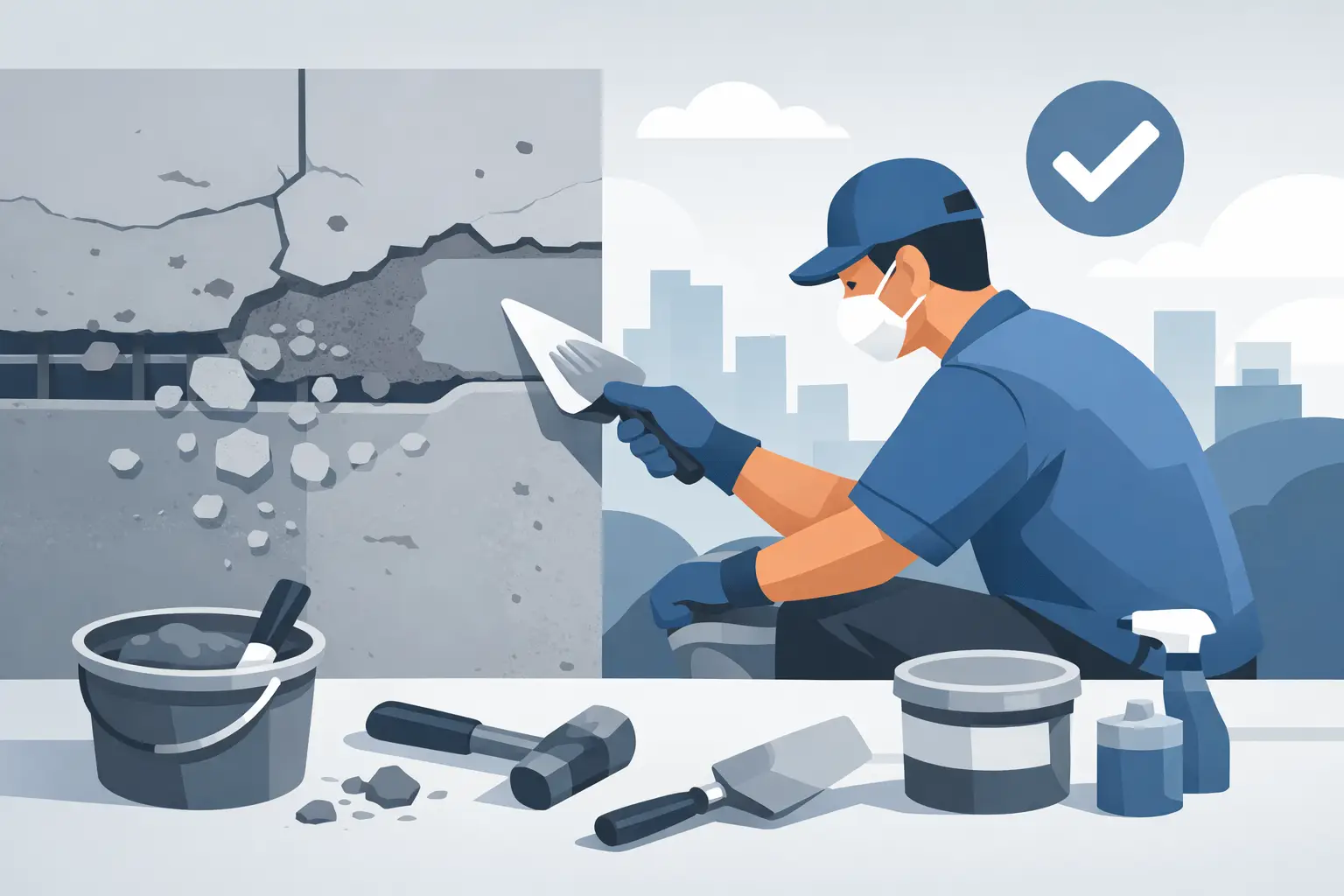
Asphalt is generally easier to repair in sections. Cracks can be filled, damaged areas can be cut out and patched, and a worn surface can be milled and overlaid when the base remains sound. Routine seal coating helps extend service life by reducing water penetration and protecting the pavement from weather exposure.
The trade-off is that asphalt requires attention. Small cracks should not be ignored until they become potholes. Timely crack filling and periodic seal coating are straightforward maintenance steps that protect the larger investment.
Concrete often needs less frequent routine care, but repairs can be more visible and more complex. A failed panel may need to be removed and replaced. Color and texture can vary between old and new concrete, and a repair must address the reason for the failure, whether that is poor drainage, settlement, inadequate base material, or heavy traffic.
For either option, the most effective maintenance plan is simple: keep water moving, repair cracks early, avoid repeated overloads, and inspect high-stress areas before damage spreads.
Appearance, Access, and Property Use
Asphalt offers a clean, uniform look and provides strong contrast for parking stripes, directional arrows, and accessible markings. It is a familiar choice for retail centers, apartment communities, schools, and larger commercial lots. Because it can often be opened to light traffic sooner than concrete, it can also reduce disruption for active businesses.
Concrete provides a brighter appearance that can improve visibility at night and create a more finished look for offices, medical facilities, mixed-use developments, and high-end residential properties. It can be finished in different textures and used to define entrances, pedestrian paths, and parking areas.
Access planning matters as much as appearance. If a business cannot close its lot completely, phasing the work may allow customers, employees, and deliveries to continue using part of the site. The installation schedule must also allow concrete adequate cure time before vehicles use the surface. Rushing that process risks damaging a surface that was built to last.
How to Choose the Right Parking Surface
Choose asphalt when upfront cost, fast installation, easy future repairs, and standard vehicle traffic are the main priorities. It is a dependable option for many residential, commercial, and multi-unit properties, provided the base, drainage, and maintenance program are handled correctly.
Choose concrete when the lot will carry heavy vehicles, repeated truck traffic, tight turning movements, or long-term high-stress use. It is also worth considering when a brighter, more permanent-looking finish suits the property and the budget supports the higher initial cost.
Before making the final decision, have the site evaluated for soil stability, existing pavement failure, drainage paths, traffic volume, and vehicle weight. A fair estimate should identify the necessary excavation, base work, grading, and drainage improvements, not simply quote a new layer on top of a weak surface.
ASAP Paving And Masonry helps property owners build strong, lasting parking areas with clear guidance on material selection, site preparation, and long-term performance. The right surface is the one designed for how your property actually works, then installed with the precision needed to keep it reliable season after season.