Water staining near a fireplace is rarely a problem to wait out. Once moisture gets behind brick, flashing, or roofing materials, it can spread into framing, insulation, ceilings, and interior finishes. Knowing how to prevent chimney leaks starts with treating the chimney as a complete system: masonry, metal flashing, a concrete crown, a cap, roof drainage, and the surrounding roof all need to work together.
A strong chimney is built to handle years of rain, snow, wind, and temperature changes. But even durable masonry can develop weak points when mortar wears away, flashing loosens, or water is allowed to sit on exposed surfaces. Early maintenance is usually straightforward. Delayed repairs can lead to damaged brickwork, rot, mold, and a much larger repair bill.
How to Prevent Chimney Leaks at the Source
The best repair is the one that stops water before it enters the structure. That means looking beyond the visible stain and identifying the exact path water is taking. Chimneys often leak at the roofline, but water can also enter through cracked mortar joints, an undersized crown, damaged bricks, or an open flue.
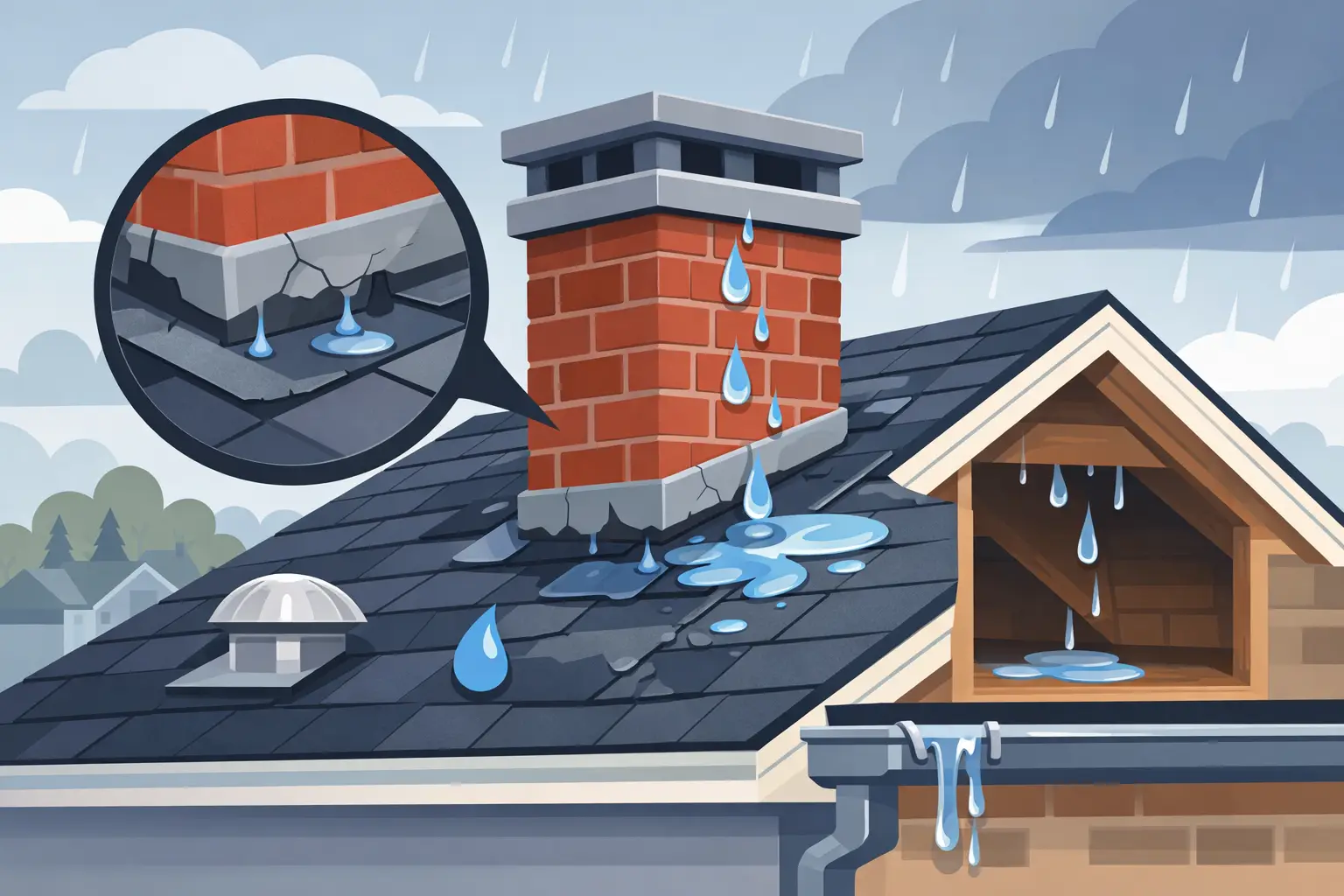
Start with an inspection after heavy rain or snowmelt. Check the attic and upper rooms for damp insulation, water marks, peeling paint, or a musty smell around the chimney chase. Outside, look for loose flashing, missing sealant, cracked masonry, white powdery deposits on brick, and mortar joints that are recessed or crumbling.
White deposits, often called efflorescence, do not always mean an active leak. They do show that moisture has moved through the masonry at some point. If the staining returns, the brick remains damp, or mortar continues to deteriorate, the moisture source needs professional attention.
Maintain the Chimney Crown
The crown is the sloped concrete or masonry top that covers the chimney around the flue tile. Its job is simple: shed water away from the stack. When a crown is flat, cracked, too thin, or poorly formed, rainwater can collect on top and work directly into the brick below.
A properly built crown should extend beyond the chimney walls and slope outward so water runs off rather than pools. Hairline cracks may sometimes be sealed before they worsen, depending on the crown’s condition. Wider cracks, broken edges, or spalling concrete often call for a full crown rebuild. Patching a failing crown repeatedly may cost less now, but it may not provide lasting protection.
Install a Proper Chimney Cap
A chimney cap is one of the most reliable ways to keep rain and debris out of the flue. It also helps prevent birds, leaves, and nesting material from blocking airflow. Without a cap, water can run down inside the flue, damage liners, and reach the firebox or smoke chamber.
The cap needs to fit securely and allow smoke to exit freely. A loose, rusted, or poorly sized cap can create its own problems in high winds. For multi-flue chimneys, a full-width cap may offer better coverage than separate small caps, provided it is designed and installed correctly.
Protect the Flashing Where Chimney Meets Roof
Flashing is often the most common source of chimney leaks. It is the metal system installed where the roof meets the chimney, and it directs water away from that vulnerable joint. Because flashing is partly integrated with roofing materials and masonry, a small gap can allow a surprising amount of water inside.
Good flashing is not just a bead of caulk around the chimney. It typically includes base flashing against the roof and counterflashing set into the masonry joints above it. The counterflashing protects the upper edge of the base flashing so water cannot run behind it.
Sealant can be useful as a finishing detail, but it should not be the only thing holding a flashing system together. Caulk dries out, cracks, and separates over time, especially with seasonal movement. If flashing is bent, corroded, pulling away from the roof, or covered in excessive patching material, replacement is often the more reliable choice.
For larger chimneys on a sloped roof, a cricket may also be needed. This small peaked structure sits on the uphill side of the chimney and diverts water around it. Without one, leaves, snow, and runoff can pile up behind the chimney, increasing the chance of a roof or flashing failure.
Keep Brick and Mortar Strong
Brick is durable, but it is not waterproof. Masonry is designed to manage small amounts of moisture and release it as conditions dry. When mortar joints fail or bricks become damaged, water can enter faster than the wall can dry out.
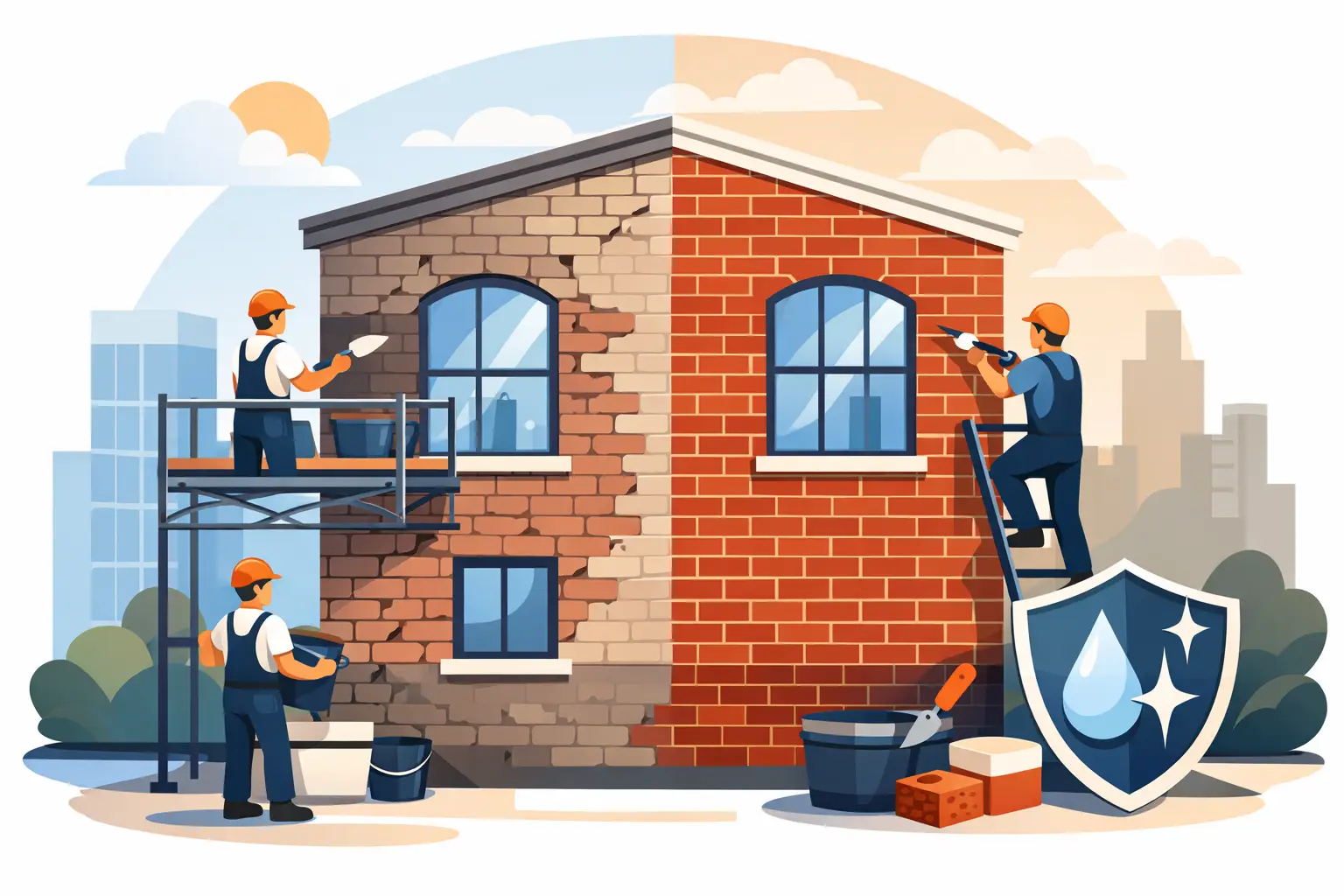
Pay close attention to mortar joints on the upper portion of the chimney, where exposure is greatest. Cracked, missing, or soft mortar should be repaired through tuckpointing or repointing before open joints allow water behind the brick face. The replacement mortar must be appropriate for the existing masonry. Mortar that is too hard can damage older, softer brick by forcing moisture through the brick instead of the joint.
Broken, flaking, or loose bricks should also be replaced. Freeze-thaw cycles make this damage worse: water enters a small crack, freezes, expands, and breaks away more material. A small masonry repair completed early protects the chimney’s structural strength and helps preserve its appearance.
Manage Water Around the Roof and Foundation
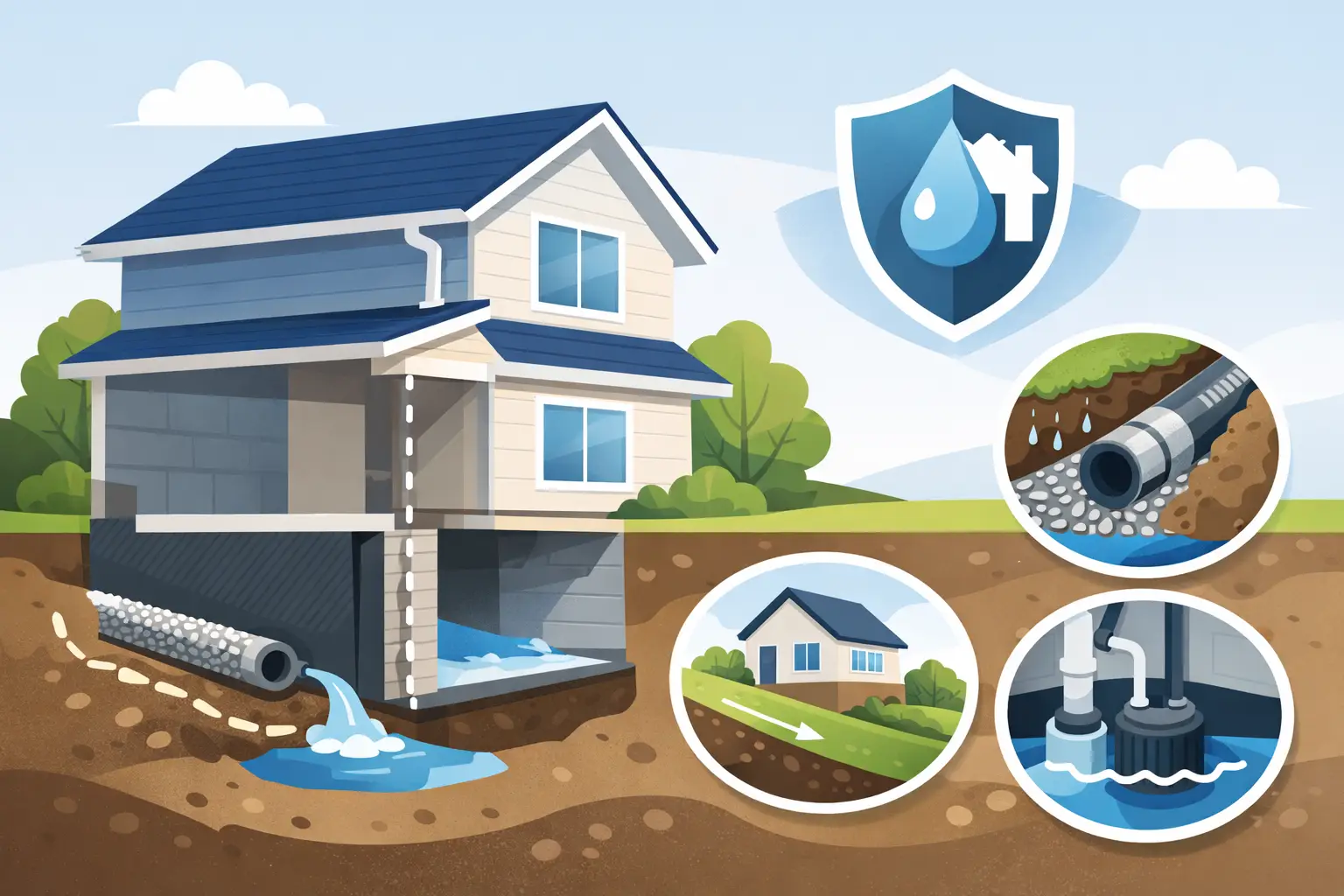
A chimney does not work separately from the rest of the property. Overflowing gutters, blocked downspouts, worn roofing, and poor drainage can all send extra water toward vulnerable building areas. Water that repeatedly washes down a chimney wall can accelerate mortar wear, while standing water near the foundation creates a separate set of moisture concerns.
Keep gutters clear and confirm downspouts discharge well away from the home. During a rainstorm, observe how water moves across the roof. If it overshoots a gutter, backs up near the chimney, or collects behind roof features, correcting the drainage path can prevent repeated damage.
Roof condition matters as well. Missing shingles, cracked roof cement, or damaged underlayment near the chimney may look like a chimney leak from inside the home. A careful inspection should separate roofing failures from masonry failures so the right repair is completed the first time.
Avoid Masonry Treatments That Trap Moisture
Homeowners often assume every chimney needs a waterproof coating. The better answer depends on the masonry’s condition, construction, and exposure. Some breathable water-repellent products can help reduce rain absorption while still allowing vapor to escape. Non-breathable paints and heavy coatings, however, can trap moisture inside the brick and lead to peeling, spalling, and hidden deterioration.
Before applying any treatment, repair the crown, flashing, brick, and mortar issues that are allowing water in. A surface product cannot replace failed masonry work. It should be the final protective layer, not a shortcut around necessary repairs.
Schedule Inspections Before Small Problems Grow
A chimney should be checked at least once a year and after major storms, especially if the home is older or the chimney has a history of repairs. You do not need to climb onto the roof to spot every issue. Interior stains, loose mortar, rusted caps, and obvious flashing gaps are enough reason to arrange a closer assessment.
Professional chimney repair is particularly worthwhile when work involves roof flashing, rebuilding a crown, replacing damaged brick, or repointing high masonry. These repairs need sound materials, correct water-shedding details, and safe access. A repair that looks acceptable from the ground can still fail if the flashing is not integrated correctly or the crown does not slope away from the chimney.
ASAP Paving And Masonry provides dependable masonry repair built around strong workmanship, durable materials, and clear guidance. A proper assessment can identify whether your chimney needs a minor repair, targeted repointing, flashing work, or more extensive restoration.
Water does not wait for a convenient time to enter a home. Addressing a loose cap, cracked crown, weak mortar joint, or flashing gap now helps keep your chimney strong, dry, and built to perform through the next storm season.