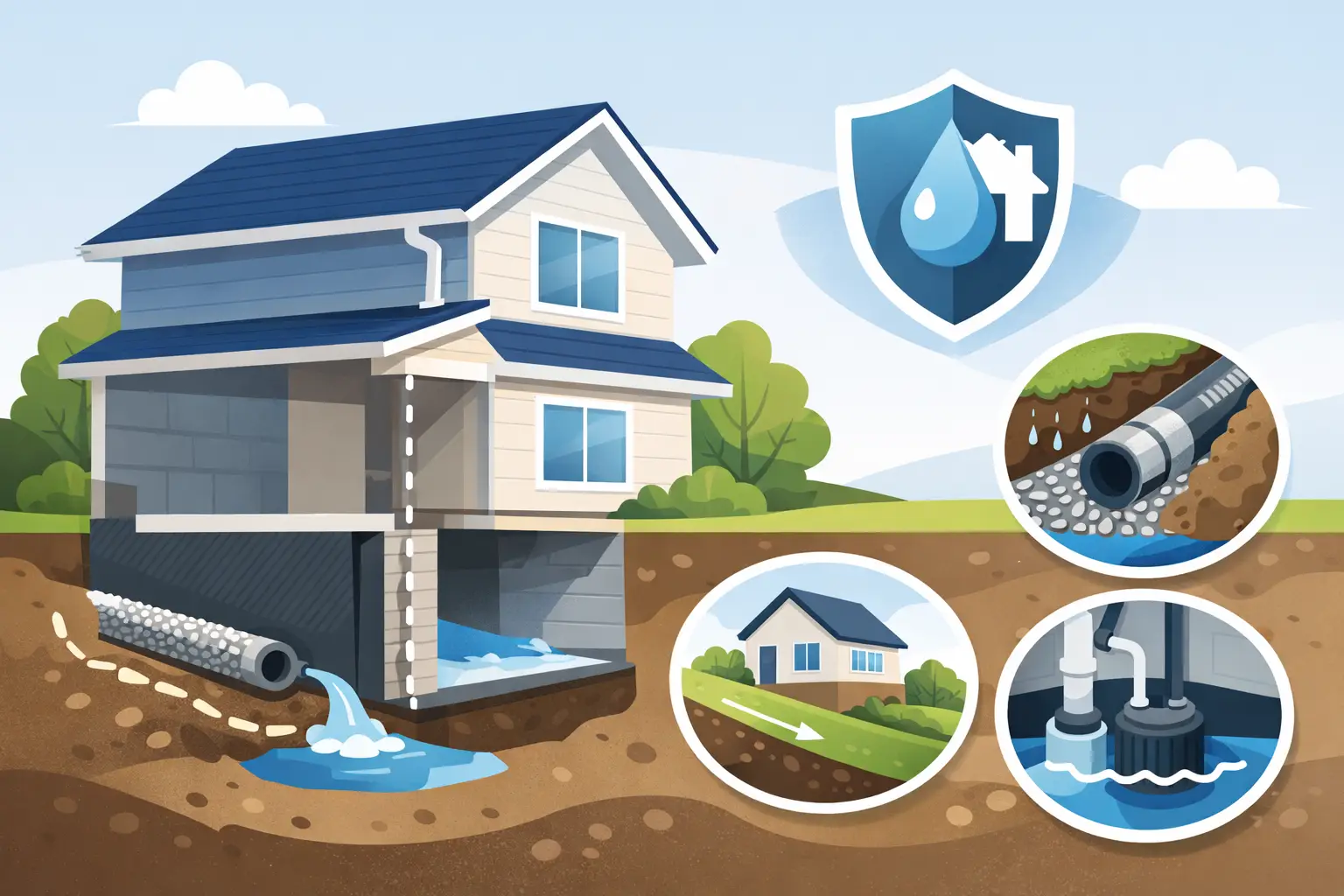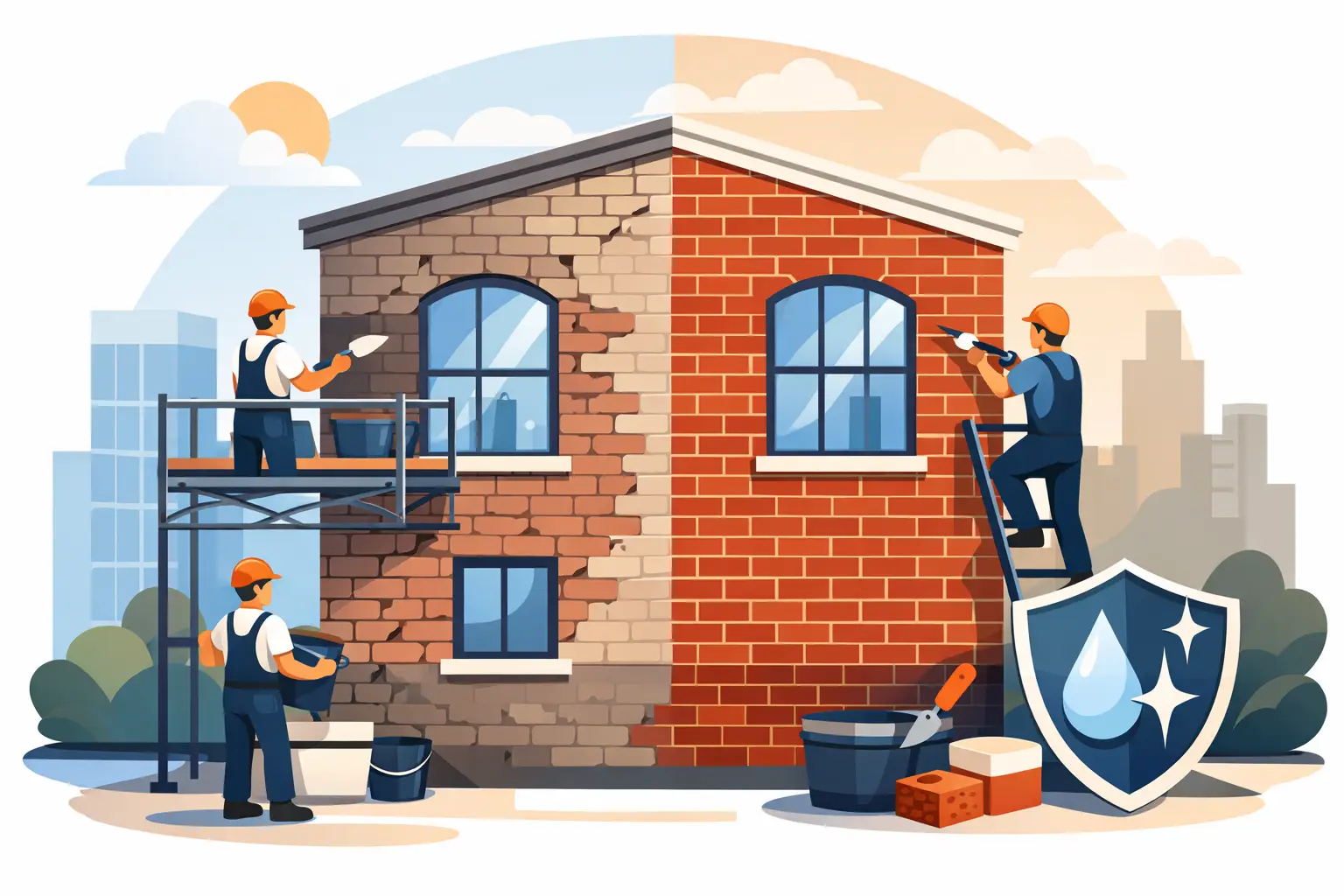
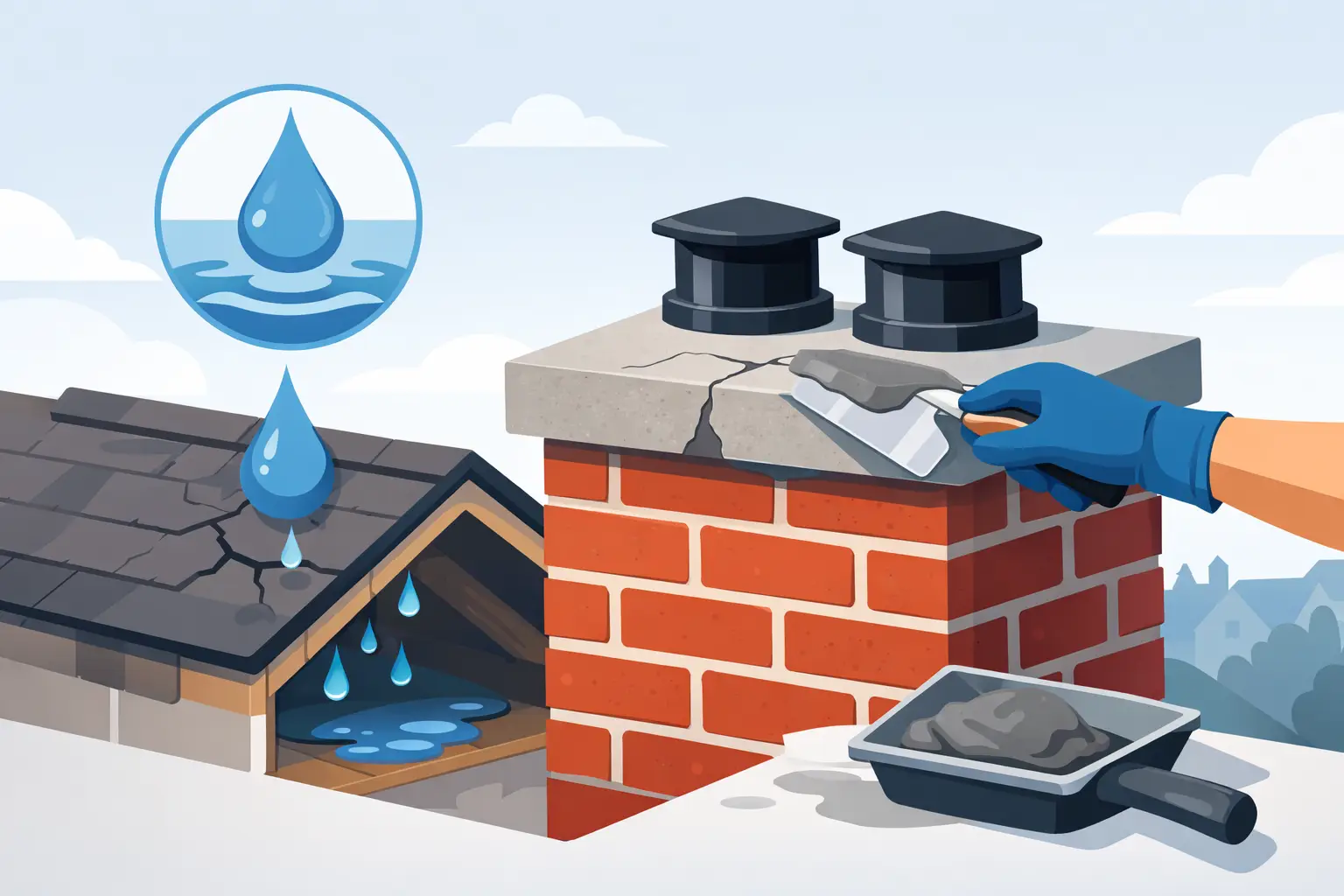
A small crack at the top of a chimney can lead to a much bigger repair below it. Water enters through damaged concrete, soaks into brick and mortar, freezes during cold weather, and slowly weakens the entire chimney structure. Chimney crown repair protects the point where that damage often starts.
The crown is the concrete cap at the very top of a masonry chimney. It is not the metal chimney cap or rain cover. Its job is to shed water away from the flue and the brickwork beneath it. When it is properly built, sloped, and sealed, it provides a durable first line of defense against rain, snow, ice, and repeated temperature changes.
What a Chimney Crown Is Meant to Do
A chimney crown should extend past the outside face of the chimney and slope away from the flue. This overhang helps move water clear of the masonry instead of allowing it to run down the chimney sides. A well-built crown also has a drip edge underneath its outer perimeter, which interrupts water before it can cling to the brick.
This small section of concrete does demanding work year-round. It is exposed to direct sun, heavy rain, freezing temperatures, wind, and moisture from the chimney system. Over time, ordinary concrete can crack, separate from the flue, or become porous. Once that happens, water finds its way in.
Ignoring crown damage can lead to loose bricks, deteriorated mortar joints, spalling faces, rusted metal components, damaged flashing, and moisture stains inside the home. For commercial properties, neglected chimney masonry can also become a safety and maintenance concern. Addressing the crown early is usually more straightforward and more affordable than rebuilding a chimney that has suffered years of water exposure.
Signs You Need Chimney Crown Repair
Most property owners do not inspect their chimney crown regularly because it is hard to see from the ground. Still, there are warning signs that point to trouble at the top of the stack.
Look for visible cracks in the concrete, chunks missing from the crown, staining on the upper brickwork, or a crown that appears flat instead of sloped. White, powdery deposits on the brick, known as efflorescence, can indicate that moisture is moving through the masonry. Cracked mortar joints near the chimney top, peeling paint indoors, and a musty smell around a fireplace can also be connected to water intrusion.
A leak does not always mean the crown is the only problem. Flashing, roof intersections, missing caps, damaged flue tiles, and failed mortar can create similar symptoms. That is why a proper assessment matters. Reliable masonry work begins by identifying where water enters, not by applying a quick patch to the most visible crack.
Hairline Cracks Still Matter
A hairline crack may not look urgent, but it can widen quickly. Water enters the opening, freezes, expands, and forces the concrete apart. This freeze-thaw cycle is one of the main reasons chimney crowns fail in areas with cold winters.
Early sealing may be enough when the crown remains solid and properly shaped. Once cracks are deeper, widespread, or accompanied by crumbling concrete, a more substantial repair is usually the stronger long-term option.
Repair, Resurfacing, or Replacement?
The right approach depends on the crown’s condition, its original construction, and the amount of damage underneath it. A dependable contractor should explain the condition clearly and recommend work that matches the problem.
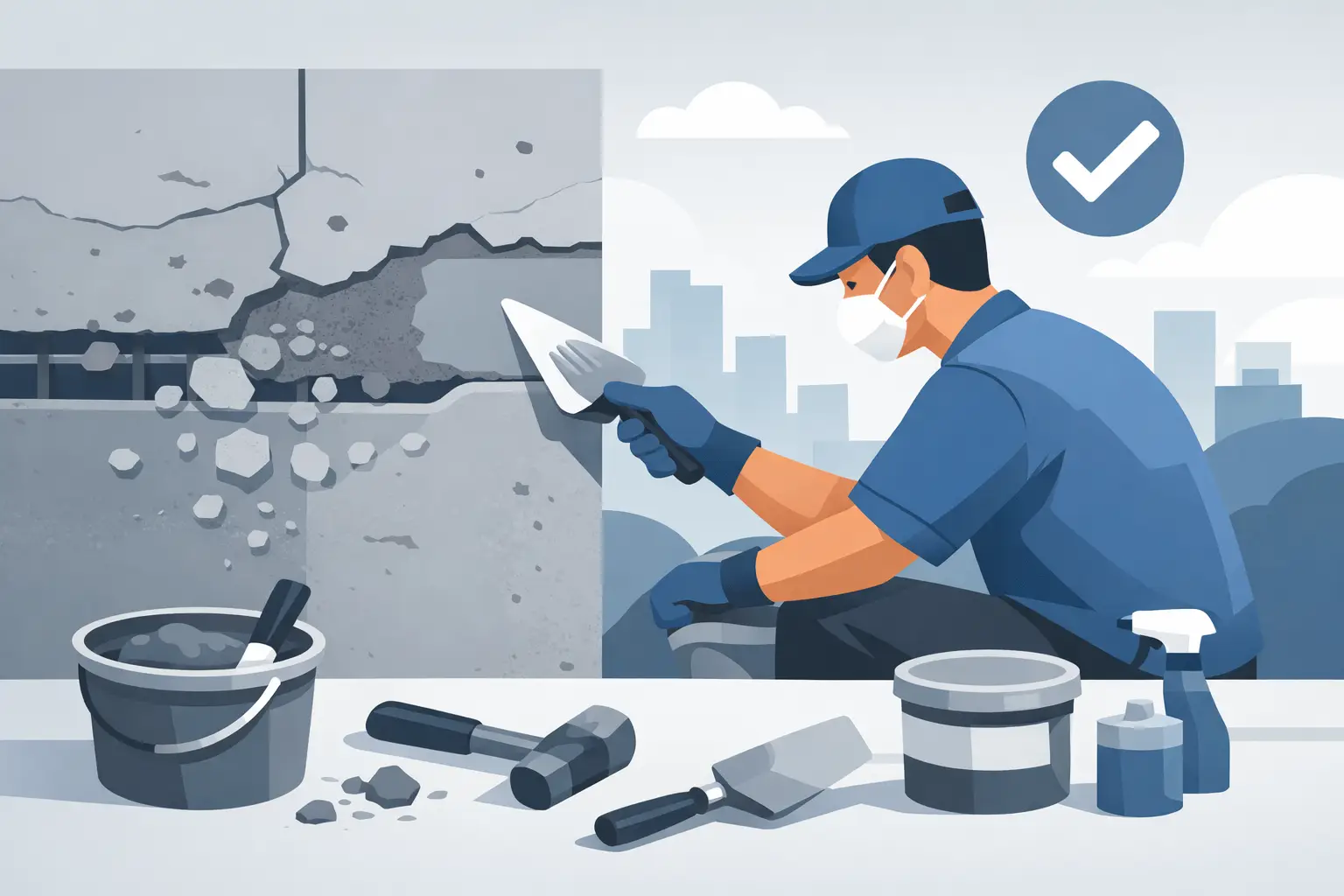
Minor surface cracking can often be addressed with a flexible, waterproof crown coating or a masonry repair material designed for exterior exposure. The surface must be cleaned, prepared, and dry enough for the material to bond correctly. Simply brushing on a sealant over loose, dirty, or actively failing concrete will not create a lasting repair.
When the crown has shallow deterioration but remains structurally sound, resurfacing may be appropriate. The damaged surface is prepared, cracks are repaired, and a new protective layer is formed with the correct slope. This can restore water shedding and improve the appearance of the chimney without removing the entire crown.
Replacement is often the better choice when the concrete is badly cracked, crumbling, improperly sloped, too thin, or separating around the flue. A new crown can be formed and installed with the proper overhang, drip edge, reinforcement where needed, and expansion space around the flue liner. It costs more than a simple coating, but it addresses underlying construction issues rather than covering them.
There is a trade-off. A smaller repair can make sense when damage is limited and the crown is otherwise built to perform. Replacement is the more durable investment when the existing crown has reached the end of its service life. Choosing the cheapest visible fix can lead to repeat leaks and more masonry damage later.
What Quality Chimney Crown Repair Should Include
Strong workmanship is as important as the repair material. Chimney work sits high above the ground and must withstand constant weather exposure, so details cannot be skipped.
A quality repair starts with a close inspection of the crown, flue, brickwork, mortar joints, flashing, and nearby roof area. Loose concrete and failed material should be removed before repairs begin. The contractor should also check whether the flue liner is moving independently from the crown. Without proper separation, normal expansion and contraction can crack new concrete around the flue.
The finished crown should direct water away from the chimney. It should not be flat, hold puddles, or terminate flush with the brick. A correctly formed overhang and drip edge are practical details that help prevent water from tracking down the masonry face.
Material selection matters as well. A crown needs a weather-resistant repair system made for exterior masonry, not a basic indoor patch product. The final surface should be smooth, dense, and properly cured. Once repaired or replaced, an appropriate breathable masonry water repellent may help protect the surrounding brickwork, depending on its condition and the repair method used.
Why DIY Patches Often Fail
A tube of caulk or a bag of quick-set cement may seem like an easy answer, especially when the crack is visible from a ladder. The issue is that chimney crowns are not simple flat surfaces. They require correct preparation, slope, thickness, drainage detailing, and compatibility with the flue system.
Many DIY repairs fail because loose concrete was left in place, the crown was coated without correcting standing water, or the material was applied in poor weather. Repairs made during rain, freezing temperatures, or extreme heat may not bond or cure as intended. Working at roof level also adds a serious safety concern.
Professional chimney crown repair provides more than a fresh surface. It addresses the path water takes through the chimney and gives the repair the structure needed for lasting performance.
Protect the Rest of Your Chimney
A repaired crown works best as part of a complete chimney maintenance plan. The upper brickwork and mortar joints should be inspected for cracks and water damage. Missing or deteriorated mortar may need repointing before it allows deeper moisture penetration. A damaged chimney cap should also be repaired or replaced to keep rain, debris, and animals out of the flue.
Keep nearby tree branches trimmed back where possible. Branches can scrape masonry, drop debris onto the roof, and make it harder for wet areas to dry. After severe weather, look for loose brick, fallen concrete pieces, or new stains around the fireplace and upper walls.
For property managers, scheduled masonry inspections are particularly useful. A small crown issue can be corrected before it becomes an emergency leak, a tenant complaint, or a larger structural repair. Preventive work protects the building, reduces disruption, and supports more predictable maintenance costs.
Get the Repair Done Before Water Spreads
Chimney damage rarely improves with time. Water follows cracks, joints, and porous masonry, then expands the problem during every wet and freezing season. A timely inspection gives you a clear answer on whether your crown needs sealing, resurfacing, or full replacement.
ASAP Paving And Masonry provides straightforward masonry assessments and durable repair work built to protect your property. If your chimney crown is cracked, crumbling, or showing signs of leaks, a professional evaluation now can help keep a small repair from turning into extensive brick and interior water damage.