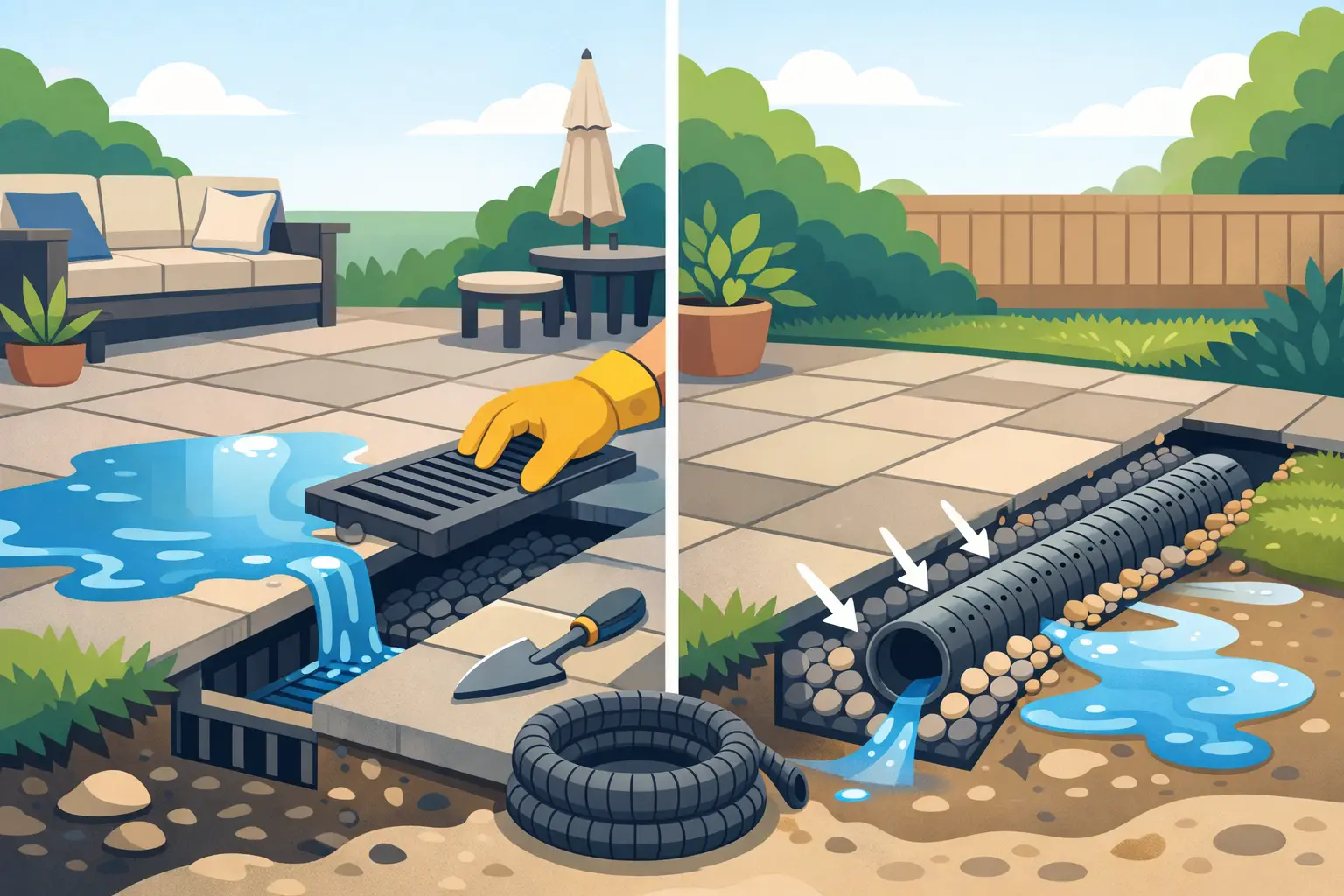
Water should move away from a patio, not settle against the house, pool at the door, or wash soil from the edges. Knowing how to fix patio drainage starts with identifying where the water enters, where it collects, and whether the patio surface is still pitched correctly. The right repair protects more than the patio. It helps prevent slippery access, cracked masonry, foundation moisture, and ongoing landscape damage.
Start by Finding the Source of the Water
A wet patio does not always mean the patio itself was installed incorrectly. Downspouts may be releasing roof runoff beside the slab. A nearby lawn or garden bed may be graded toward the house. In other cases, settled pavers, cracked concrete, or failed joints have created low areas that trap rainwater.
Inspect the patio during a steady rain if it is safe to do so. Watch the direction of runoff and note every place where water stands longer than a few hours after the rain stops. A small amount of surface moisture is normal. Deep puddles, water flowing toward the foundation, or soil washing out from beneath the patio are signs that the drainage system needs attention.
Look closely at the transition between the patio and the home. Water should never remain against siding, brick, foundation walls, or door thresholds. If it does, the repair needs to address both the patio grade and the surrounding ground.
Check the Patio Slope First
A durable patio needs a consistent slope that directs water away from the structure. As a general rule, a patio should fall about 1/4 inch per foot away from the house. That is enough pitch for reliable drainage without making the surface uncomfortable for furniture, walking, or entertaining.
You can check the slope with a long level and a straight board. Place the board on the surface, running from the house toward the outer edge of the patio. Raise the far end slightly until the level reads level, then measure the gap between the board and patio. Compare that measurement to the length of the board to see whether the surface has enough fall.
A patio that slopes toward the house needs more than a quick surface patch. Water will keep returning to the same area until the grade is corrected. For paver patios, this often means carefully lifting the affected section, rebuilding the compacted base, and reinstalling the pavers at the proper pitch. For concrete patios, the right solution depends on the slab condition, height restrictions at doors, and the extent of settlement.
Match the Drainage Fix to the Patio Material
Repairing drainage on a paver patio
Pavers are repairable because individual units can be removed and reset. If low spots are limited to one section, a contractor can lift the pavers, remove unstable bedding material, add and compact new aggregate, and reset the surface to a clean, even slope. Joint sand is then replaced to lock the pavers together and reduce movement.
This approach is effective only when the base is still structurally sound outside the low area. If the patio has widespread settlement, soft ground, or water washing through the base, a larger rebuild may be the more lasting and cost-effective option. Releveling only the visible low spot without correcting the failed base can lead to another repair after the next freeze-thaw cycle.
Repairing drainage on a concrete patio
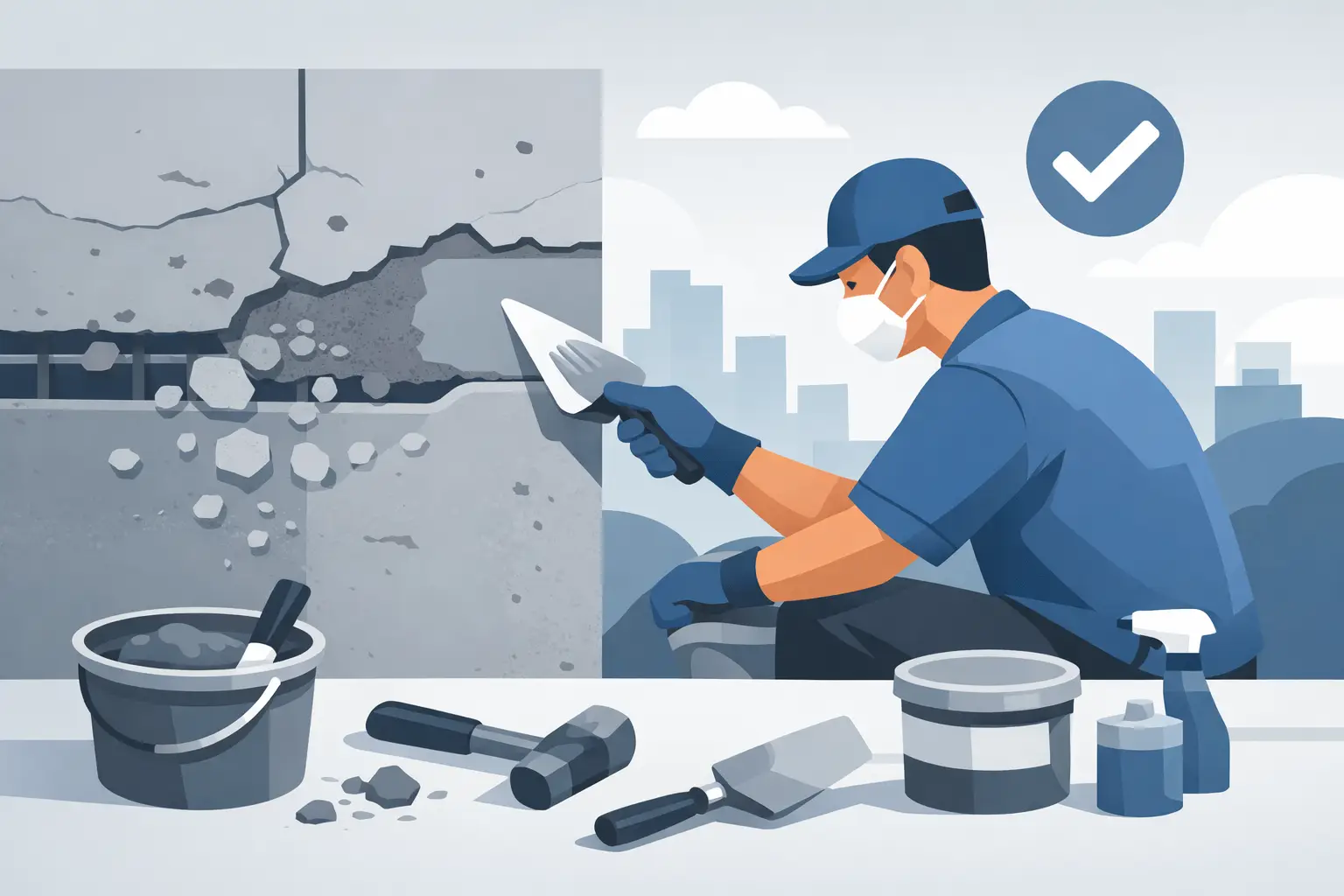
Concrete drainage repairs require a closer assessment. Minor surface depressions may be corrected with a compatible exterior-grade resurfacing material, but that is not a solution for a slab that has cracked, settled, or pitched toward the building. A patch may improve appearance while leaving the water problem in place.
Where a concrete slab has dropped or moved, options can include slab lifting, partial removal and replacement, or full replacement with a properly prepared base and positive drainage slope. The best choice depends on the slab thickness, the condition of the subgrade, nearby steps or doors, and whether the concrete is structurally sound enough to retain.
Control Water Before It Reaches the Patio
Patio drainage works best when roof runoff and surface water are managed before they reach the hardscape. Downspouts should discharge well away from the patio and foundation, using properly directed extensions or buried drain lines where appropriate. Water should not pour directly onto pavers, concrete, or the edge of a retaining wall.
The surrounding landscape also matters. Mulch beds, lawn areas, and gravel borders should be shaped to carry water away from the patio. Soil that has built up over time can block the intended drainage path and send runoff back toward the surface. Restoring the grade around the patio may solve a problem that appears to be caused by the patio itself.
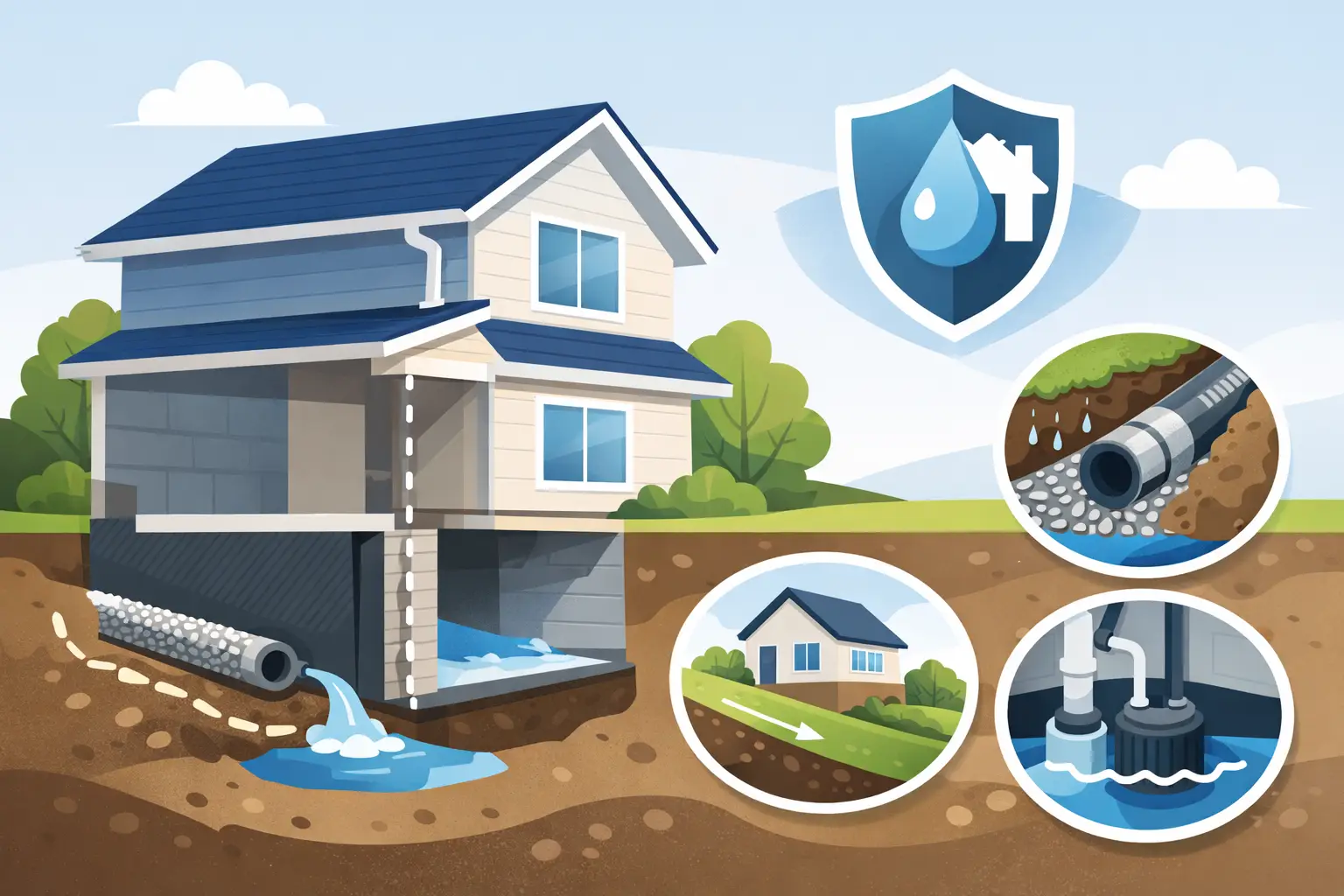
For properties with heavy runoff, clay soil, or limited yard space, a dedicated drainage system may be needed. Common solutions include a channel drain installed across a doorway or low patio edge, a French drain that collects groundwater through perforated pipe, or solid drain pipe that directs roof runoff to a safe discharge point. Each system must have a clear outlet. A drain without a proper discharge location simply moves the problem underground.
Install a Channel Drain Where Water Has No Other Exit
A channel drain is often the right answer when a patio sits between the house and a retaining wall, grade change, or other fixed obstruction. It is a narrow, grated drain set flush with the surface. Water enters the channel and travels through pipe to a lower, approved discharge area.
Placement is critical. A channel drain should be installed at the true low point, not simply near the house because it is convenient. The surrounding patio must still be pitched toward the drain. If the drain is set too high or the slab remains uneven, water will bypass it and continue to pond.
Channel drains need regular cleaning. Leaves, mulch, sand, and debris can clog the grate or pipe, especially near trees and garden beds. A reliable installation includes access for maintenance so the system can keep performing through heavy storms.
Protect the Base From Washout and Movement
Drainage damage often begins below the surface. When water enters through open joints, cracks, or unprotected patio edges, it can carry fine material out of the base. The result is voids beneath pavers or concrete, followed by settlement, rocking pavers, cracking, and more standing water.
Repairing the surface without rebuilding washed-out areas is rarely a lasting fix. The affected base should be excavated as needed, rebuilt with the correct aggregate, compacted in lifts, and finished with a stable bedding layer. Edging and restraints should also be secure so pavers do not spread when water and seasonal ground movement put pressure on the patio.
For concrete, cracks should be evaluated for their cause before they are sealed. Small, stable cracks can often be cleaned and filled to limit water entry. Cracks with uneven edges, widening gaps, or ongoing movement may point to base failure or drainage issues that need structural repair first.
Avoid Quick Fixes That Create Bigger Problems
It is tempting to spread sand into a puddle, add a thin layer of concrete over a low spot, or apply sealant to stop water from getting in. These repairs may offer a short-term improvement, but they do not correct poor grading, failed base material, or uncontrolled runoff.
Adding material on top of an existing patio can also create a new problem at doorways and steps. Raising the finished surface too high can direct water into the building or reduce the required clearance below siding. Drainage repairs must consider the entire site, including finished elevations, walkways, landscape grades, and foundation protection.
Do not direct water onto a neighboring property, toward a driveway where it can freeze, or into an area that already has poor drainage. The goal is controlled runoff that leaves the patio safely and has a reliable place to go.
When a Professional Drainage Assessment Makes Sense
A professional assessment is worthwhile when water reaches the foundation, the patio has widespread settling, drainage involves excavation, or a new drain line is needed. These projects require accurate grading, proper compaction, and a clear understanding of where water can be discharged. The visible patio finish is only one part of a durable repair.
ASAP Paving And Masonry can assess the patio surface, base condition, surrounding grades, and runoff sources to recommend a practical repair built to last. Whether the work calls for regrading, paver resetting, concrete repair, drainage installation, or excavation, the goal is the same: a strong, stable patio that sheds water reliably.
A patio should be a usable outdoor surface after a rainstorm, not a place where water waits for the next problem. Address drainage early, keep outlets clear, and choose repairs that correct the grade and the base rather than only covering the symptoms.