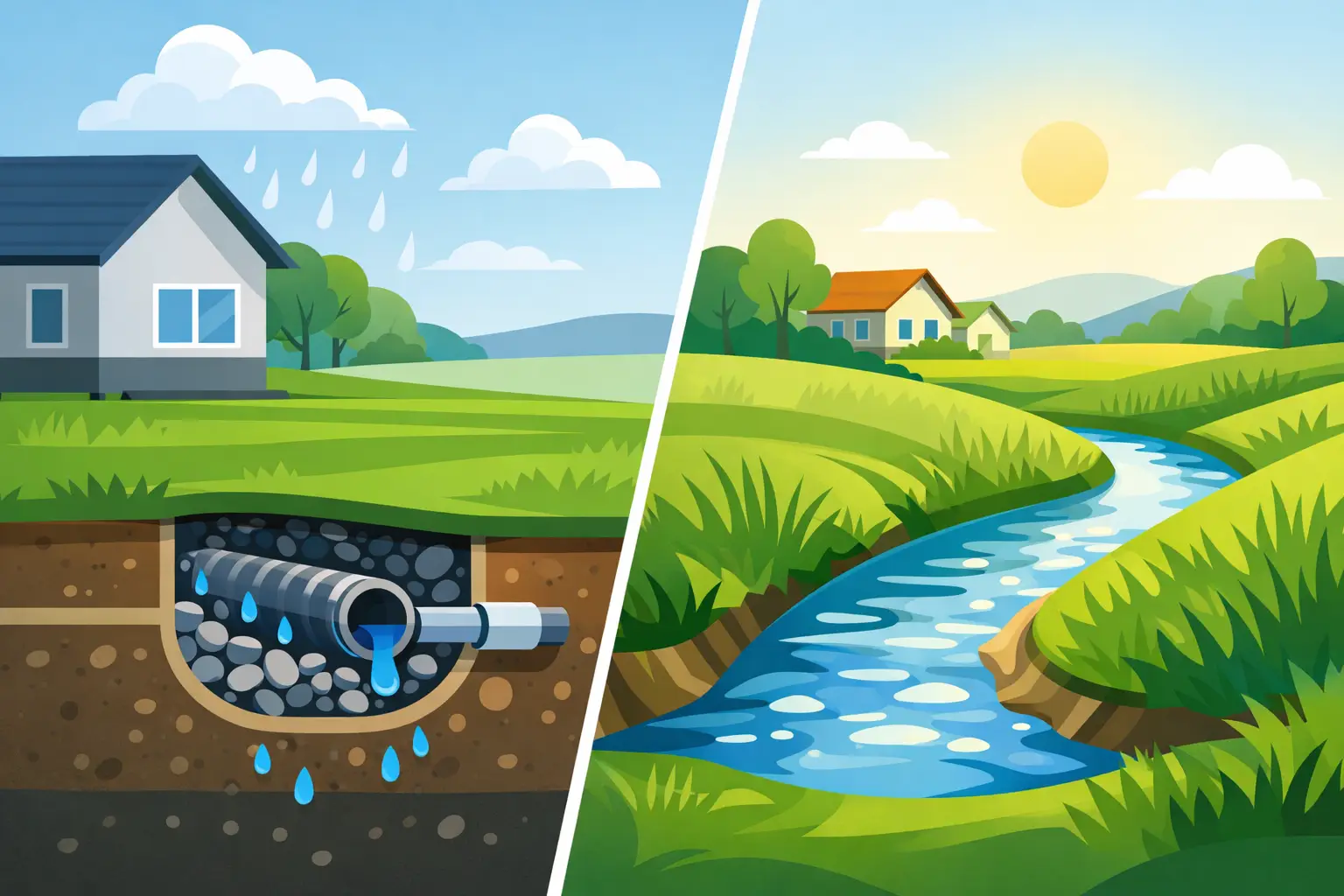
A driveway or parking area can do more than carry vehicles. With permeable paving, rainwater can pass through the finished surface and into a prepared stone base below, rather than racing across the property toward a building, sidewalk, or low spot. When it is designed and installed correctly, this approach supports reliable drainage without giving up the clean, durable finish property owners expect.
For homes, businesses, and industrial sites, water is often the source of the most expensive exterior problems. Standing water weakens soil, contributes to pavement damage, creates slippery access areas, and can place added pressure on foundations. A properly built permeable surface is one practical way to manage runoff at the point where it lands.
What Is Permeable Paving?
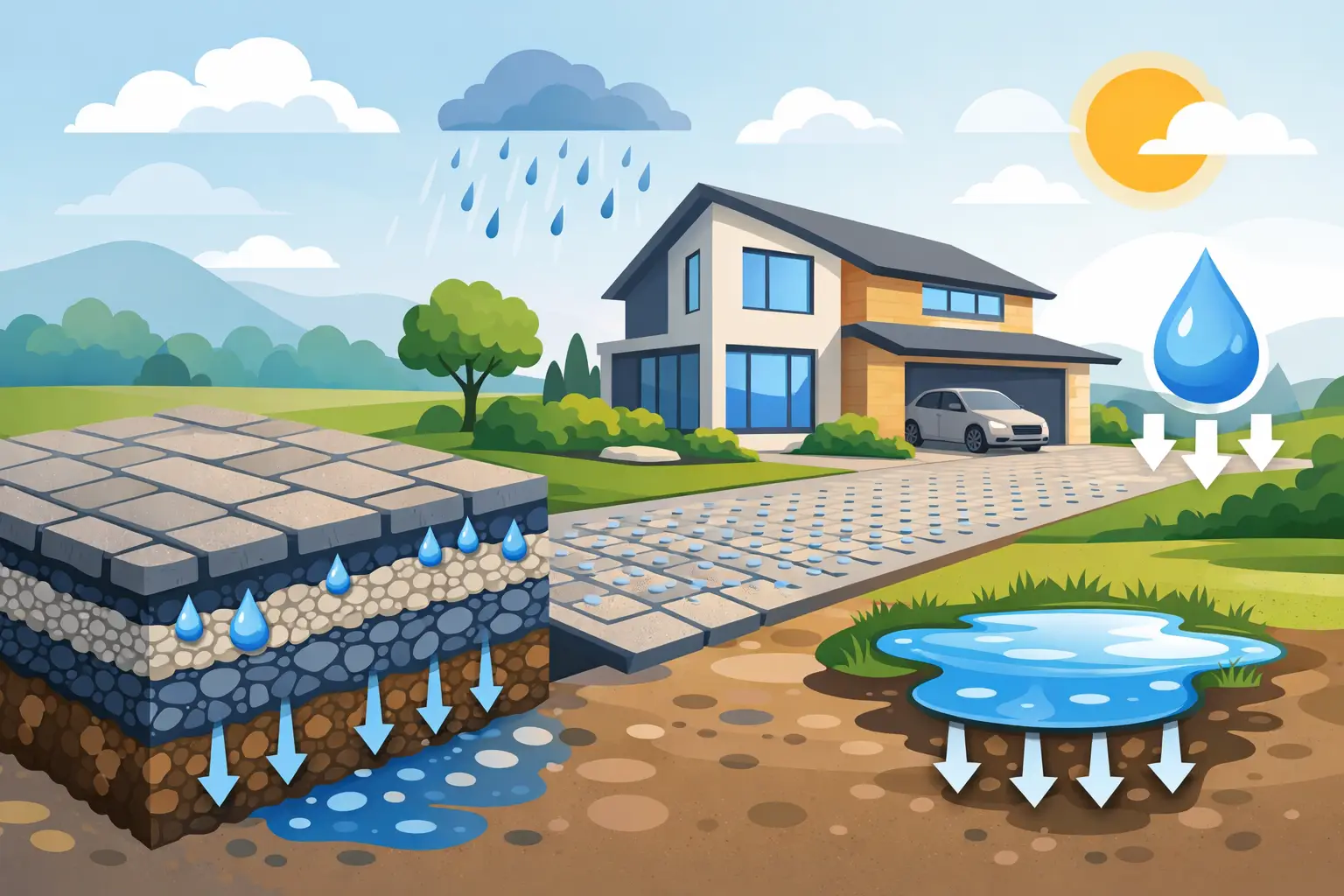
Permeable paving is a surface system that allows water to drain through joints, openings, or a porous material. The water then enters layers of clean, open-graded aggregate underneath. Those stone layers hold water temporarily and allow it to filter into suitable subsoil or move to a planned drainage outlet.
The visible finish may be permeable concrete pavers, porous asphalt, pervious concrete, or open-cell grid systems. For many residential driveways, walkways, patios, and smaller parking areas, permeable pavers are a strong choice because individual units can be repaired or replaced if needed. The joints are filled with clean aggregate, not regular sand, so water can continue moving downward.
The surface is only one part of the system. Lasting performance depends on excavation depth, a stable subgrade, proper grading, the right base stone, edge restraints, and compaction completed with precision. A surface can look good on installation day and still fail early if the groundwork is undersized or water has nowhere dependable to go.
Why Permeable Paving Matters for Property Protection
Traditional paved areas shed water quickly. That can be useful when drainage is carefully planned, but it can also concentrate runoff at the edge of a driveway or against a structure. Permeable paving spreads the work across the surface, slowing water down and reducing the volume that reaches nearby drains at once.
That does not mean every property should use it everywhere. Soil conditions, groundwater levels, slopes, local requirements, and expected traffic all matter. On dense clay soil, for example, the stone base may need a controlled outlet because the soil cannot absorb water fast enough. On a site with a high water table, a contractor may need to use an underdrain or choose a different drainage strategy.
Where conditions are suitable, the benefits are practical. A permeable system can reduce puddling, help protect landscaping from erosion, lower the burden on storm drains, and direct water away from vulnerable areas. It can also support a cleaner-looking property by limiting the dirty runoff paths that often form along curbs and driveway edges.
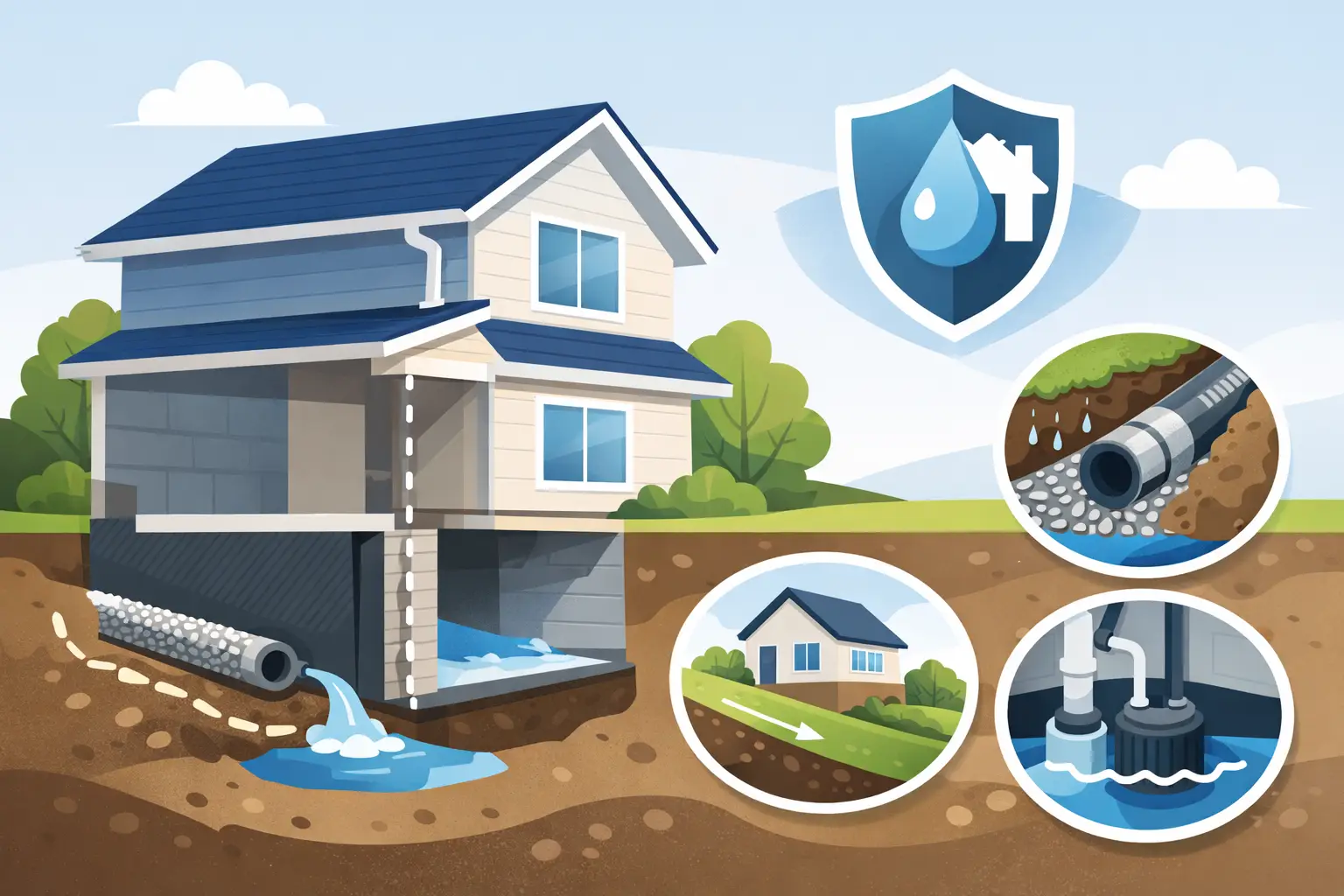
For properties with foundation moisture concerns, surface drainage should never be treated as an afterthought. Grading, downspout discharge, drainage lines, and paved surfaces need to work together. A durable driveway alone will not solve a basement water issue, but a properly designed permeable section can be a valuable part of a broader water-management plan.
Where This Surface Performs Best
Permeable paving works well in areas that receive regular rain and benefit from on-site stormwater control. Residential driveways, patios, walkways, pool surrounds, and side-yard access paths are common applications. It is also suitable for commercial parking stalls, overflow parking areas, pedestrian zones, courtyards, and light-duty access lanes.
Load matters. A family driveway and a loading area do not require the same base design. Frequent delivery trucks, garbage vehicles, forklifts, and heavy equipment place much greater stress on the surface and subbase. For commercial and industrial properties, the system must be engineered around actual axle loads, traffic patterns, turning movements, and the condition of the underlying soil.
The strongest installations are built for the site, not copied from a standard detail. A shallow base may be adequate for a walkway, while a vehicle area may require deeper excavation and a substantially thicker aggregate reservoir. This is where proper site preparation protects the investment.
The Base Is What Makes the System Work
A permeable pavement installation begins below grade. The area is excavated to the required depth, then shaped to support drainage and structural stability. The subgrade may be compacted lightly or protected with a geotextile fabric depending on soil conditions and the design. The goal is to keep native soil and fine particles from migrating into the stone base while preserving the system’s ability to drain.
Open-graded aggregate is installed in compacted lifts. Unlike a dense road base, this material contains void spaces that store water. A smaller bedding layer supports the pavers or surface material, while strong edge restraints hold the finished area in place under traffic.
Every layer has a job. If the base stone is contaminated with fines, if the edges are weak, or if compaction is uneven, the surface can shift and joints can open. If excavation does not account for utility lines, slopes, and existing drainage paths, water may be redirected toward the very areas it was meant to protect.
Precision is especially important near garages, entrances, foundations, retaining walls, and public walkways. Finished elevations must provide safe transitions and keep water moving in the intended direction. Good drainage is not simply about making water disappear. It is about controlling where it goes.
Maintenance Keeps Water Moving
Permeable paving is not maintenance-free, but its upkeep is straightforward when addressed early. The main concern is clogging. Dirt, leaves, lawn clippings, construction debris, and winter sanding material can gradually fill the surface joints and slow infiltration.
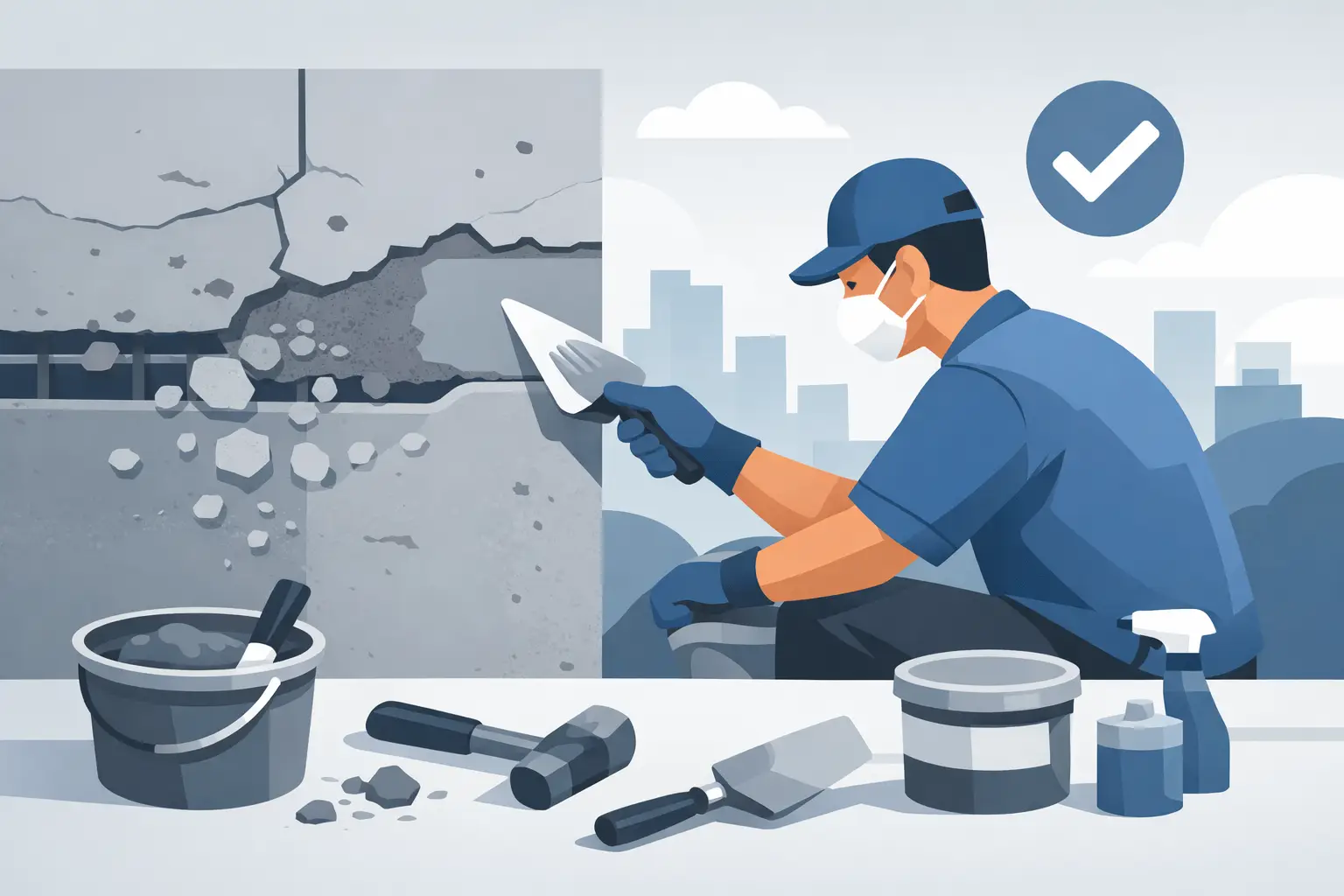
Regular sweeping and seasonal vacuum cleaning help keep the joints open, particularly in high-traffic areas or near landscaped beds. Any settled or missing joint aggregate should be replaced with the correct clean stone. For paver systems, individual damaged units can usually be lifted and repaired without removing the entire driveway or parking section.
Snow management also deserves attention. Plows should be set carefully to avoid catching paver edges, and excessive use of sand should be avoided because it can clog the joints. Deicing products should be selected with the surface material, surrounding vegetation, and local winter conditions in mind.
If water begins pooling where it once drained freely, the cause should be investigated rather than covered over. The issue may be surface clogging, but it could also point to settlement, a blocked outlet, or a change in drainage from nearby construction. Early service is usually simpler and more cost-effective than waiting for structural movement.
Choosing Between Permeable Pavers, Asphalt, and Concrete
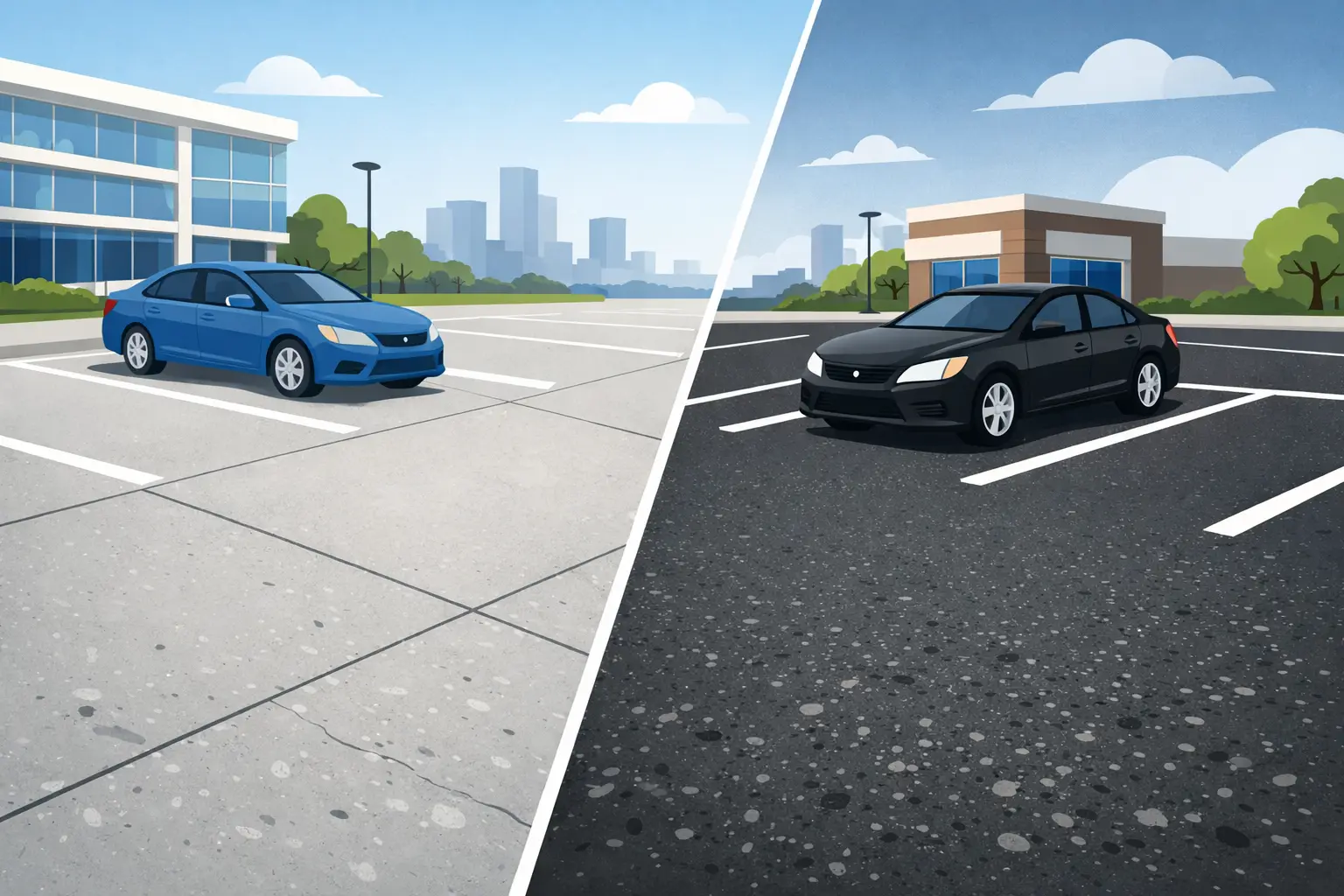
There is no single best paving material for every project. Permeable pavers offer a finished, patterned appearance and accessible repairs. They are a strong fit for driveways, patios, walkways, and parking areas where appearance and drainage are equally important.
Porous asphalt can provide a more continuous, traditional blacktop look. It may be a practical choice for larger paved areas, but it requires an experienced installation crew, careful mix selection, and maintenance that prevents surface clogging. Pervious concrete can create a clean concrete appearance while allowing drainage, though it also needs strict installation control and appropriate curing conditions.
Standard asphalt or concrete paired with catch basins, trench drains, swales, or underground drainage may be the better choice on some sites. This is particularly true where heavy traffic, difficult soil, contamination concerns, or limited excavation depth make infiltration impractical. The right answer should be based on the property, not a sales pitch.
Plan the Project Before Water Becomes a Problem
A reliable assessment starts with the conditions already on site. Contractors should look at the slope of the land, soil behavior, existing puddles, downspout locations, foundation elevations, vehicle use, and any signs of cracking or settlement. For commercial sites, drainage routes and access during construction also need clear planning so daily operations are not disrupted unnecessarily.
ASAP Paving And Masonry approaches paving as part of the full exterior system. That means considering excavation, grading, drainage, base preparation, and the finished surface together. It is the practical way to build work that looks clean, handles regular use, and stands up to changing weather.
A permeable surface is most valuable when it is installed before recurring runoff causes deeper damage. If water is collecting at the garage, washing out a driveway edge, or finding its way toward the foundation, a site review can identify whether permeable paving belongs in the solution. Built with the right base and a clear drainage plan, it gives rainwater a better place to go and gives the property a stronger surface to rely on.