A front step can look like a small issue until a crack catches a heel, water freezes in an open joint, or the entire landing begins to pull away from the home. Concrete steps repair is not only about improving appearance. It is about restoring safe access, controlling water, and protecting the structure beneath the surface.
At ASAP Paving And Masonry, we assess the condition of the steps, the supporting base, and the surrounding grade before recommending a repair. That approach matters because a cosmetic patch may hide damage for a season, while a properly planned repair addresses the reason the concrete failed in the first place.
When Concrete Steps Need Repair
Concrete is strong and durable, but it is not immune to movement, moisture, salt exposure, or everyday use. Small surface wear can often be repaired. Larger cracks, shifting sections, and crumbling edges may point to a deeper base or drainage issue.
Property owners should schedule an assessment when they notice cracks that continue across a tread or riser, sections that have settled unevenly, loose or broken edges, flaking concrete, or gaps where the steps meet a porch, foundation, or walkway. Pooling water near the bottom of the steps is another warning sign. Water can wash out supporting soil, enter cracks, and create repeated freeze-thaw damage in colder weather.
For commercial properties, damaged steps are also a liability concern. Uneven tread heights, broken corners, and loose handrail connections can create trip hazards for customers, tenants, delivery teams, and employees. Timely repair helps maintain a safer, more professional entrance without waiting for damage to spread.
What Causes Concrete Step Damage?
Most failed steps have more than one cause. The visible crack is often the result, not the full problem.
Poor drainage is a common source of damage. When roof runoff, landscape drainage, or sloped pavement directs water toward the steps, moisture can saturate the soil below. That soil may shift, settle, or expand during freezing conditions. The concrete above loses support and begins to crack or tilt.
An inadequate base can create similar problems. Steps need stable, properly prepared support. If the ground was not compacted correctly, or if fill material was used without proper preparation, settlement may occur over time. Heavy use, delivery traffic near the entrance, and soil movement can make the issue worse.
Concrete can also deteriorate because of age and exposure. Deicing salts, repeated freeze-thaw cycles, impact damage, and poor previous repairs can cause scaling and spalling. Surface flaking may begin as an appearance issue, but it can expose weaker concrete below and leave edges vulnerable to breaking.
Concrete Steps Repair Starts Below the Surface
A reliable repair begins with an honest inspection. The right solution depends on whether the steps are structurally sound, how far they have moved, and what is happening around them.
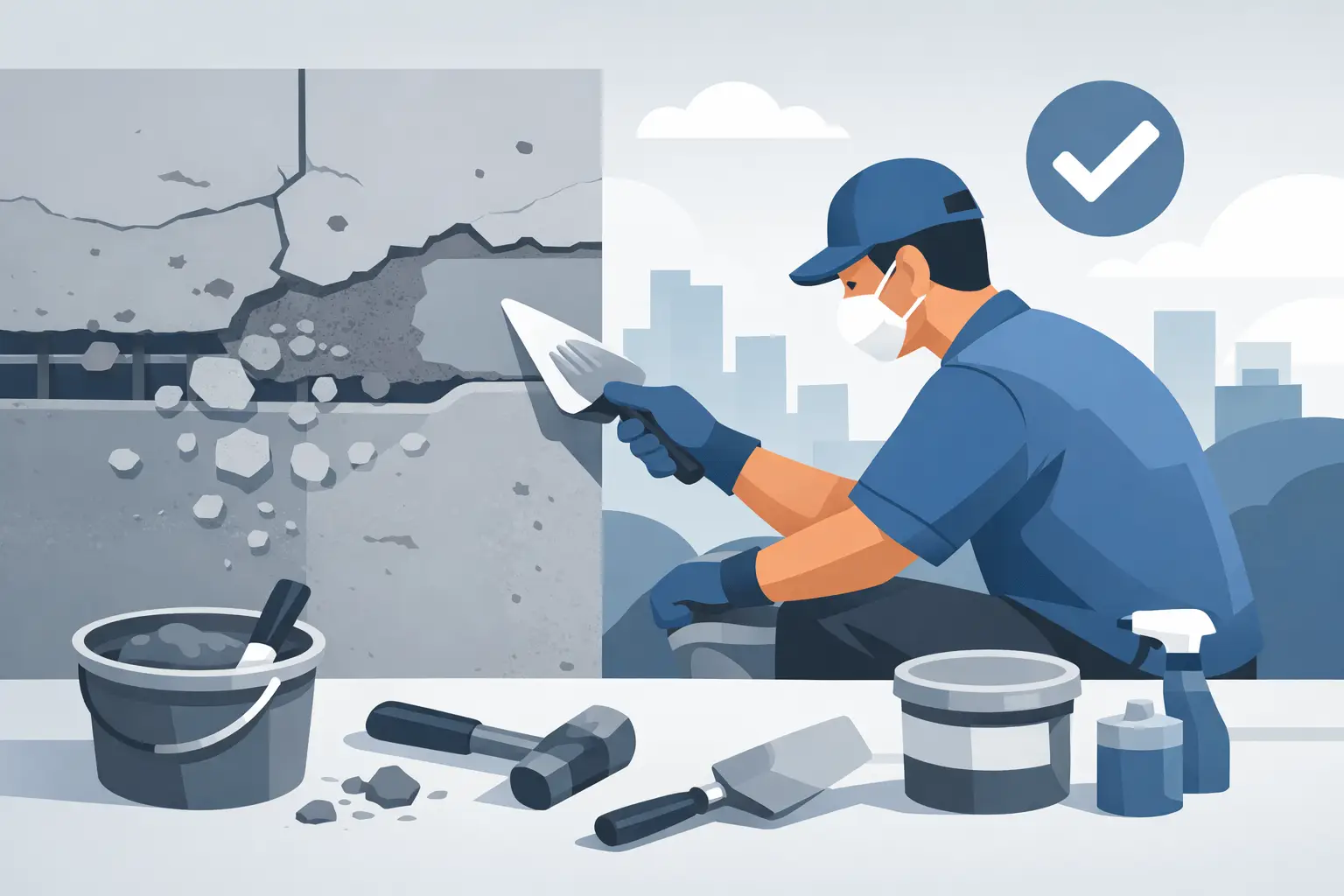
For minor cracks in otherwise stable concrete, professional crack repair and sealing may prevent water from entering and enlarging the damage. Small areas of surface scaling can sometimes be removed and rebuilt with compatible repair materials. This work requires proper cleaning and preparation. Applying new material over weak, dusty, or moisture-damaged concrete will not produce a lasting bond.
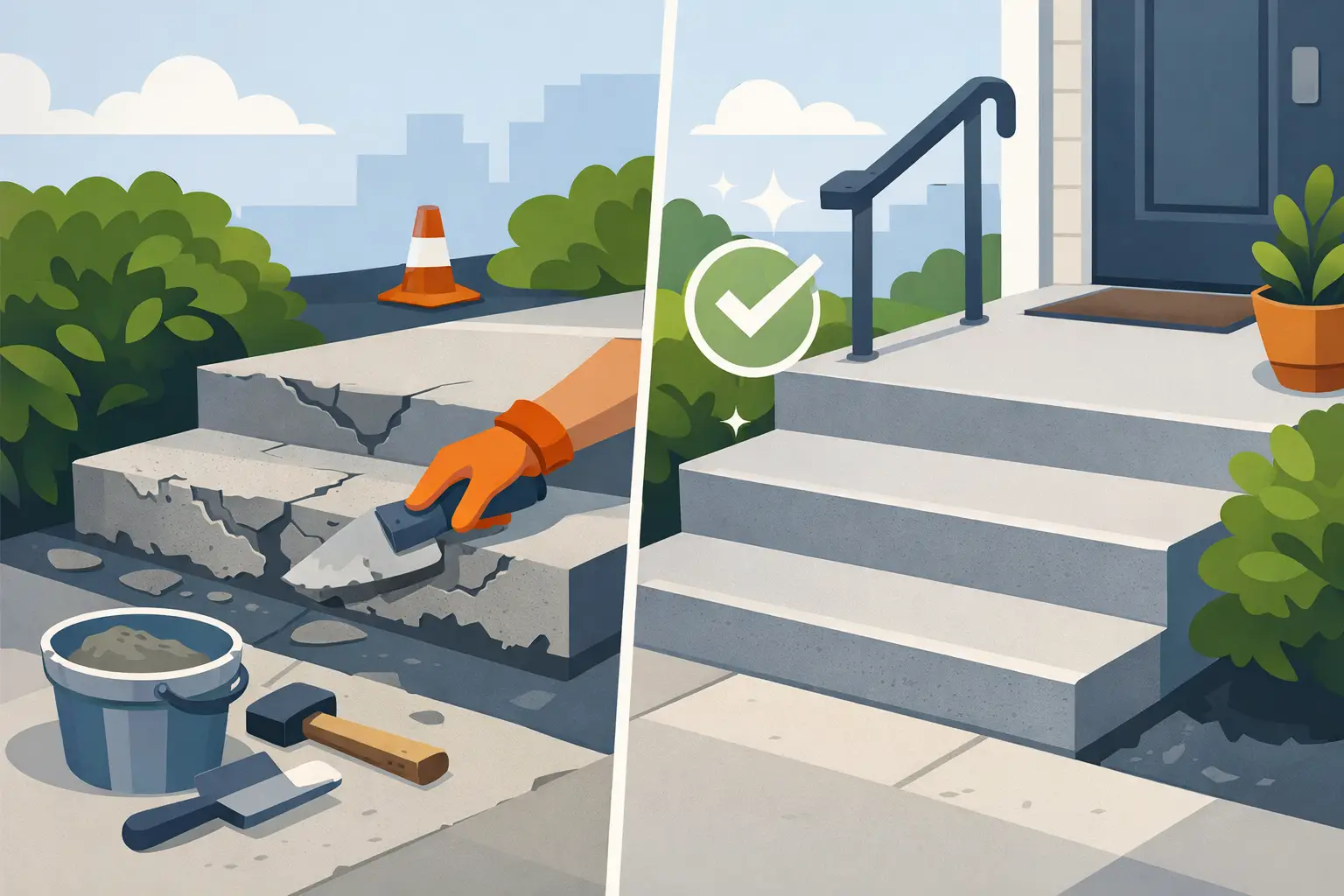
When a corner, riser, or tread edge has broken away, the damaged concrete may need to be cut back to solid material before rebuilding the section. A proper repair restores the shape of the step, creates a clean edge, and provides a stable walking surface. Matching the existing finish also helps the repaired area look natural rather than patched.
If the steps have settled, separated, or shifted significantly, surface repair alone is usually not enough. The affected sections may need to be removed so the base can be excavated, corrected, and compacted. Drainage improvements may be needed at the same time. Rebuilding on a stable base takes more work upfront, but it is the dependable choice when movement caused the damage.
Repair or Replace? The Right Choice Depends on the Damage
There is no benefit in replacing concrete that can be repaired properly. At the same time, patching a failed structure can become more expensive when the problem returns. The best option depends on the condition of the concrete and the supporting ground.
Repair is often appropriate when damage is localized, the steps remain level, and the concrete is solid beneath the surface. A few isolated cracks, minor spalling, or chipped edges can often be addressed without removing the full set of steps.
Replacement is usually the stronger long-term option when several sections are sinking, cracks run through the full depth of the concrete, steps have pulled away from the building, or deterioration is widespread. Replacement also makes sense when the existing layout is unsafe or inconvenient. A new set of steps can provide more consistent tread dimensions, a broader landing, better drainage, and a cleaner connection to nearby walkways or patios.
For property managers and business owners, replacement may be the practical choice when repeated repairs disrupt operations or leave an entrance looking neglected. A durable rebuild can reduce ongoing maintenance and give visitors a safer route into the property.
The Importance of Drainage and Site Preparation
Strong concrete cannot compensate for standing water or unstable soil. That is why drainage and site preparation should be part of the discussion for any significant concrete steps repair.
The surrounding grade should direct water away from the entrance and foundation. Downspouts should not discharge directly beside the steps. In some cases, drainage channels, catch basins, or adjustments to the adjacent walkway and landscaping can help keep water under control.
Before new concrete is placed, the base must be excavated to the proper depth and compacted for the site conditions. This creates support that resists settlement and helps the steps perform through changing weather. For steps connected to a porch, foundation, or masonry wall, proper joint detailing is also important. It allows for natural movement while reducing the chance of uncontrolled cracking.
These details are not extras. They are the work that turns a new-looking repair into a lasting one.
A Professional Repair Process Protects Your Property
Concrete work is visible, but the quality of the finished surface is only part of the job. A dependable contractor plans the work around access, safety, curing time, and the condition of nearby structures.
The process typically begins with a site review and a clear estimate. The contractor identifies whether the work involves patching, rebuilding sections, full replacement, drainage correction, or related masonry repair. Property owners should know what is being removed, how the base will be prepared, and what finish will be used before work begins.
During construction, damaged material is removed carefully to avoid unnecessary disruption to nearby walls, railings, walkways, and landscaping. The crew prepares the base, forms the new shape, places quality concrete, and finishes the surface for dependable traction. Curing is then allowed to take place properly. Walking or loading concrete too early can affect its strength and finish.
For occupied homes and active commercial sites, scheduling matters. Clear communication helps residents, customers, and staff understand temporary access arrangements while the work is completed efficiently.
Protecting Repaired and New Concrete Steps
After repair or replacement, simple maintenance can extend the life of the concrete. Keep the steps clear of leaves, soil, and standing water. Avoid using harsh deicing materials that can damage the surface, especially during the first winter after installation. Use products suited to concrete when ice control is necessary.
Watch for new cracks, failing sealant joints, or water collecting along the sides of the steps. Addressing a small issue early is usually faster and more affordable than waiting for structural movement. Periodic sealing may also help protect sound concrete from moisture and surface wear, depending on the finish and exposure conditions.
A safe entrance should feel solid underfoot and look ready for daily use. Whether your steps need targeted repair, drainage correction, or a complete rebuild, choosing skilled workmanship and proper site preparation gives the project the strength to perform for years ahead.