Water rarely announces itself with one dramatic failure. More often, it collects beside a foundation after rain, seeps through a small crack, and gradually weakens the soil and materials that support the building. Knowing the signs of foundation water damage gives property owners time to correct the source before a minor drainage issue becomes a larger structural repair.
A wet basement wall does not always mean the foundation is failing. Likewise, a hairline crack is not automatically a serious concern. The pattern matters: where the damage appears, whether it changes after rainfall, and whether movement or moisture is getting worse. A careful inspection and the right repair plan can protect the structure, improve drainage, and keep the property built to perform through changing weather.
1. Cracks That Change or Spread
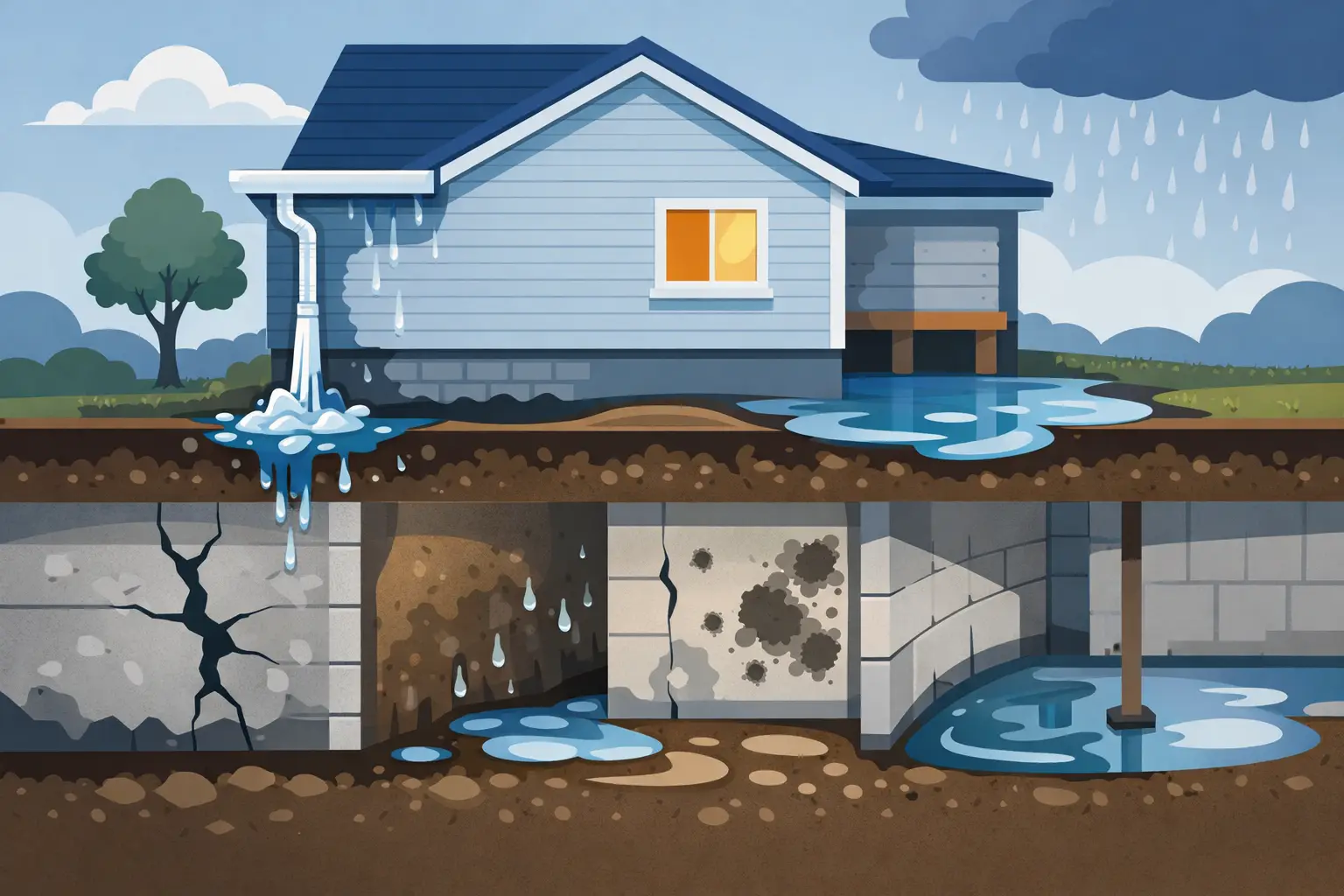
Small surface cracks can develop as concrete cures or as masonry ages. They deserve attention when they widen, lengthen, return after patching, or appear with water staining. Diagonal cracks around basement windows, stair-step cracks in brick or block walls, and horizontal cracks can point to soil pressure or movement against the foundation.
Water is often part of that pressure. Saturated soil becomes heavier and can push against below-grade walls. In cold climates, repeated freezing and thawing can make the problem worse. A crack should not be judged by appearance alone. Its location, width, direction, and history help determine whether crack filling, waterproofing, drainage correction, or structural repair is needed.
2. Damp Walls, Stains, or White Mineral Deposits
Dark areas on foundation walls, peeling paint, bubbling finishes, and a damp or musty smell are common signs that moisture is entering or lingering near the structure. White, powdery deposits on concrete, block, or brick are called efflorescence. They form when water moves through masonry and leaves minerals behind as it evaporates.
Efflorescence does not necessarily mean the wall is structurally unsound, but it is clear evidence that water is traveling through the material. Simply cleaning the surface may improve appearance, but it will not stop the water source. Exterior grading, damaged gutters, poor downspout discharge, failed joints, or inadequate foundation drainage may be the real cause.
3. Standing Water Near the Foundation
Puddles that remain alongside a building several hours or days after rain should be taken seriously. Water should move away from the foundation, not settle against it. When the ground slopes toward the building, runoff can collect along the wall and work into cracks, joints, window wells, or porous masonry.
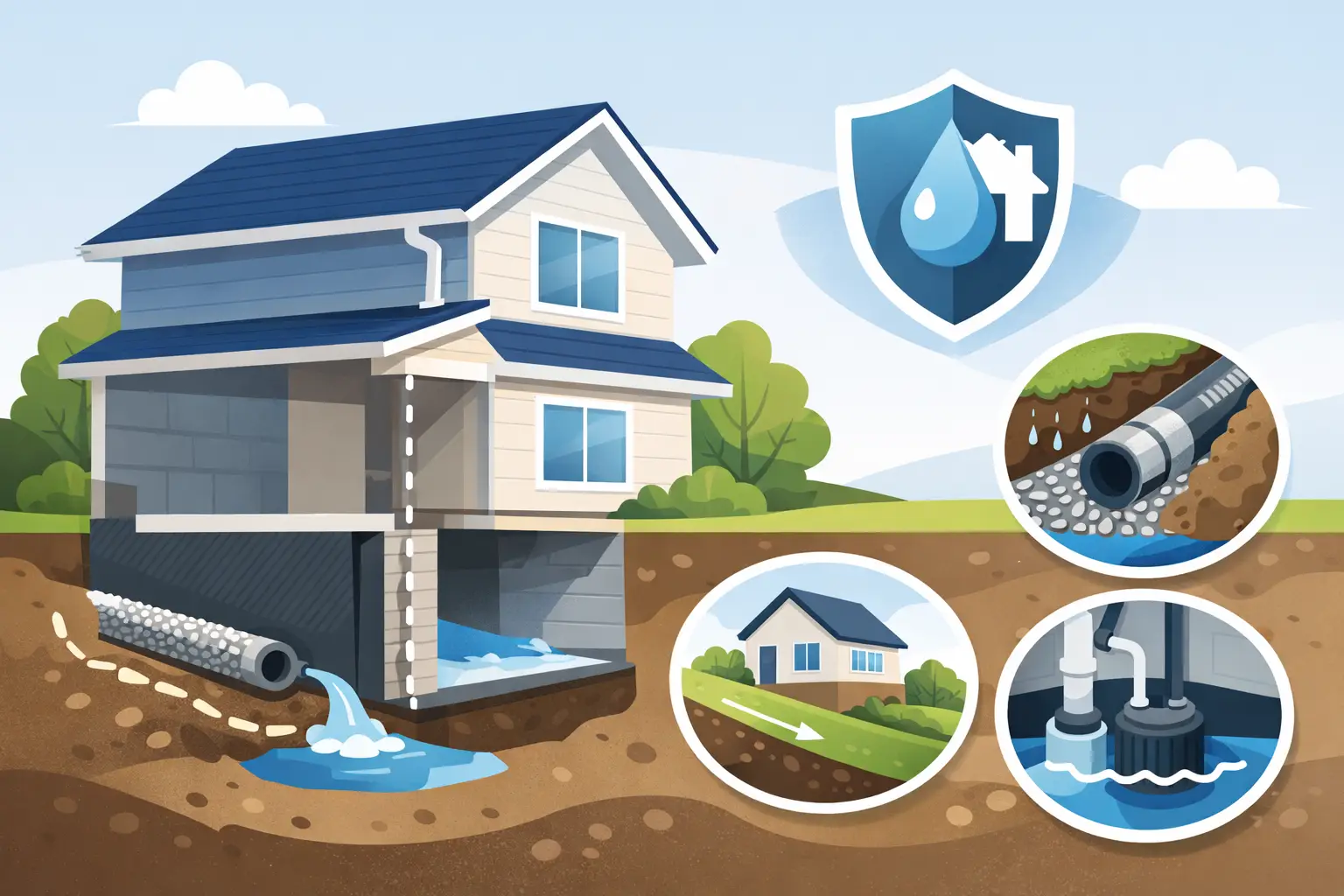
Look at the full drainage path, not only the puddle itself. A downspout that releases water beside the house, a sunken garden bed, compacted soil, or a driveway that directs runoff toward the building can all contribute. Proper grading and drainage are practical forms of foundation protection. They reduce hydrostatic pressure before water has a chance to reach the wall.
4. Soft, Settling, or Eroded Soil
Foundation water damage can also show up outside before it becomes visible indoors. Soil that is washed out near a wall, unusually soft ground, exposed foundation edges, or a gap between the soil and concrete may signal that runoff is moving material away from the building.
Erosion can create uneven support around foundations, steps, patios, and walkways. It may also leave water with an easier path downward along the foundation. Rebuilding the grade without correcting the runoff source is usually a short-term fix. Lasting work may require excavation, compacted fill, drainage installation, and a finished slope designed to carry water safely away.
5. Basement Leaks After Heavy Rain
A basement that leaks only during major storms can be easy to dismiss. That is often when drainage systems are under the greatest strain, which makes the timing useful information. Note whether water enters at a wall-floor joint, through a crack, around a window, or near a utility penetration.
A single wet spot does not always require extensive work. In some cases, a localized crack repair or window-well correction is enough. If leaks occur in several areas or return after interior patching, the exterior water-management system needs closer attention. The most reliable repair addresses the path water takes before it reaches the foundation.
6. Doors, Windows, and Floors That Become Uneven
Sticking doors and windows can result from humidity, normal seasonal movement, or worn hardware. However, when they occur with foundation cracks, sloping floors, or gaps at trim and exterior masonry, they may indicate settlement or shifting below the structure.
Water changes soil conditions. Some soils expand when saturated and shrink when dry, creating movement that affects slabs, footings, and walls. The repair approach depends on the building type, soil conditions, crack pattern, and severity of movement. Drainage improvements may be a key part of stabilizing the area, but significant movement should be assessed before cosmetic repairs are made.
7. Damage to Nearby Concrete, Masonry, or Retaining Walls
The foundation is not the only part of a property affected by poor water control. Sinking walkways, cracked steps, heaved patios, loose brickwork, and leaning retaining walls can all reveal excess water or unstable soil. These areas may share the same drainage problem as the foundation.
For example, a driveway pitched toward the building can send large amounts of runoff to one side of the foundation. A retaining wall without proper drainage can hold wet soil against a structure and eventually shift. Looking at the entire site helps prevent repairs that solve one visible problem while leaving the cause in place.
What Causes Foundation Water Problems?
Most foundation moisture problems come down to water being allowed to collect where it should not. Common causes include poor site grading, short or disconnected downspouts, blocked gutters, damaged drainage lines, leaking exterior plumbing, and cracks or gaps in foundation materials. Older properties may also have aging waterproofing or drainage systems that no longer manage water effectively.
Construction around the property can change drainage too. A new patio, driveway, landscaping feature, or raised soil level may redirect runoff toward the building if it is not planned carefully. That does not mean exterior improvements should be avoided. It means paving, masonry, excavation, and drainage work need to function together.
When to Call for a Foundation and Drainage Inspection
Call for a professional assessment promptly if you see horizontal or widening cracks, repeated basement water intrusion, a bowing wall, rapidly sinking concrete, or visible soil washout. These conditions can worsen with each storm and may affect safety as well as property value.
For less urgent issues, schedule an inspection before the next heavy-rain season. A contractor can check the slope of the surrounding ground, drainage routes, surface conditions, cracks, masonry joints, and areas where water collects. Clear recommendations should explain what needs attention now, what can be monitored, and which repairs will provide durable protection.
ASAP Paving And Masonry approaches foundation protection as a site-wide job, combining drainage, grading, excavation, concrete, and masonry work where needed. The goal is straightforward: move water away, strengthen damaged areas, and leave the property with a reliable finish built to last.
If you have noticed moisture, cracking, or pooling water, take a few photos after the next rainfall and track where the water travels. That simple record can make the right repair clearer and help protect your foundation before the damage grows.